On the evening of Tuesday 5 January 2027, the Three Kings ride into towns across Spain, throwing sweets to crowds of children who will wake up to presents the next morning. It is the biggest night of the Spanish Christmas, bigger for many families than 25 December. Here are seven cities that do it best, from Madrid’s grand boulevard to the ladders of Alcoy, plus where to stand and how to plan the day after.
What is a cabalgata?
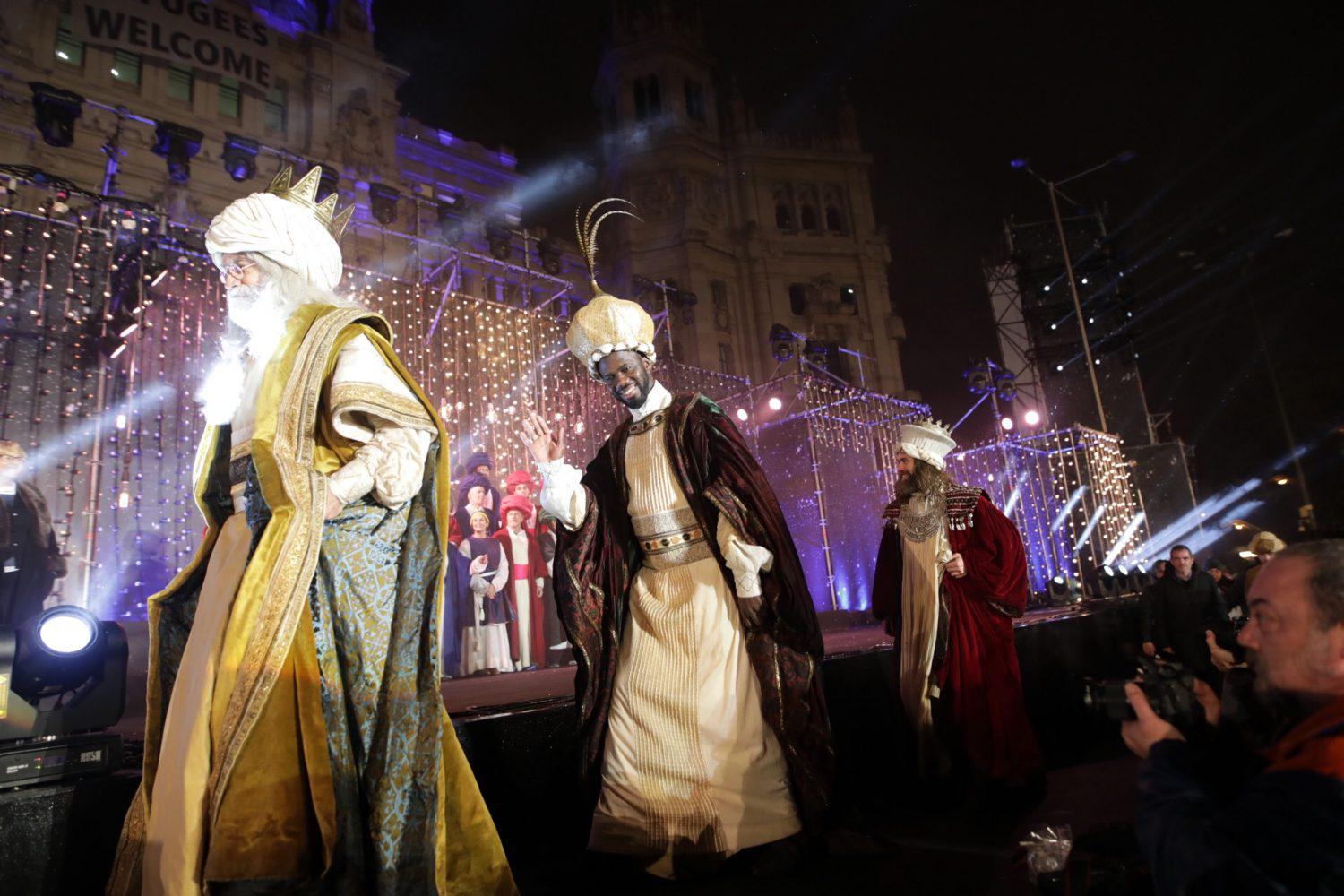
A cabalgata de Reyes is the parade of the Three Kings, Melchior, Caspar and Balthazar, on the eve of Epiphany. Each king rides on his own float, with pages, musicians, dancers and themed floats around him. Sweets rain down on the crowd from the floats, and children hold up bags, hats and even upturned umbrellas to catch them. That night, children leave their shoes out for the Kings, who bring the presents in Spain.
Wednesday 6 January 2027 is a public holiday, so the parade night works well as the end of a long winter weekend. Arrive at the weekend, catch a smaller neighbourhood parade in the days before, and see the main event on Tuesday night.
Three Kings parade Spain: the 7 best cabalgatas in 2027
Most cities publish the final routes and times in December. Where the 2027 details are not yet out, we give last year’s (January 2026) from the official source, as routes usually change little from year to year.
1. Madrid, Spain
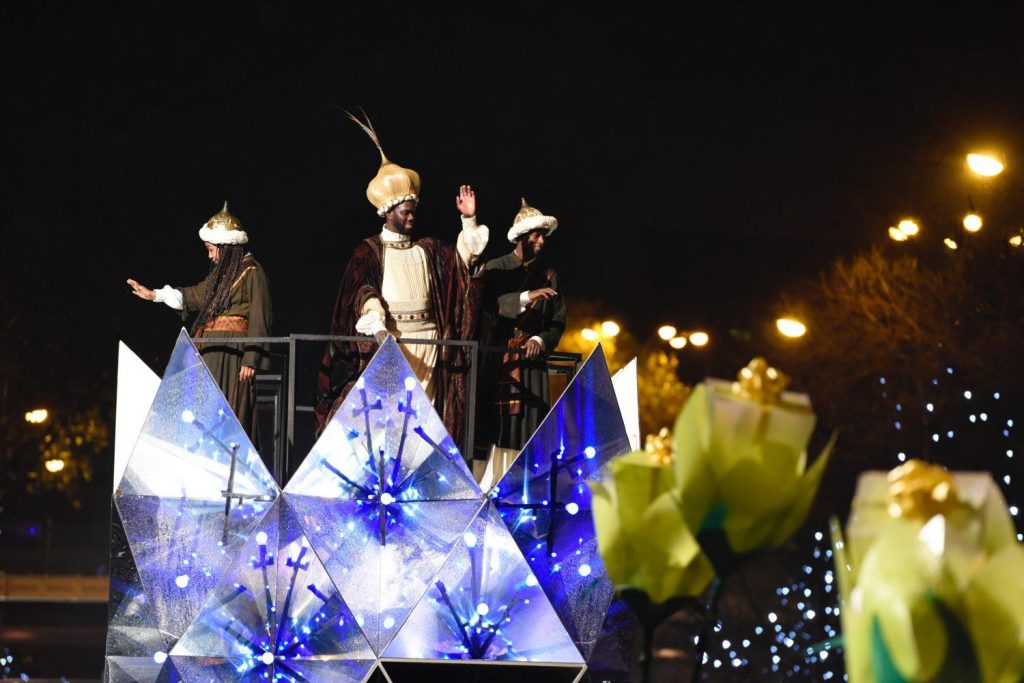
Madrid’s main parade runs down the Paseo de la Castellana, the city’s great north–south boulevard. Last year it set off at 6pm from Plaza de San Juan de la Cruz, by Nuevos Ministerios. It continued past Plaza del Doctor Marañón, Glorieta de Emilio Castelar and Plaza de Colón, then down Paseo de Recoletos to Plaza de Cibeles. The royal floats reached Cibeles shortly before 9pm, when the Kings spoke to the children, and the city expected more than 200,000 people. The city’s tourism site already lists 5 January 2027 on the same route, with approximate times of 6.30pm to 9pm.
Madrid’s districts also hold their own parades, from 2 to 5 January, which are smaller and easier with young children.
Best for: Scale. Big floats, huge crowds and a grand finale at Cibeles.
2. Seville, Spain
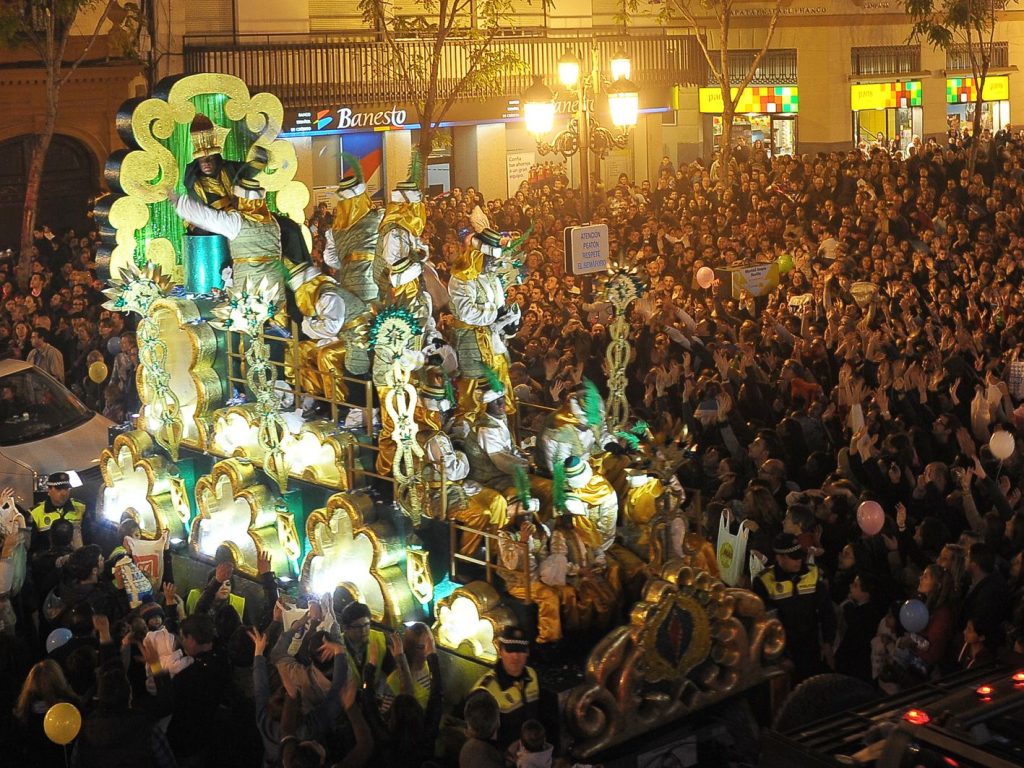
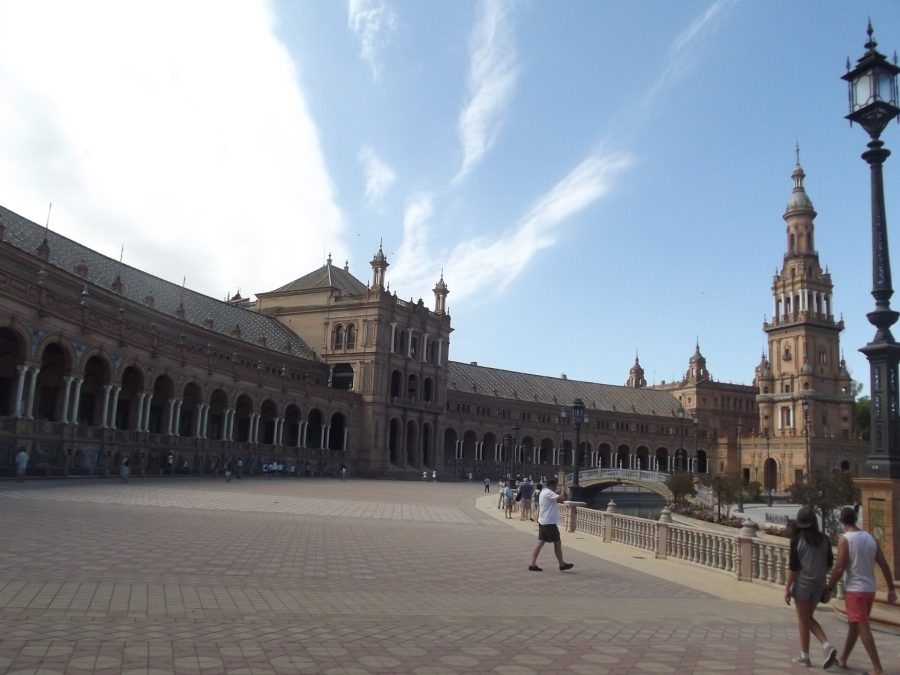
Seville’s parade, organised by the Ateneo de Sevilla, has been held every year since 1918. Andalusia’s tourist board counts more than thirty floats and about ninety tonnes of sweets. It fills most of the afternoon and evening. In 2026, the official route left the University on Calle Palos de la Frontera. It looped north through Menéndez y Pelayo, Ronda de Capuchinos and Calle Feria to the Campana. Then it crossed the Puente de Isabel II into Triana and returned over the Puente de los Remedios and along Paseo de las Delicias.
On its official social media, the Ateneo says the parade will go back to starting from the Casino de la Exposición, its starting point for 40 years. The full 2027 route had not been published when we checked, so confirm the start on ateneodesevilla.es in December. The night before, on 4 January, the Heraldo Real (royal herald) rides through the centre to announce the Kings.
Best for: Sheer quantity of sweets, and a whole city out on the streets. Pair it with our Seville weekend guide.
3. Barcelona, Spain
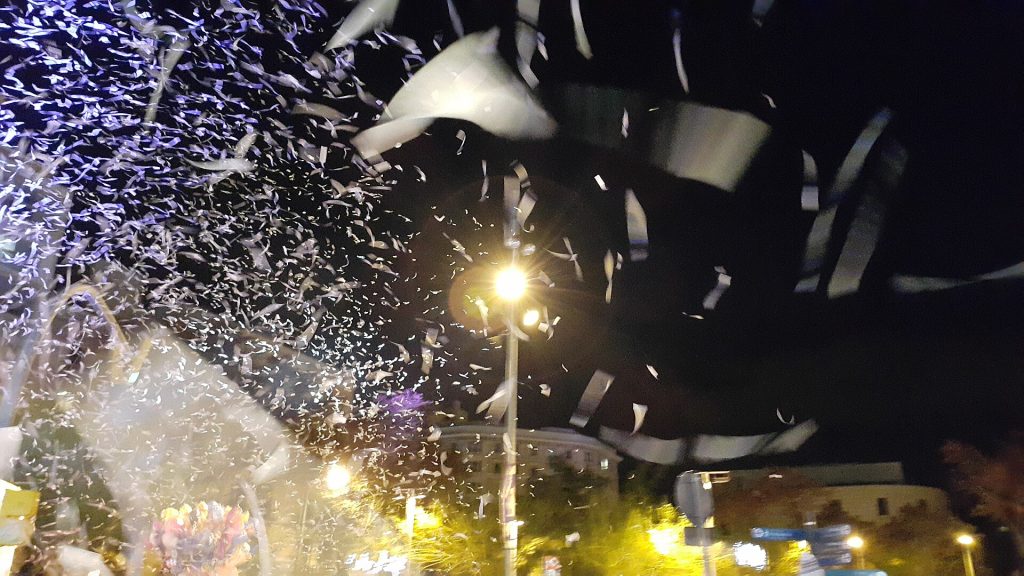
Barcelona’s Kings arrive by sea. In 2026 they stepped ashore at Plaça del Portal de la Pau, at the foot of La Rambla, at 4.30pm. The parade set off at 6pm from Parc de la Ciutadella. It passed the Columbus monument at about 6.55pm and the Mercat de Sant Antoni at about 7.45pm. Then it ran along Carrer de Sepúlveda and up Avinguda de la Reina Maria Cristina towards the Magic Fountain of Montjuïc, ending at Avinguda de Francesc Ferrer i Guàrdia at about 9.20pm.
There are four reserved areas for disabled visitors along the route.
Best for: Watching the boat arrival, then picking your spot along a timed route. See our Barcelona guide.
4. Valencia, Spain
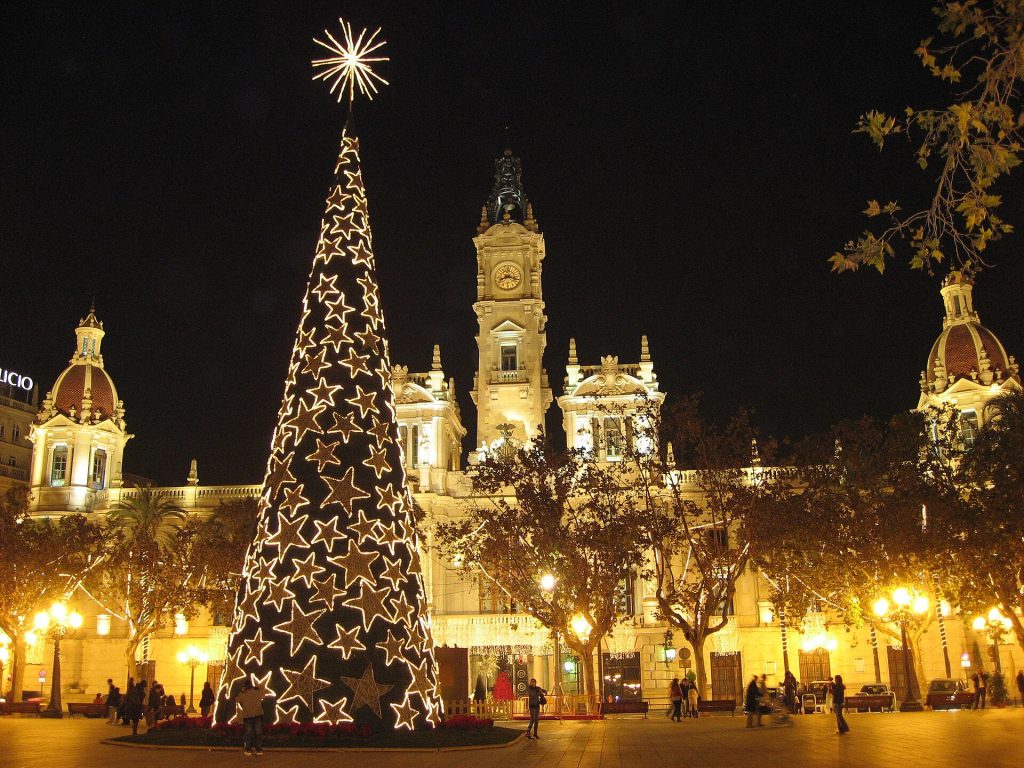
Valencia’s Kings also arrive by boat. In 2026 they landed at Plaza de la Sal, in Marina Norte, at about 4.30pm, with stands for watching. The parade then left from the Puente de las Flores at 5.30pm. It passed Porta de la Mar, Plaza de la Reina and Calle de San Vicente Mártir, and ended in Plaza del Ayuntamiento. There, the evening closes with a nativity scene, fireworks from the town hall roof and the Kings climbing to the balcony on a fire engine. The city handed out four tonnes of gluten-free sweets, and more than 1,300 people took part. Visit València already lists 5 January 2027 with the same arrival and start times.
Best for: Families with coeliac children, and a fireworks finale.
Tip: Valencia sets out around 2,500 chairs along the route on parade day. They suit grandparents and small children.
5. Málaga, Spain
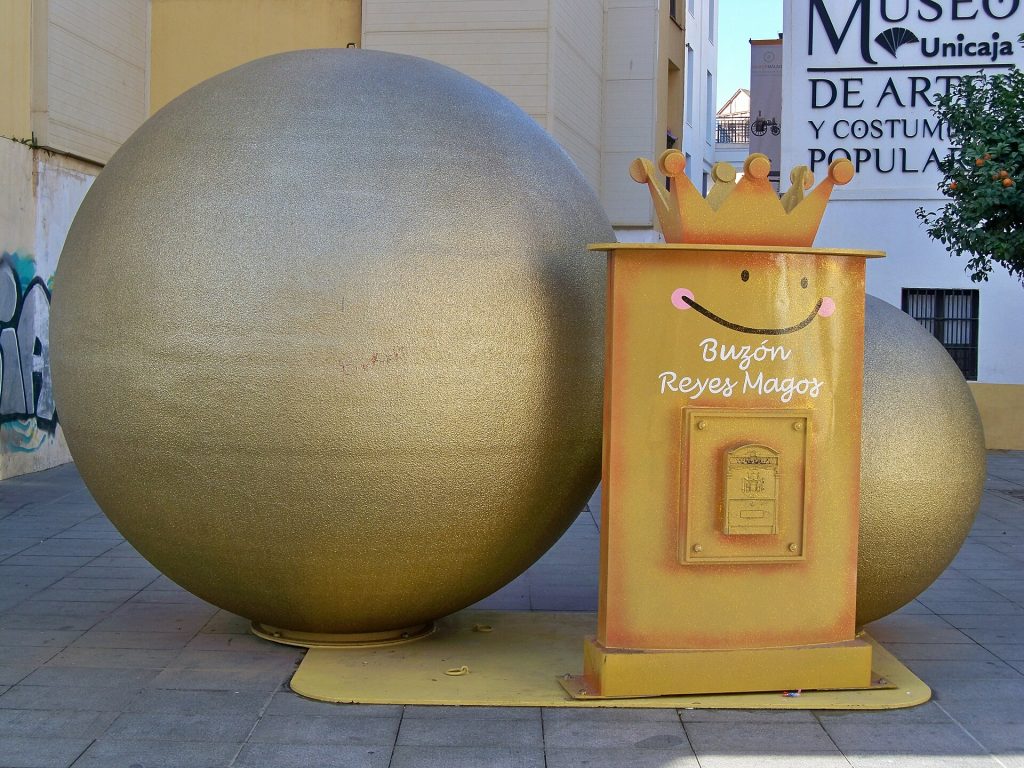
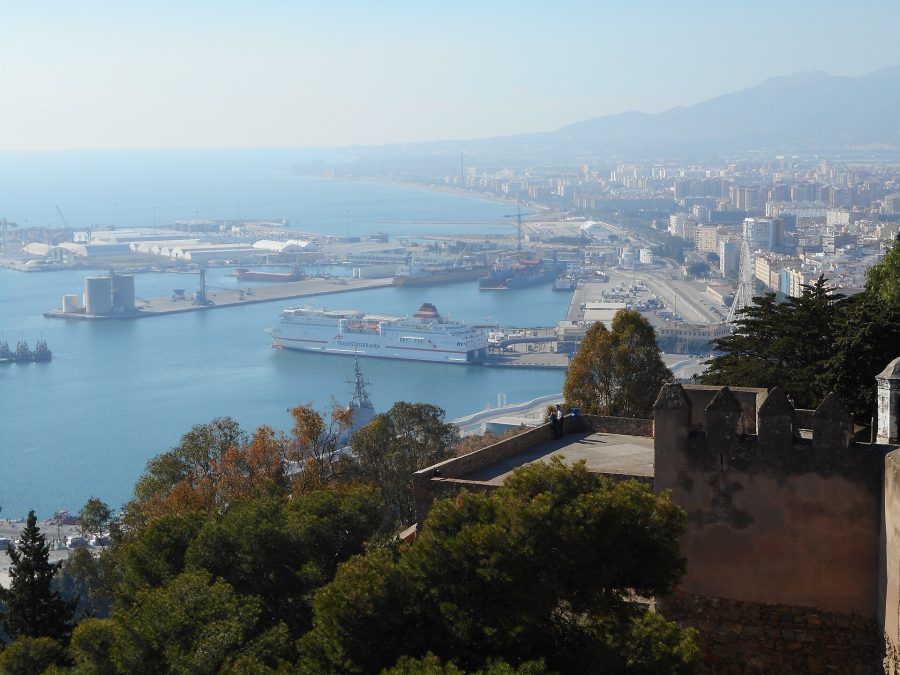
In Málaga, the Kings set out from the Alcazaba, the Moorish fortress above the city. In 2026, they were due to leave at 5pm, but the city put this back an hour because of rain. The parade started at 7pm from the town hall on Avenida de Cervantes. It ran along Paseo del Parque and the Alameda Principal, across the river and back, past the Atarazanas market and along the port before returning to the town hall. Thirteen floats and around 1,000 performers handed out about 20,000 kilos of sweets. Afterwards the Kings walked to the cathedral for a living nativity scene.
Best for: Winter sun with your parade. See our Málaga weekend guide.
6. Alcoy (Alcoi), Spain
This hill town north of Alicante holds what is often called Spain’s oldest Three Kings parade. It has run without a break since 1885, and records of it go back to 1866. It was declared a Festival of National Tourist Interest in 2001. The parade starts at 6pm in the upper town, on Avinguda d’Elx. It pauses in Plaça d’Espanya for the Adoration and fireworks, sets off again after 8pm and ends at about 10pm on Avinguda del País Valencià.
What makes it special are the pages who climb long wooden ladders up to the balconies to hand over presents. On 4 January, the Ban Reial (royal proclamation) announces the Kings’ arrival.
Best for: Tradition and a small-town atmosphere.
7. Igualada, Spain
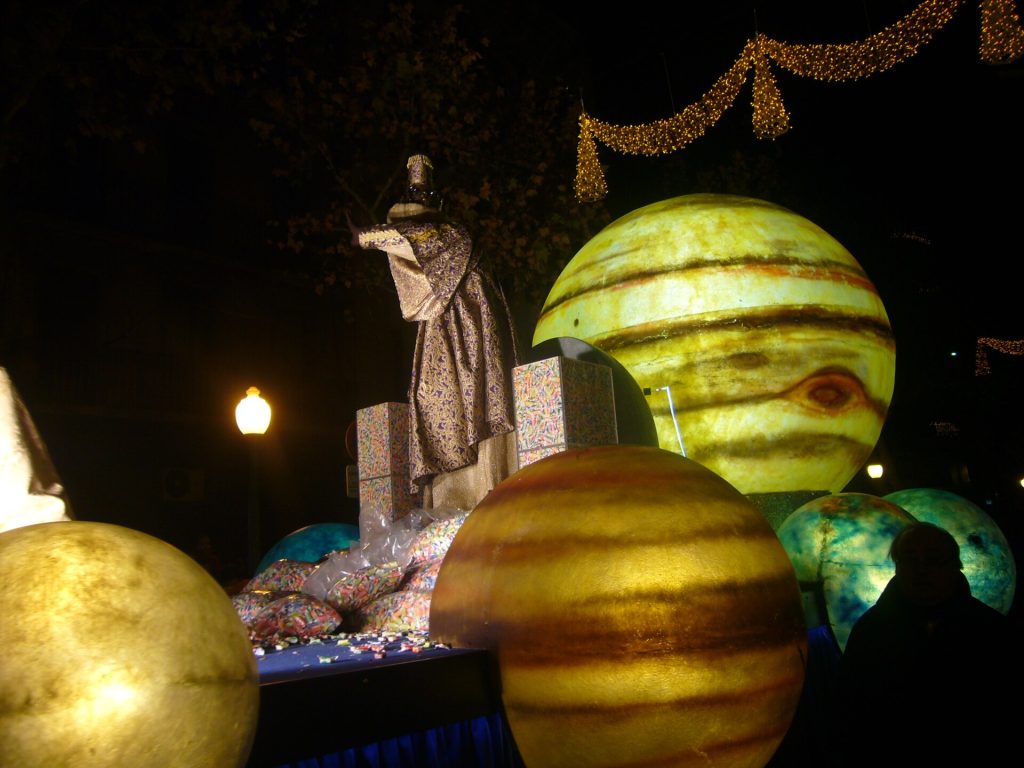
Igualada, inland from Barcelona, has records of its parade going back to 1895. Like Alcoy, its pages climb wooden ladders to deliver gifts to children on their balconies, and more than 500 of them follow the Kings’ carriages through the town. In 2026, the mayor received the Kings at about 6pm before the parade set off through the centre. The festival begins earlier with the arrival of the Patge Faruk, the Kings’ messenger, who collects children’s letters.
Best for: A Catalan tradition that is easy to reach from Barcelona.
Roscón de reyes
The day after the parade, Spanish families eat roscón de reyes, a ring-shaped sweet bread flavoured with orange blossom water and topped with candied fruit. Many are filled with whipped cream, custard or truffle. Hidden inside are a small figurine and a dried bean, and tradition says the bean decides your luck for the year. Bakeries fill their windows with them over Christmas, and in Madrid, traditional pastry shops such as El Riojano and La Mallorquina are a classic place to buy one. Eat it for breakfast on 6 January with a cup of thick hot chocolate.
Where to stand
- Near the start: Crowds are thinner and the floats are fresh, with full sweet buckets. In Madrid, the upper Castellana near Nuevos Ministerios is calmer than Cibeles.
- Near the end: You will see the finale, such as the Kings’ speech at Cibeles or the balcony in Valencia, but expect the densest crowds.
- Along a wide street: Wide avenues like the Castellana or Avinguda del Paral·lel give children room to see.
- Not in the road: Barcelona’s organisers ask spectators not to step into the road to pick up sweets. Keep children behind the barriers.
Practical tips
- Arrive early. Families start claiming kerb space hours before the parade. Arrive at least an hour early, and earlier near the finish.
- Bring a bag. Children catch sweets in bags, hats or upturned umbrellas. Sweets are thrown hard enough to sting, so younger children may prefer to stand a row back.
- Use public transport. Roads along the route close from the afternoon, and Madrid’s council recommends taking the metro. Expect stations near the finish to be very busy afterwards.
- Dress warmly. Even in Seville and Málaga, January evenings turn chilly after dark.
- Agree a meeting point. Crowds are thick, so pick a spot in case anyone gets separated, and write your phone number on young children’s wrists.
What’s open on 6 January
Wednesday 6 January 2027 is Epiphany, a public holiday across Spain. Many shops close, banks are shut and public transport runs on a holiday timetable. Cafés and bakeries are busy in the morning with roscón, and families gather for long lunches, so book restaurants ahead. Many museums open, but some keep shorter hours. The Prado in Madrid, for example, opens from 10am to 2pm on 6 January. Check each museum’s holiday hours before you go.
The day before, 5 January, is a normal working day. Shops stay open for last-minute presents, but the city centres fill up from mid-afternoon. For more ideas around the holidays, see New Year’s Eve in Europe, Christmas markets open in January 2027 and things to do in Spain.
How to choose
Go to Madrid for scale, Seville for the most sweets and the longest party, and Barcelona or Valencia to see the Kings arrive by sea. Choose Málaga for winter sun. For tradition, pick Alcoy or Igualada, where the pages climb up to the balconies.
FAQ
When is the Three Kings parade in Spain in 2027?
The parades take place on the evening of Tuesday 5 January 2027. Most start in the late afternoon or early evening and finish by about 10pm. Wednesday 6 January is a public holiday.
Which city has the best Three Kings parade in Spain?
Madrid has the biggest, Seville throws the most sweets and Alcoy has the oldest tradition. Barcelona and Valencia add the Kings’ arrival by boat.
Are the 2027 cabalgata routes published yet?
Not all of them. Madrid’s and Valencia’s tourism sites already list 5 January 2027 on the usual routes. Most other cities publish final routes and times in December.
Do you need a ticket for a cabalgata?
No. The parades are public street events along city streets. Barcelona’s organisers say there is no capacity limit, but the best spots go to those who arrive first.
What do you eat on Three Kings Day in Spain?
Roscón de reyes, a ring-shaped sweet bread with candied fruit, often filled with cream. It hides a figurine and a bean, and families usually eat it on the morning of 6 January.