Tenerife in winter is about more than a sunlounger. Base yourself in the island’s capital, Santa Cruz, and in two days you can shop a lively market, ride the tram up to a UNESCO-listed colonial town and stand at more than 3,500 metres on the flanks of Spain’s highest mountain. It suits couples, walkers and anyone after winter warmth with substance.
Why go
Most visitors head straight for the resorts of the south. The north-east of the island is a different Tenerife: a working port city with a Calatrava concert hall on its seafront, and, a short tram ride uphill, San Cristóbal de La Laguna. La Laguna was declared a World Heritage Site in 1999. Its street grid survives almost intact from the 15th century, and it served as a model for colonial cities in the Americas, from Old Havana to Lima and Cartagena.
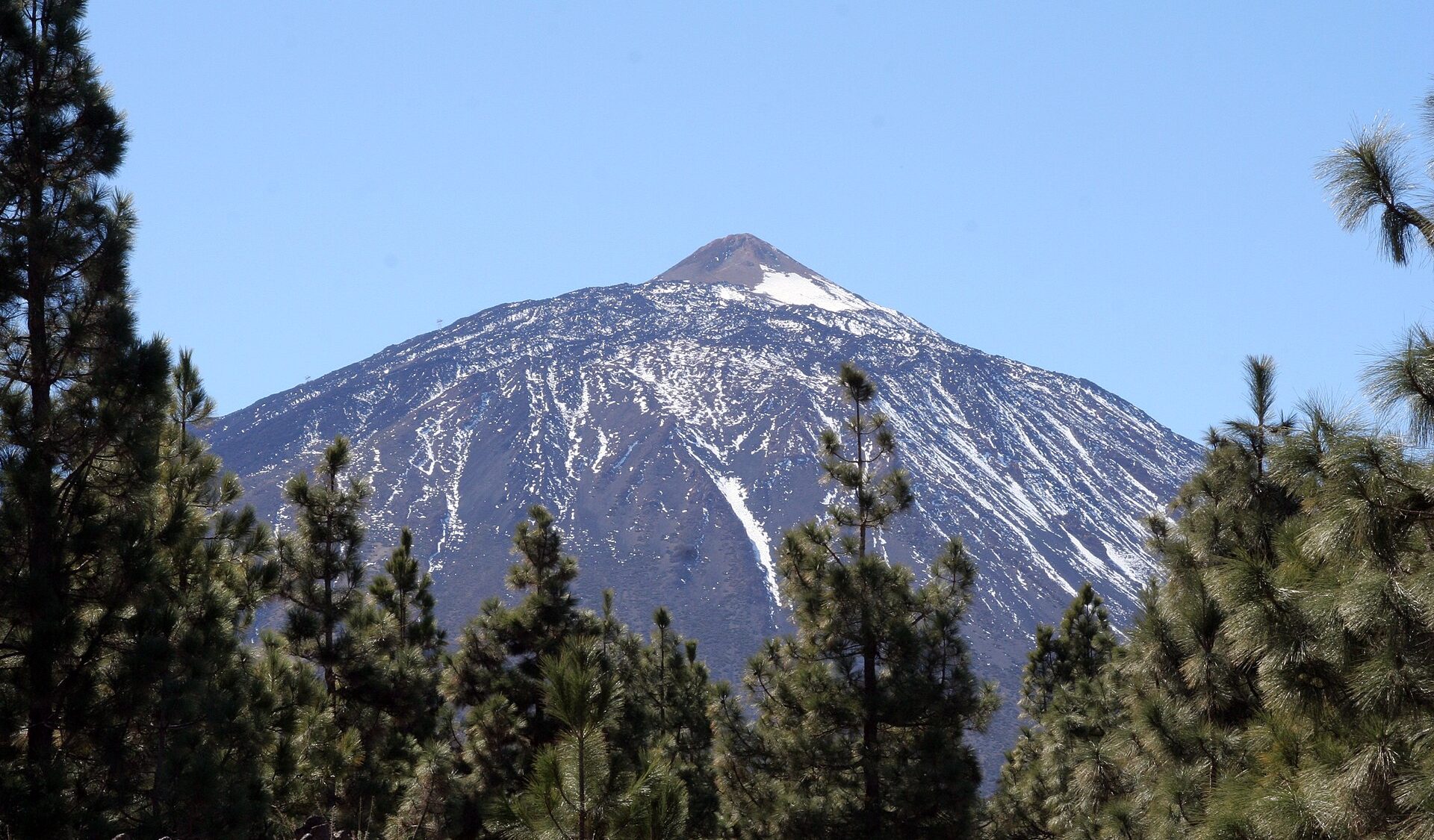
Then there is Teide. The volcano and its national park fill the centre of the island, a high plateau of lava fields, pumice and strange rock towers under one of the clearest skies in Europe. Together they make a weekend in Tenerife of city, history and wilderness, with no long transfers.
Santa Cruz de Tenerife
Don’t miss
The places that make the trip, and why each one deserves your time.

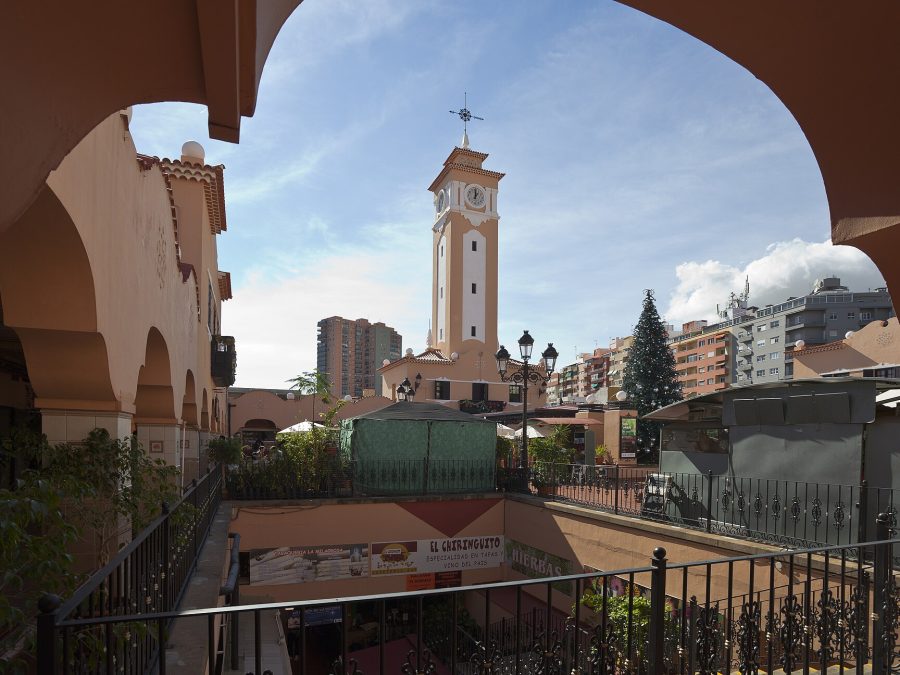
Diego Delso / Wikimedia Commons, CC BY-SA 3.0 Mercado de Nuestra Señora de África
Santa Cruz's main market wraps stalls of tropical fruit, island cheeses, honey and fresh fish around arcaded courtyards, with food counters serving tapas and sandwiches to shoppers.
Open mornings only, until 2pm, every day.
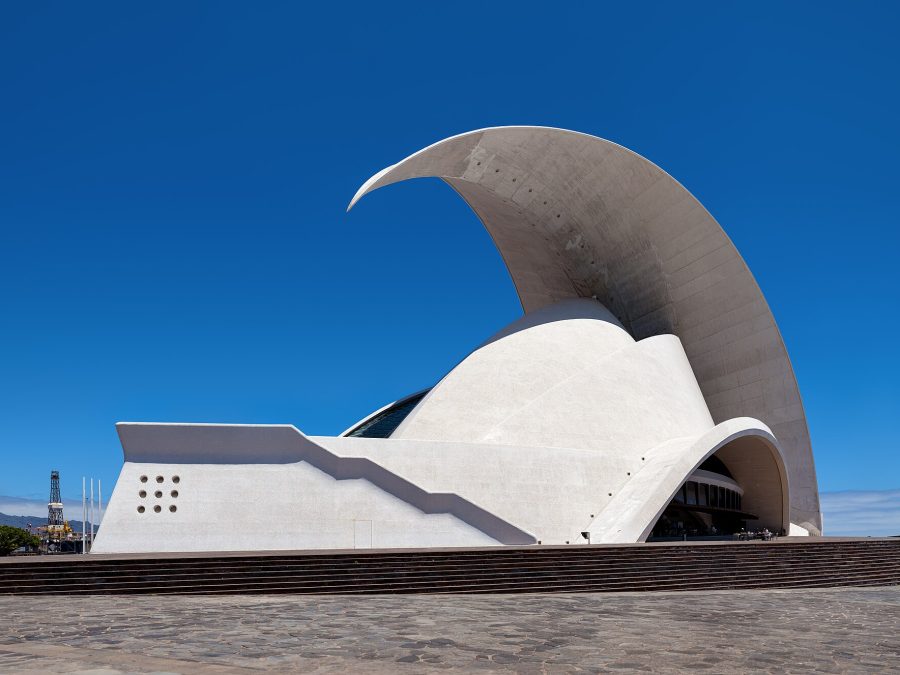
Thomas Wolf, www.foto-tw.de / Wikimedia Commons, CC BY-SA 3.0 de Auditorio de Tenerife
Santiago Calatrava's white concert hall rises from the seafront like a breaking wave, its huge curved roof shell gleaming against the Atlantic and the dark breakwater beyond.
Walk the seafront from the market for the best approach.
Diego Delso / Wikimedia Commons, CC BY-SA 4.0 La Laguna old town
A UNESCO-listed grid of pedestrian streets lined with ochre, blue and pink houses, wooden balconies and carved doorways, laid out in the 15th century and copied across the Americas.
Take tram line 1 to Trinidad, then walk.
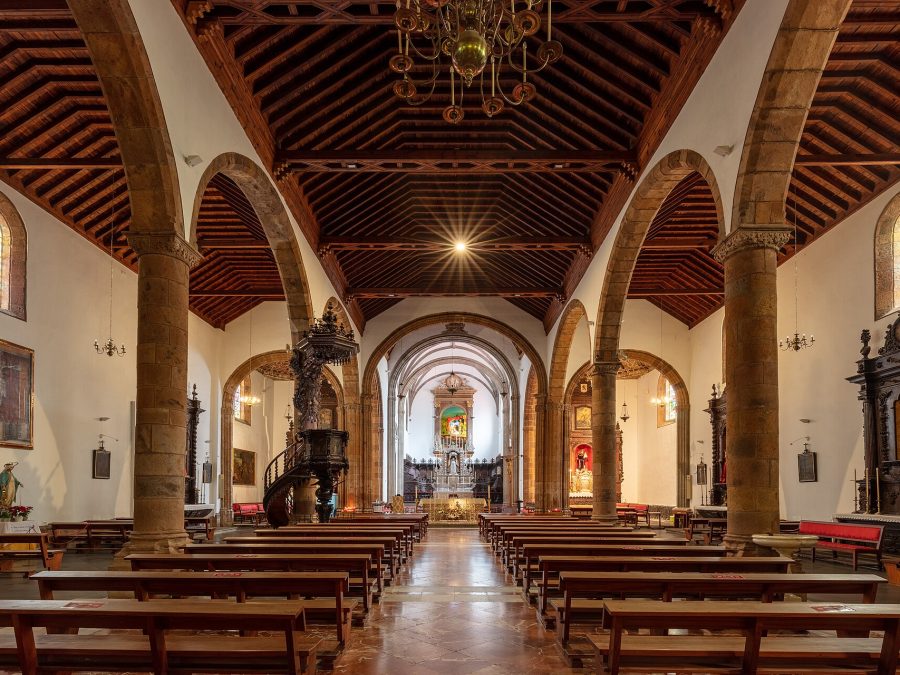
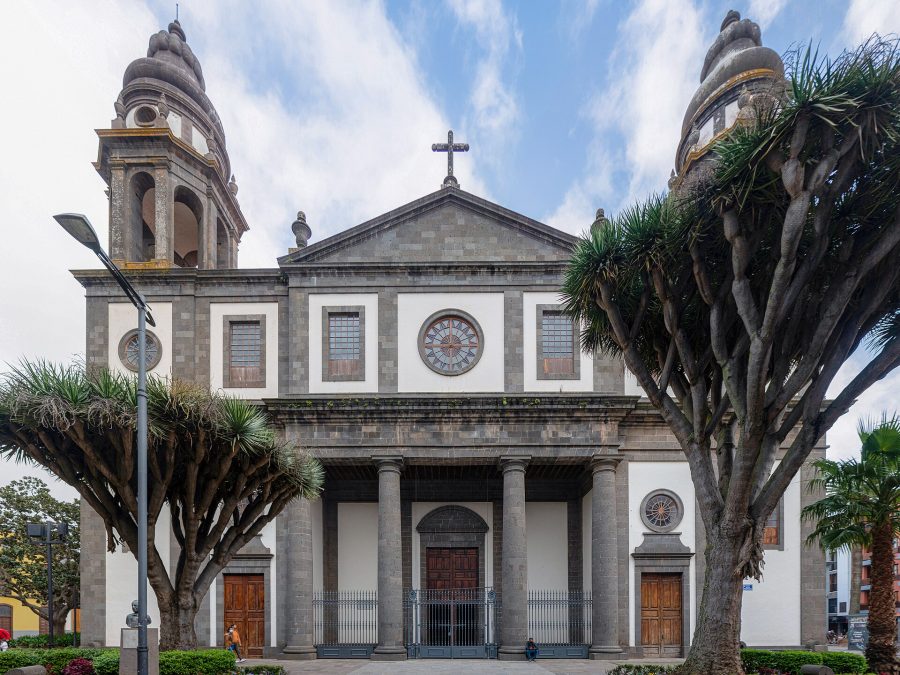
Fernando / Wikimedia Commons, CC BY-SA 4.0 La Laguna Cathedral
The island's cathedral anchors the old town with a neoclassical front and twin towers, a calm stop between the market square and the church of La Concepción.
Combine it with Plaza del Adelantado and the market.
Gabriel gironés / Wikimedia Commons, CC BY-SA 4.0 Teide cable car
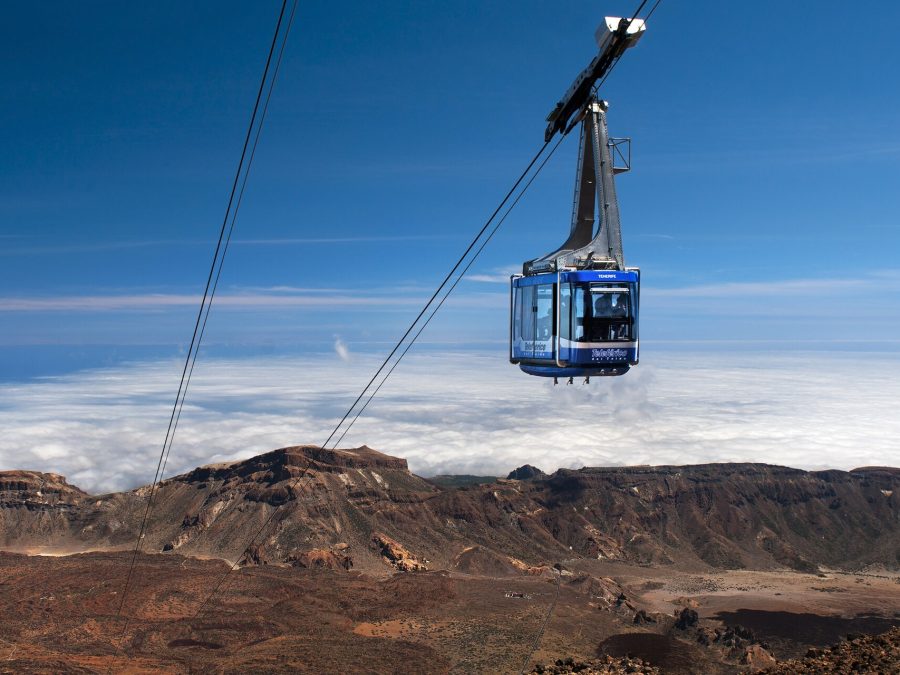
The cabin climbs from 2,356 metres to the upper station at 3,555 metres, opening a view over the crater floor, the clouds and, on clear days, the other Canary Islands.
Book online and check the weather status that morning.
Thomas Wolf, www.foto-tw.de / Wikimedia Commons, CC BY-SA 3.0 de Roques de García
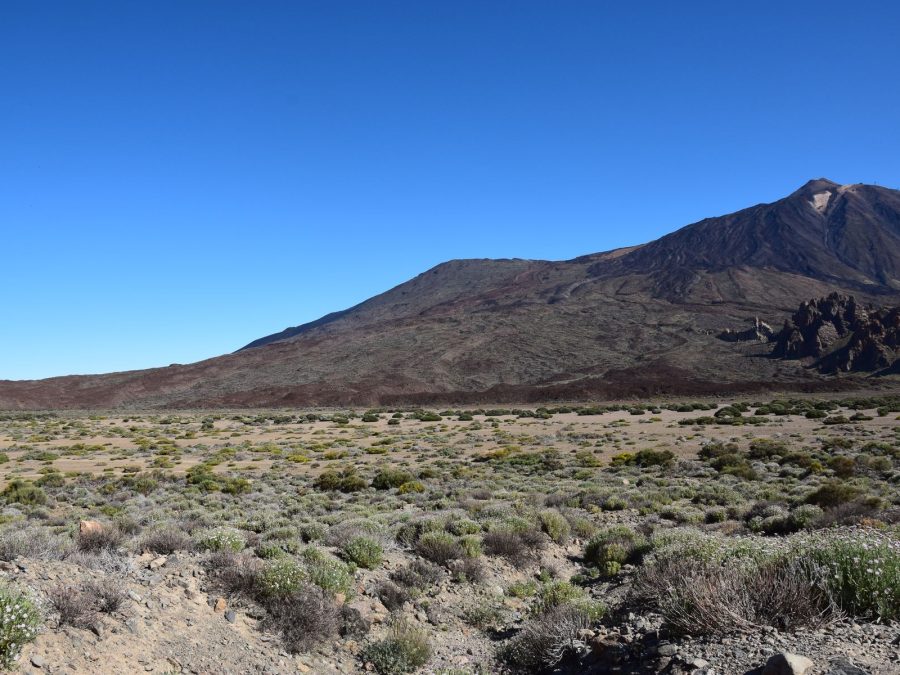
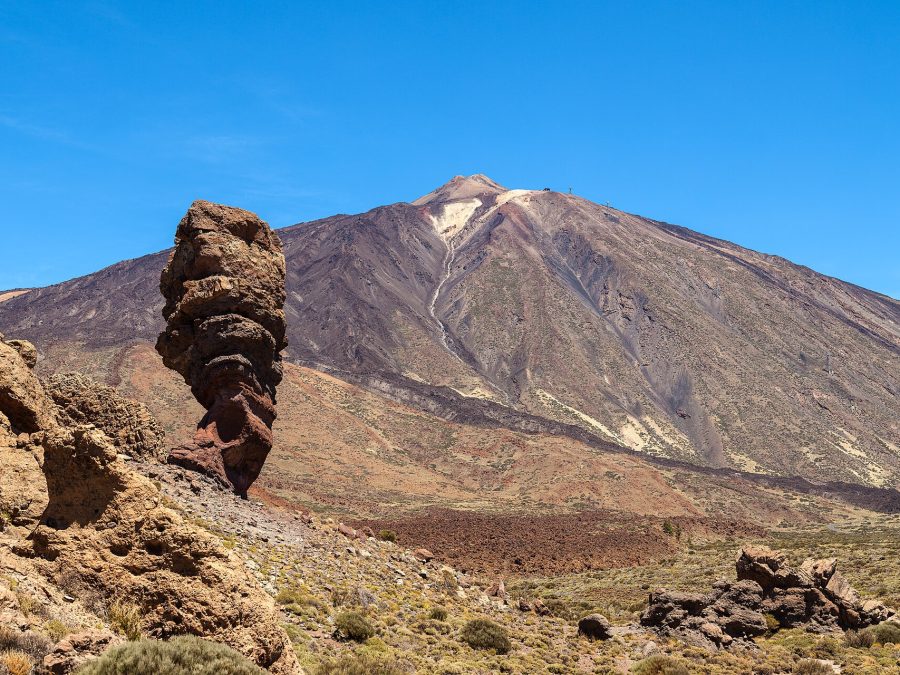
A line of wind-carved lava towers stands in front of Teide's cone, and the short loop path around them crosses rust, black and ochre ground like another planet.
Go early afternoon, after the cable car, for softer light.
Peng (talk · contribs) / Wikimedia Commons, CC BY-SA 3.0 Playa de Las Teresitas
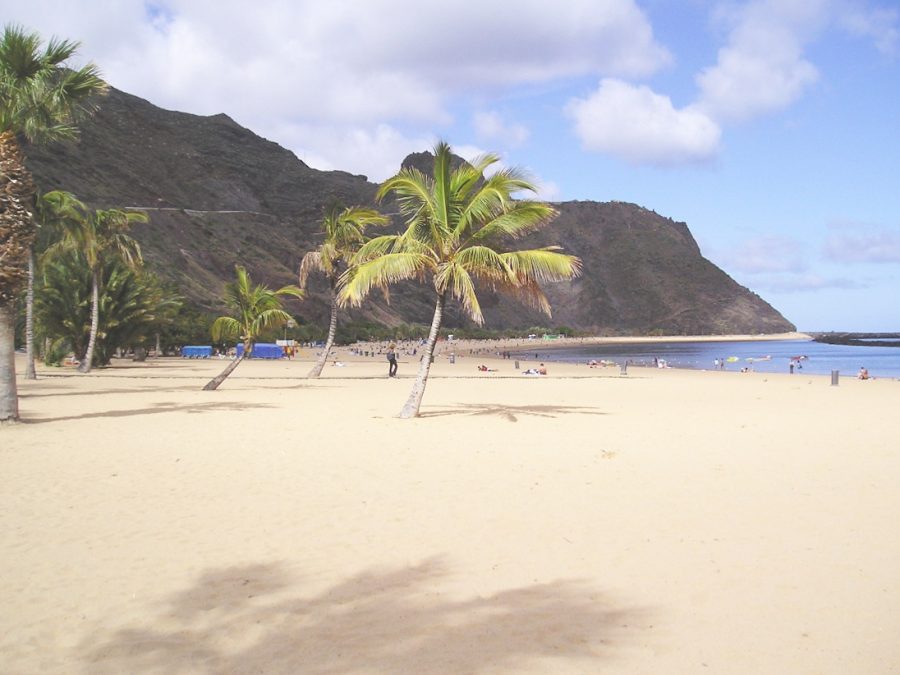
A long curve of pale golden sand below the steep ridges of Anaga, sheltered by a breakwater and fringed with palms near the city.
Come late afternoon after the mountain day.
The 48-hour route for a weekend in Tenerife
Day 1
Morning: Start in Santa Cruz at the Mercado de Nuestra Señora de África, the city’s main market. It opens every day from early morning until 2pm, with stalls of local fruit and vegetables, cheeses, honey, fish and meat around its courtyards, plus food counters for tapas and sandwiches. From there, walk down to the seafront and follow it south to the Auditorio de Tenerife, Santiago Calatrava’s concert hall, whose great white roof curls over the building like a wave.
Afternoon: After lunch, take tram line 1 from the centre of Santa Cruz up to La Laguna. The line runs from the Intercambiador, the city’s transport hub, to the Trinidad stop, and the old quarter is a short walk from there. The main streets are pedestrianised, so this is a town for slow walking. Start at the Plaza del Adelantado, then see the Cathedral of San Cristóbal de La Laguna, the church of La Concepción, the Casa de los Capitanes and the Palacio de Nava. Tenerife’s tourist board suggests allowing two to three hours for a first visit, more if you go inside the buildings.
Tip: La Laguna sits well above Santa Cruz and is often cooler and cloudier. Take a jumper, even on a warm day by the sea.
Evening: Stay in La Laguna for the evening. As a university town, its old centre fills with students and locals after dark, and small bars make it easy to graze through dinner. Take the tram back down to Santa Cruz afterwards.
Day 2
Morning: Spend the day in Teide National Park. The easiest way to get there from Santa Cruz is by hire car, climbing through pine forest via La Esperanza to the high plateau, or on a guided trip. Head first for the Teide cable car. Its base station stands at 2,356 metres and the upper station at 3,555 metres, close to the 3,718-metre summit. In winter it usually runs from 9am, with the last ascent in the late afternoon, but strong wind, ice or snow can stop it at short notice, so check the operator’s facilities status page on the morning of your trip and book a time slot online.
At the top, two short paths lead from the upper station to viewpoints over Pico Viejo and La Fortaleza. The final stretch to the summit is a separate matter, covered below.
Afternoon: Drive the short way to the Roques de García, a line of eroded lava towers in front of Teide’s cone. An easy loop path circles them and gives the classic view of the volcano. Leave the park by mid-afternoon to be back at sea level with light to spare.
Evening: Finish at Playa de Las Teresitas, next to the fishing village of San Andrés, a few kilometres north-east of Santa Cruz. The long, sheltered beach sits below the steep ridges of the Anaga mountains, and a late swim or a walk on the sand is a fine end to a day at altitude. Return to Santa Cruz for dinner.
Climbing Teide: cable car and summit permit
The cable car takes you to the upper station, but it does not take you to the summit. To walk the last stretch on the Telesforo Bravo trail, you need a separate permit from Teide National Park. According to the cable car operator, Volcano Teide, permits are managed through the Tenerife ON platform. They are personal, valid only for one date and one of four two-hour slots between 9am and 5pm, and are checked at the start of the trail against the ID you used to apply. Places are limited, and the operator advises applying two to three months ahead.
Your cable car booking also has to fit your permit slot, so plan the two together. Without a permit you can still ride to the upper station and walk to the Pico Viejo and La Fortaleza viewpoints. Access to the crater itself is not allowed under any circumstances. Rules can change, so confirm the current process on the official Tenerife ON and Volcano Teide sites before you book.
Tip: The air is thin above 3,500 metres. Move slowly at the top, and bring a warm coat, hat and sunglasses; it can be close to freezing at altitude while the coast basks.
Without a car: TITSA bus 348 runs once a day each way between Puerto de la Cruz and the Parador in Las Cañadas, stopping at La Orotava and the cable car. The trip takes about an hour and 40 minutes each way, with the morning departure from Puerto de la Cruz at 9.30am and the return from the Parador at 4pm. From Santa Cruz, a guided excursion is usually simpler.
Tenerife in winter
Santa Cruz has one of the mildest winters of any European city. Spain’s national weather service, AEMET, records average highs of about 22°C in December, 21°C in January and February and 22°C in March, with nights rarely much below 15°C. Rain falls on only four or five days a month, and sunshine runs to about 170–185 hours a month from December to February, rising above 220 in March.
La Laguna, up on its plateau, is noticeably cooler and more often under cloud, and Teide is another world again: snow on the summit is common in winter, and the cable car can close for days in bad weather. Pack for three climates: summer clothes for the coast, a light jacket for La Laguna and proper warm layers for the mountain.
Carnival 2027: The Santa Cruz carnival is one of the biggest in the world. Santa Cruz city council has announced that the 2027 opening gala will take place on 22 January, with the street carnival running from 19 to 28 February 2027.
Where to stay
- Santa Cruz centre: Around the Plaza de España, Calle Castillo and the market. Best for first-timers who want the tram, the seafront and easy access to both airports.
- Parque García Sanabria and the Ramblas: Leafy residential streets just above the centre. Best for a quieter base within walking distance of everything.
- La Laguna old town: Small hotels in historic buildings in the pedestrian centre. Best for couples and anyone who would rather spend the evenings in a university town than a port city.
- San Andrés: The fishing village by Las Teresitas. Best for those who want the beach on the doorstep and do not mind relying on buses or a car.
What to eat and drink
- Papas arrugadas with mojo: Small, wrinkled potatoes boiled in salty water, served with red mojo picón and green coriander mojo.
- Queso asado: Grilled local goat’s cheese, often topped with mojo or palm honey.
- Carne de cabra: Slow-cooked goat stew, a mountain classic.
- Barraquito: A layered coffee with condensed milk, liqueur and lemon peel, served in a tall glass.
- Local wine: Tenerife’s volcanic slopes grow characterful whites and reds, often from listán grapes.
Where to go:
- Mercado de Nuestra Señora de África (Santa Cruz): The city’s main market, with food counters for tapas and sandwiches. Open every morning until 2pm.
- Mercado de La Laguna (Plaza del Cristo): The old town’s market, open mornings until 2pm, good for fruit, cheese and picnic supplies before Teide.
- La Laguna’s old centre: For dinner, the pedestrian streets around the Cathedral and La Concepción are lined with tascas and bars; wander and pick the busiest.
Getting around
Getting there: Tenerife has two airports. Tenerife North (TFN), near La Laguna, is the closer one for this weekend: TITSA bus 20 links it with La Laguna and Santa Cruz. Tenerife South (TFS), the busier of the two, is further away; TITSA bus 10 runs to Santa Cruz by day, and line 711 covers the same route at night. Express line 343 links both airports with Puerto de la Cruz and Los Cristianos, but does not serve Santa Cruz.
The tram: Tram line 1 is the backbone of the weekend. It runs 12.5 kilometres between the Intercambiador in Santa Cruz and Trinidad in La Laguna, with stops including Fundación, Teatro Guimerá and Weyler in the city centre.
For Teide: A hire car gives you the most freedom; otherwise, use a guided trip or bus 348 from Puerto de la Cruz. For more island ideas, see our Canary Islands tips, or compare Tenerife with Fuerteventura.
Good to know
- Book the cable car ahead: Time slots fill, and the summit permit needs planning months in advance.
- Check the mountain on the day: Weather on Teide changes quickly, and the cable car closes in high wind, ice or snow.
- Sun protection: The sun is strong at sea level and fierce at altitude, even in January.
- More winter sun in Spain: Browse the best holiday destinations in Spain and the best national parks in Europe.
- What’s on: See this weekend’s picks for events across Europe.
FAQ
Is Tenerife warm in winter?
Yes. AEMET records average highs of about 21–22°C in Santa Cruz from December to March, with little rain. La Laguna and especially Teide are much cooler, so bring layers.
Is a weekend in Tenerife enough?
Two days covers Santa Cruz, La Laguna and a day on Teide at a relaxed pace. Add a third day for the Anaga mountains or the north coast around Puerto de la Cruz.
Do you need a permit to climb Teide?
Only for the final stretch to the summit on the Telesforo Bravo trail. The cable car and the viewpoint paths from the upper station do not need one. Permits are limited and are booked through the Tenerife ON platform.
Which airport is best for Santa Cruz and La Laguna?
Tenerife North (TFN) is closest, with TITSA bus 20 to La Laguna and Santa Cruz. From Tenerife South (TFS), take TITSA bus 10, or line 711 at night.
How do you get from Santa Cruz to La Laguna?
Take tram line 1 from the Intercambiador or any city-centre stop to the Trinidad terminus, then walk a few minutes into the old town.