Valencia gives you a Gothic old town, a riverbed turned into a nine-kilometre park, Calatrava’s space-age City of Arts and Sciences and a city beach, all on the Mediterranean and all in easy reach of each other. Add mild winter sun and paella cooked where it was born, and two days fill themselves. It suits couples, families and anyone who likes to explore a city by bike.
Why go
Valencia packs two cities into one weekend. The first is medieval: a cathedral that guards a chalice venerated as the Holy Grail, a silk exchange listed by UNESCO and a Modernista food market that is one of the finest in Spain. The second is modern and green. After the floods of 1957 the River Turia was diverted south, and its old bed became a long ribbon of gardens that ends at Santiago Calatrava’s white City of Arts and Sciences.
Then there is the sea. On the city’s east side, the tiled streets of El Cabanyal run down to Malvarrosa beach, and south of the city the Albufera lagoon turns gold at sunset. Winter is mild and mostly dry, which makes Valencia one of Spain’s easiest off-season breaks.
Valencia
Don’t miss
The places that make the trip, and why each one deserves your time.

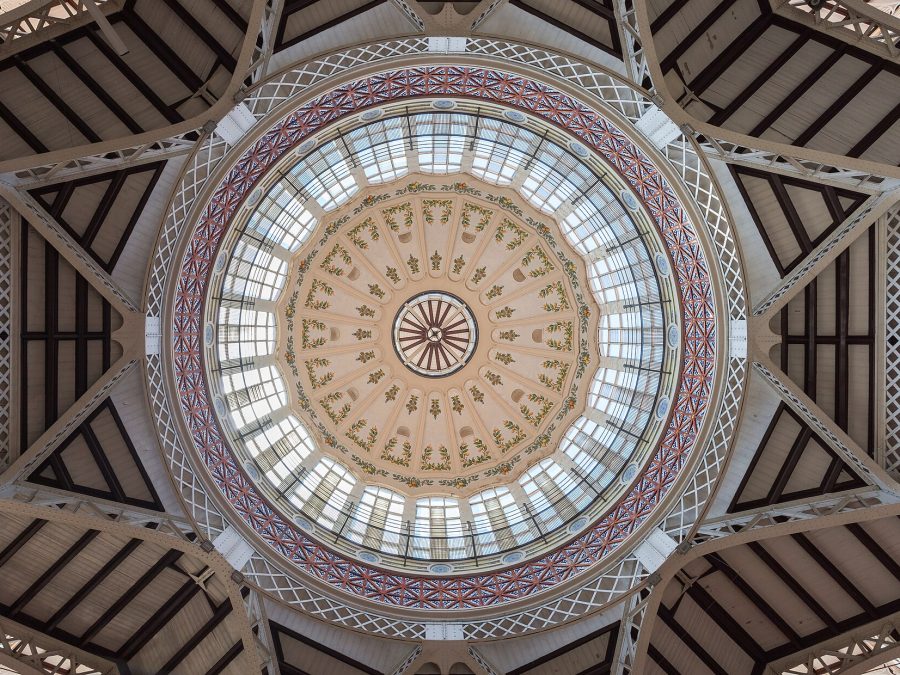
Diego Delso / Wikimedia Commons, CC BY-SA 4.0 Mercado Central
A Modernista market of iron, tiles and stained glass covering more than 8,000 square metres, with over 250 stalls of fish, rice, citrus and cured meats.
Open Monday to Saturday, 7.30am to 3pm.
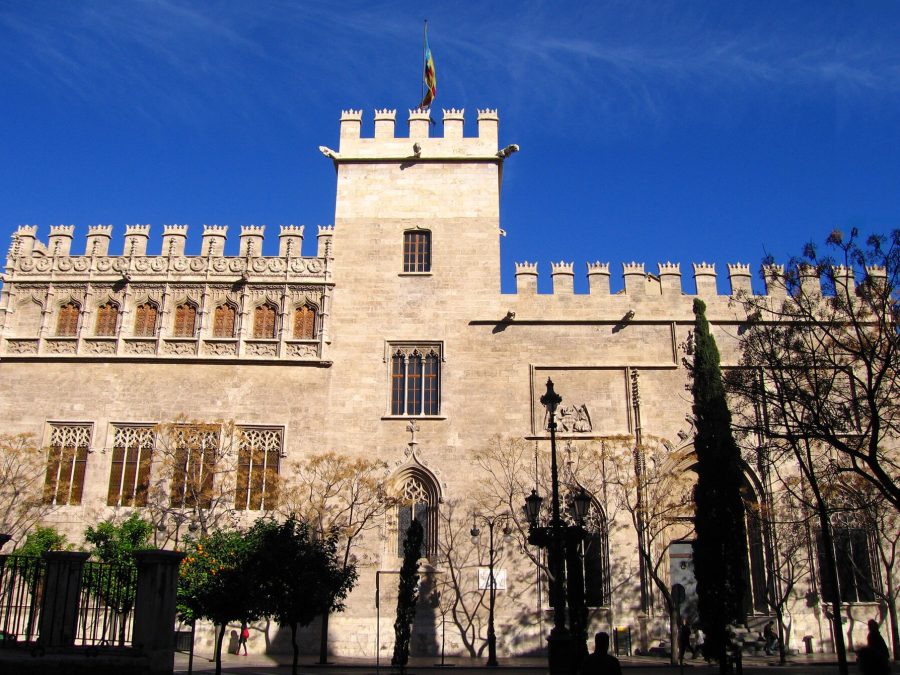
Felivet / Wikimedia Commons, Public domain Lonja de la Seda
The Gothic silk exchange, a UNESCO World Heritage Site since 1996, where eight twisted stone columns rise like palm trees in the old trading hall.
Free on Sundays and holidays, open 10am to 2pm.
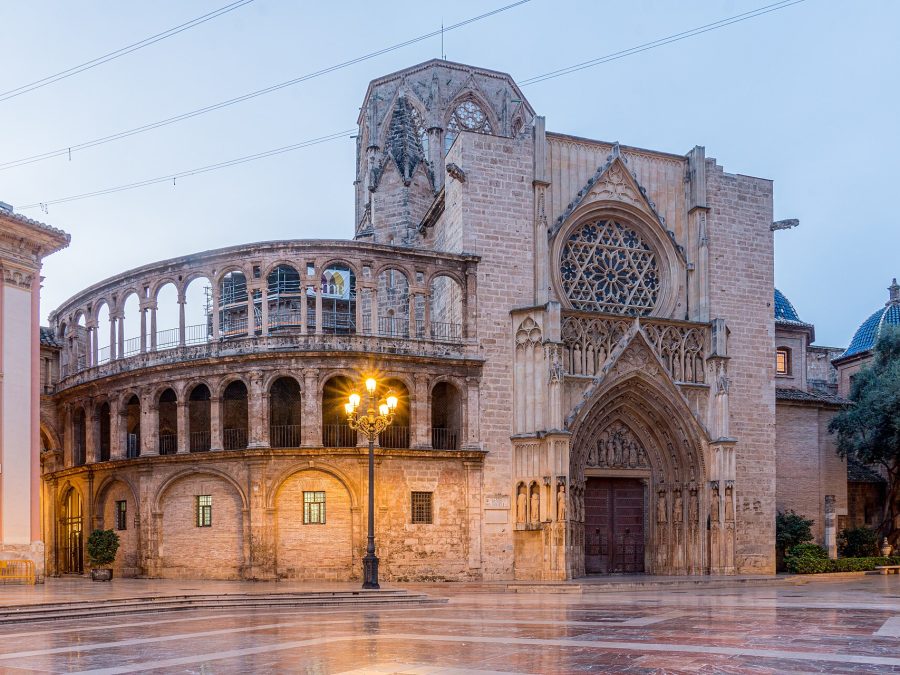
Fernando Pascullo / Wikimedia Commons, CC BY-SA 4.0 Valencia Cathedral and the Miguelete
A cathedral that keeps a chalice venerated as the Holy Grail, beside the Miguelete bell tower, whose 207 steps end in a view over the old town's domes.
Sunday visits start only at 2pm.
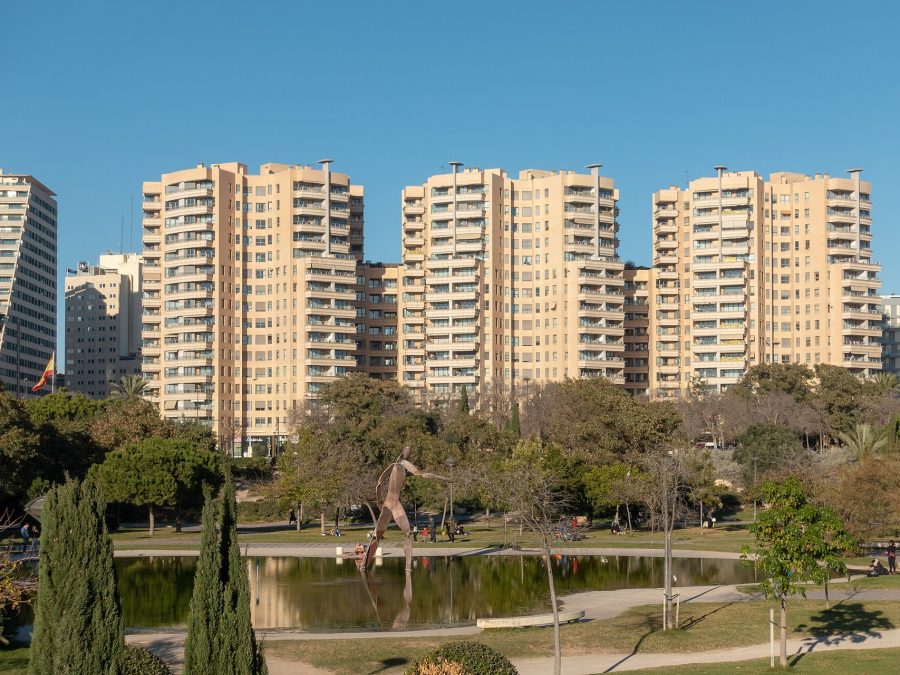
Kent Wang / Wikimedia Commons, CC BY-SA 2.0 Turia Gardens
More than nine kilometres of park in the old riverbed, crossed by 18 bridges from Gothic stone to Calatrava, ideal for an easy, traffic-free bike ride.
Cycle east to finish at the City of Arts and Sciences.
David Ferris from Elda, Spain / Wikimedia Commons, CC BY 2.0 City of Arts and Sciences
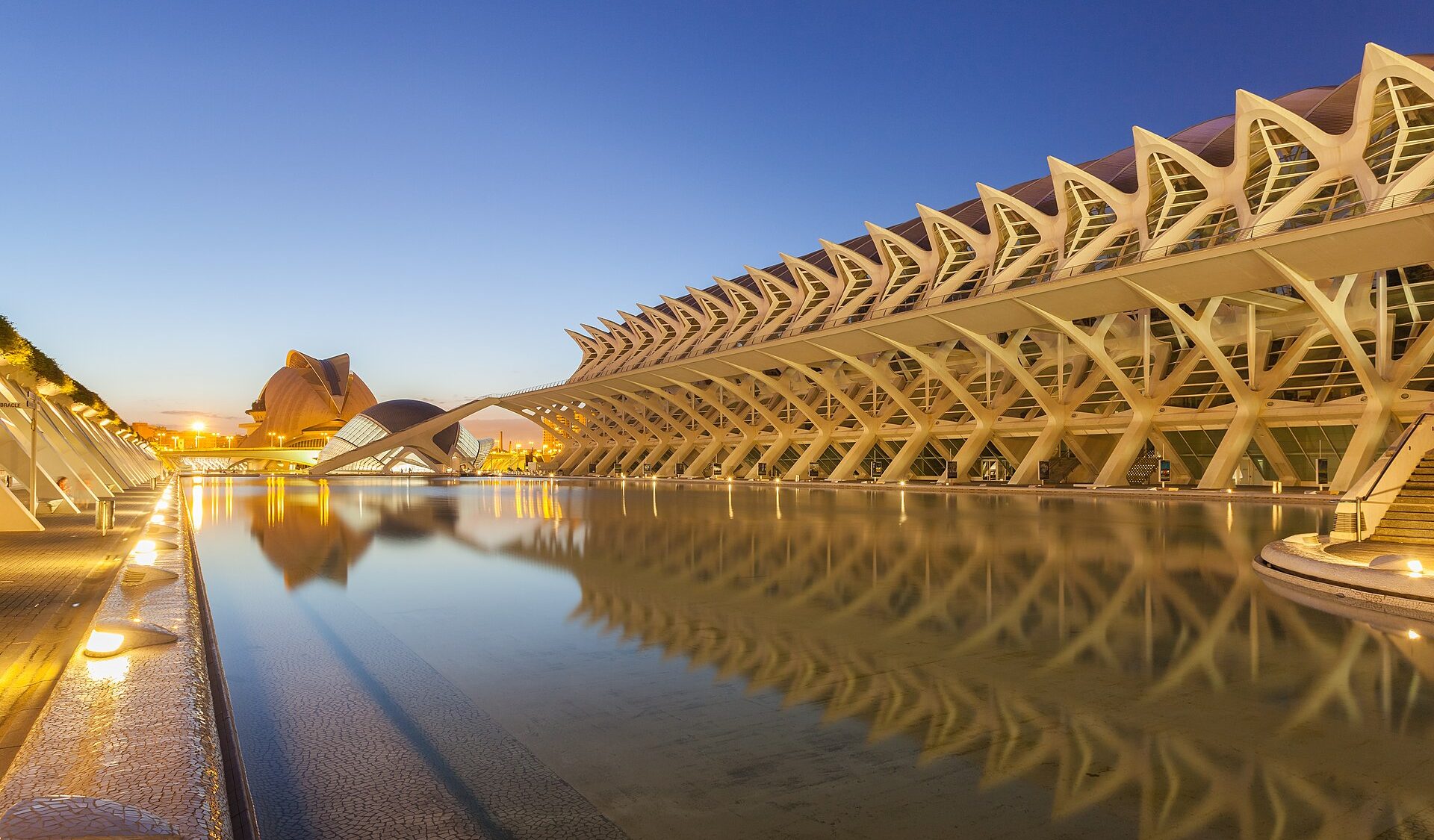
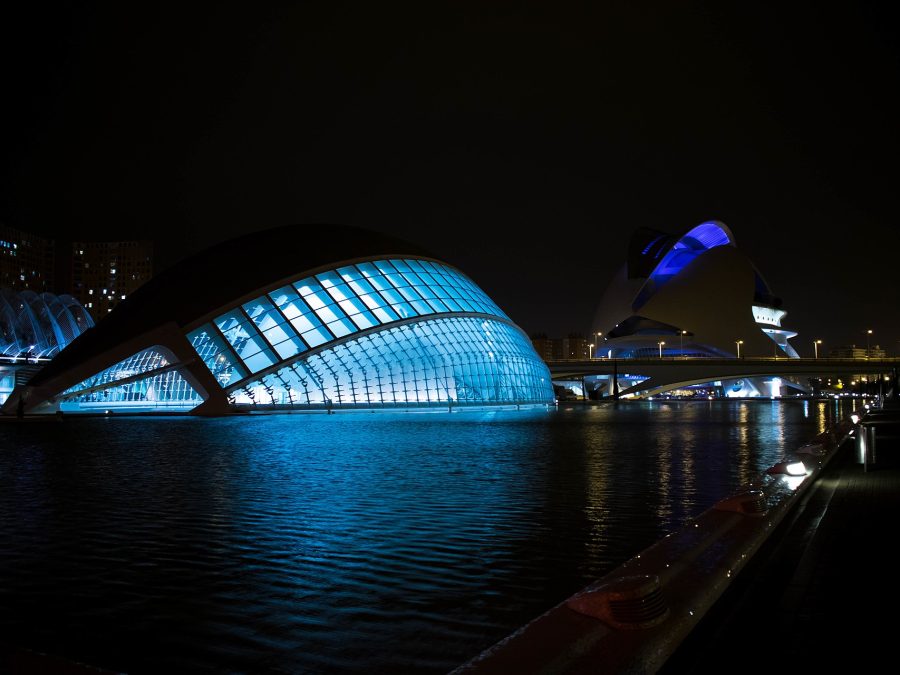
Santiago Calatrava's white complex stretches for almost two kilometres along the old riverbed, with an aquarium, a science museum, an IMAX dome and the Umbracle garden.
Stroll the Umbracle garden even without a ticket.
Joanbanjo / Wikimedia Commons, Public domain El Cabanyal and Malvarrosa
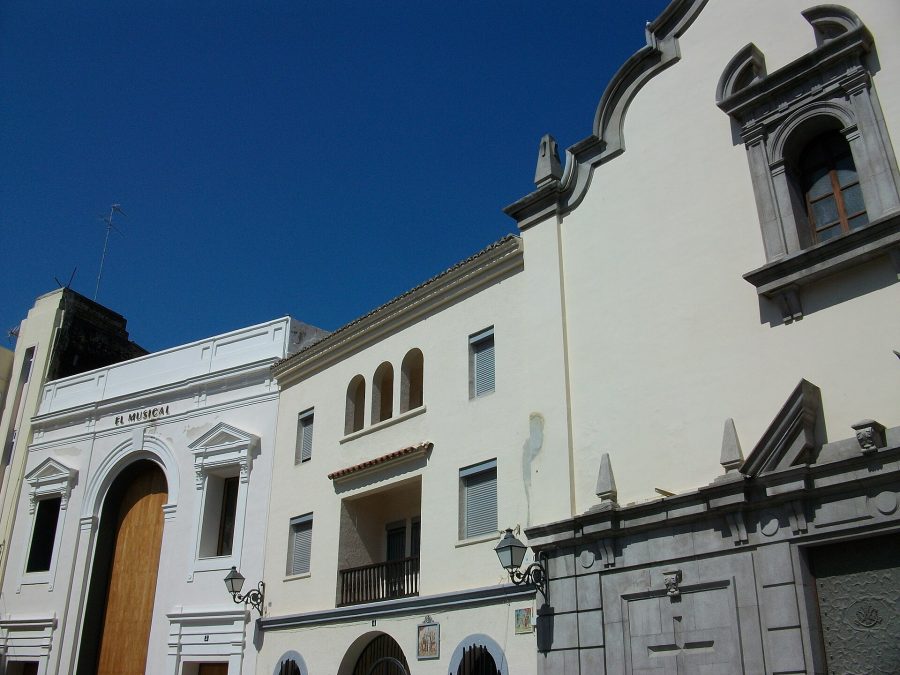
The old fishermen's quarter, with houses dressed in coloured ceramic tiles, runs down to the wide sands of Malvarrosa and a long seafront promenade.
Pair it with an old bodega lunch or beachfront paella.
Diego Delso / Wikimedia Commons, CC BY-SA 4.0 Albufera at El Palmar
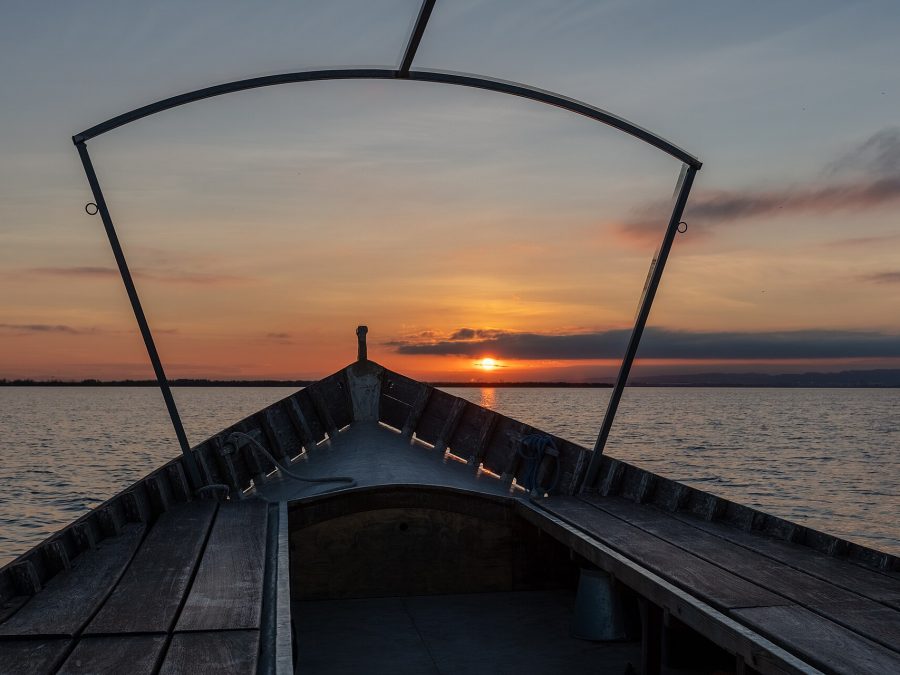
A lagoon village ringed by rice paddies, the cradle of paella valenciana, where traditional boats slip across the water as the sun goes down.
Take EMT bus 25; the paddies are flooded November to January.
A Valencia weekend: the 48-hour route
The route assumes Day 1 is a Saturday, because the Mercado Central closes on Sundays.
Day 1
Morning: Start at the Mercado Central, open Monday to Saturday from 7.30am to 3pm. Built between 1910 and 1928, it covers more than 8,000 square metres under iron domes, local tiles and stained glass, with more than 250 stalls of fresh produce. Go early, when the fish counters are fullest. Then cross the street to the Lonja de la Seda, the 15th-century silk exchange and a UNESCO World Heritage Site since 1996. In the Sala de Columnas, eight twisted stone columns spiral up into the vaults. The Consulado del Mar pavilion has a gilded and painted 15th-century ceiling, and the Patio de los Naranjos is a calm courtyard of orange trees. The Lonja opens from 10am to 7pm, Monday to Saturday.
Afternoon: Walk five minutes to the Cathedral. Visits run from 10.30am to 6.30pm on weekdays and to 5.30pm on Saturdays, with last entry an hour before closing. An audio guide leads you round, including the chapel of the Holy Chalice. Next door, climb the 207 steps of the Miguelete, the octagonal bell tower, which opens daily from 10am to 6.45pm and needs its own ticket. From the top you see the blue-tiled domes of the old town and, on a clear day, the sea. Afterwards, wander the lanes of El Carmen to the north.
Tip: On a Thursday, the Water Tribunal, one of Europe’s oldest courts, still sits outside the cathedral’s Apostles’ Door to settle irrigation disputes.
Evening: Head south to Ruzafa, the city’s creative quarter, just beyond the Estació del Nord. Start at the Mercado de Ruzafa, with its colourful façade, then join the tardeo, the late-afternoon terrace hour that rolls on into the evening among galleries, craft-beer bars and small restaurants.
Day 2
Morning: Hire a bike and ride the Turia Gardens. The park stretches for more than nine kilometres, crossed by 18 bridges, from the Gothic Puente de la Trinidad to Calatrava’s modern Assut d’Or. Families should stop at Gulliver, a giant figure that children climb and slide down. Ride east to the City of Arts and Sciences, which stretches for almost two kilometres along the old riverbed. In low season, Visit València gives the Science Museum’s hours as 10am to 7pm and the Oceanogràfic’s as 10am to 6pm. Even without a ticket, you can walk the Umbracle, a garden of Mediterranean plants and sculptures covering more than 17,000 square metres.
Afternoon: Go to the coast. El Cabanyal is the old fishermen’s quarter, where many houses wear coloured ceramic tiles. Stop for tapas at Casa Montaña, a family bodega founded in 1836, or walk on to Malvarrosa beach for a long lunch of paella by the sea. Then stroll the seafront promenade.
Evening: End at the Albufera. EMT bus 25 runs about 20 km south to El Palmar, a village of canals and rice fields in the Albufera Natural Park. It is often called the cradle of paella valenciana. Take a boat across the lagoon as the sun sets, when the light on the water is at its best. Between November and January, the flooded paddies mirror the sky.
Tip: Visit València advises against cycling to El Palmar, as the bike lane stops at La Devesa and the road is narrow. Take the bus.
Valencia in winter
AEMET’s normals for the city of Valencia (1981–2010) give average highs of 17.0°C in December, 16.4°C in January and 17.1°C in February, with nights of around 7–8°C. November is milder still, with highs near 20°C. Rain falls on only four or five days a month, and the sun shines for 155 to 171 hours a month through the winter. In plain words, bring a warm layer for the evenings and expect lunch outside on most days. The sea is too cool for most swimmers, but the beach is lovely for a walk.
Christmas: In 2025 the city’s lights ran from 21 November to 6 January, with a 25-metre fir in the Plaza del Ayuntamiento and short pyromusical shows there at 6.30pm on Saturdays. The 2026 dates had not been announced when we checked.
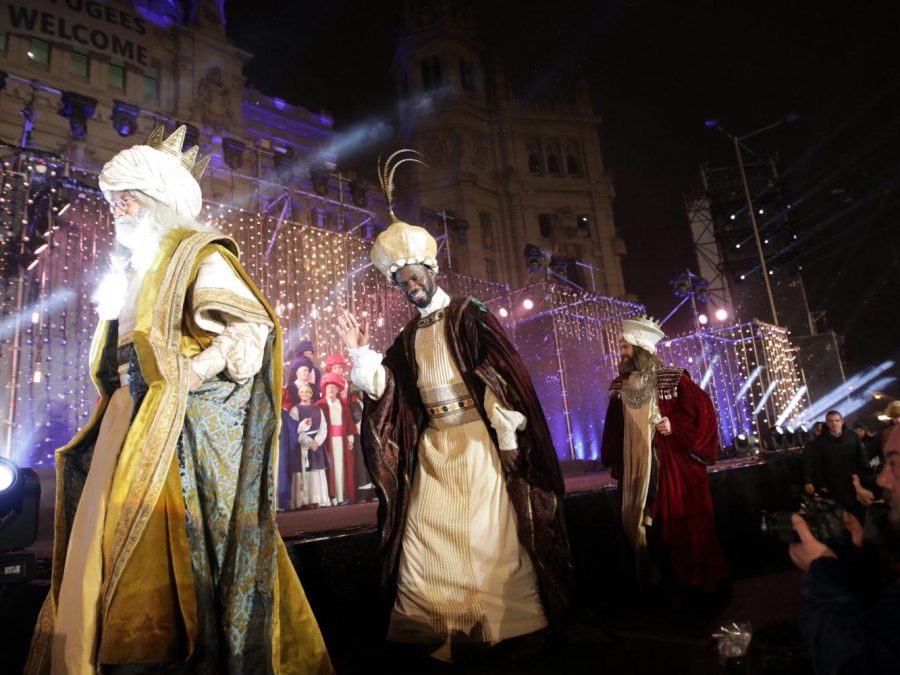
Three Kings, 5 January: The Kings arrive by boat at the Plaza de la Sal in Marina Norte at about 4.30pm on Tuesday 5 January 2027, and the parade sets off at 5.30pm. It passes Porta de la Mar and Plaza de la Reina and ends in the Plaza del Ayuntamiento, in front of a life-size nativity scene below the town hall balcony. See our guide to Three Kings parades in Spain.
Fallas build-up: Las Fallas, the March festival of giant satirical figures, firecrackers and bonfires, climaxes on 19 March, the feast of Saint Joseph. For 2027, the city has confirmed that festival tents go up from 11 March and street orchestras may play on 13 and 15 to 18 March. The full 2027 programme, including the daily mascletà dates, had not been published when we checked.
Where to stay
- Ciutat Vella: The old town, including El Carmen, around the Cathedral, the Lonja and the Mercado Central. Best for first-timers who want to walk everywhere.
- Ruzafa: South of the centre, near Estació del Nord. Best for food, terraces and nightlife, though weekend nights can be lively.
- L’Eixample around Colón: Elegant streets and shops between the old town and Ruzafa, on metro lines 3 and 5 from the airport. Best for a calm, central base.
- El Cabanyal and Malvarrosa: By the beach, on the city’s east side. Best for sea views, morning runs and a slower pace.
What to eat and drink
- Paella valenciana: The original is rice with chicken, rabbit, green beans and garrofó, a large flat white bean, cooked in a wide pan. Seafood comes in other rice dishes.
- All i pebre: Eel stewed with garlic, paprika, chilli and potatoes, a speciality of El Palmar. Fresh eel is sold at the fishermen’s market from October to April.
- Esgarraet: Strips of roasted red pepper and salt cod dressed with garlic and olive oil, a classic starter.
- Horchata and fartons: Horchata is a cool, milky drink made from tiger nuts grown around Alboraya, under a Valencia designation of origin. You dunk fartons, long glazed buns, into the glass.
- Agua de Valencia: A cocktail of cava and fresh orange juice, the city’s party drink.
Where to go:
- Mercado Central (Ciutat Vella): Stalls of rice, saffron, citrus and Valencian tomatoes, best before noon. Closed on Sundays and holidays.
- Casa Montaña (El Cabanyal): A family bodega founded in 1836, pouring wine with its tapas.
- Casa Carmela (Malvarrosa): Founded in 1922 and known for paella cooked over orange-wood fires. It serves lunch only, is closed on Sundays, and asks you to order paella valenciana in advance, as it makes a limited number each day.
- Horchatería Daniel (Alboraya): A family horchatería on the Avenida de la Orxata, a short metro ride from the centre, making horchata and fartons since 1949.
For more Spanish food trips, see our Seville weekend guide and the Málaga weekend guide.
Getting around
Valencia is flat, so walking and cycling cover most of the weekend.
From the airport: Valencia Airport lies 8 km from the city. Metro lines 3 and 5 run to the centre in about 20 minutes, every 15 to 20 minutes. Line 5 continues to Marítim, near the port and the beach. Metrobus 150 also links the airport with the Mercat Central stop in about 45 minutes. The Valencia Tourist Card covers the airport metro.
In the city: Ciutat Vella and Ruzafa are best on foot. The Turia Gardens have long, flat cycle paths away from traffic. For the City of Arts and Sciences, take metro line 10 or one of several EMT buses, including the 19, 40 and 95.
To El Palmar: Take EMT bus 25, which is covered by the Valencia Tourist Card.
Good to know
- Sunday plans: The Mercado Central is closed, Cathedral visits start only at 2pm, and the Lonja opens from 10am to 2pm, with free entry on Sundays and holidays.
- Cathedral closures: There are no tourist visits on 1 and 6 January, 19 March, Palm Sunday, Good Friday, 9 October, 8 December and 25 December.
- Low-season hours: The City of Arts and Sciences runs shorter winter hours, so check the venue’s site for your exact dates.
- Rice fields: The Albufera paddies are flooded and at their best from November to January, but dry in March and April.
- Make it longer: For more ideas, see things to do in Spain, and for live events, this weekend’s picks.
FAQ
Is a weekend in Valencia enough?
Yes. Two days covers the old town, the Mercado Central, the Turia Gardens, the City of Arts and Sciences and the beach, with a sunset trip to the Albufera. Add a third day for the Oceanogràfic or a slow day on the coast.
Is Valencia warm in winter?
Mild rather than hot. AEMET’s averages give highs of around 16–17°C from December to February and lows of 7–8°C, with rain on only a few days each month.
How do you get from Valencia Airport to the city centre?
Take metro line 3 or 5, which reaches the centre in about 20 minutes. Metrobus 150 and taxis are the alternatives.
When is the Lonja de la Seda free?
Entry is free on Sundays and public holidays, when it opens from 10am to 2pm. From Monday to Saturday it opens from 10am to 7pm.
When are the Fallas in 2027?
The festival builds through March and ends with the burning of the fallas on the night of 19 March. The city has confirmed tents from 11 March 2027, but the full programme had not been published when we checked.