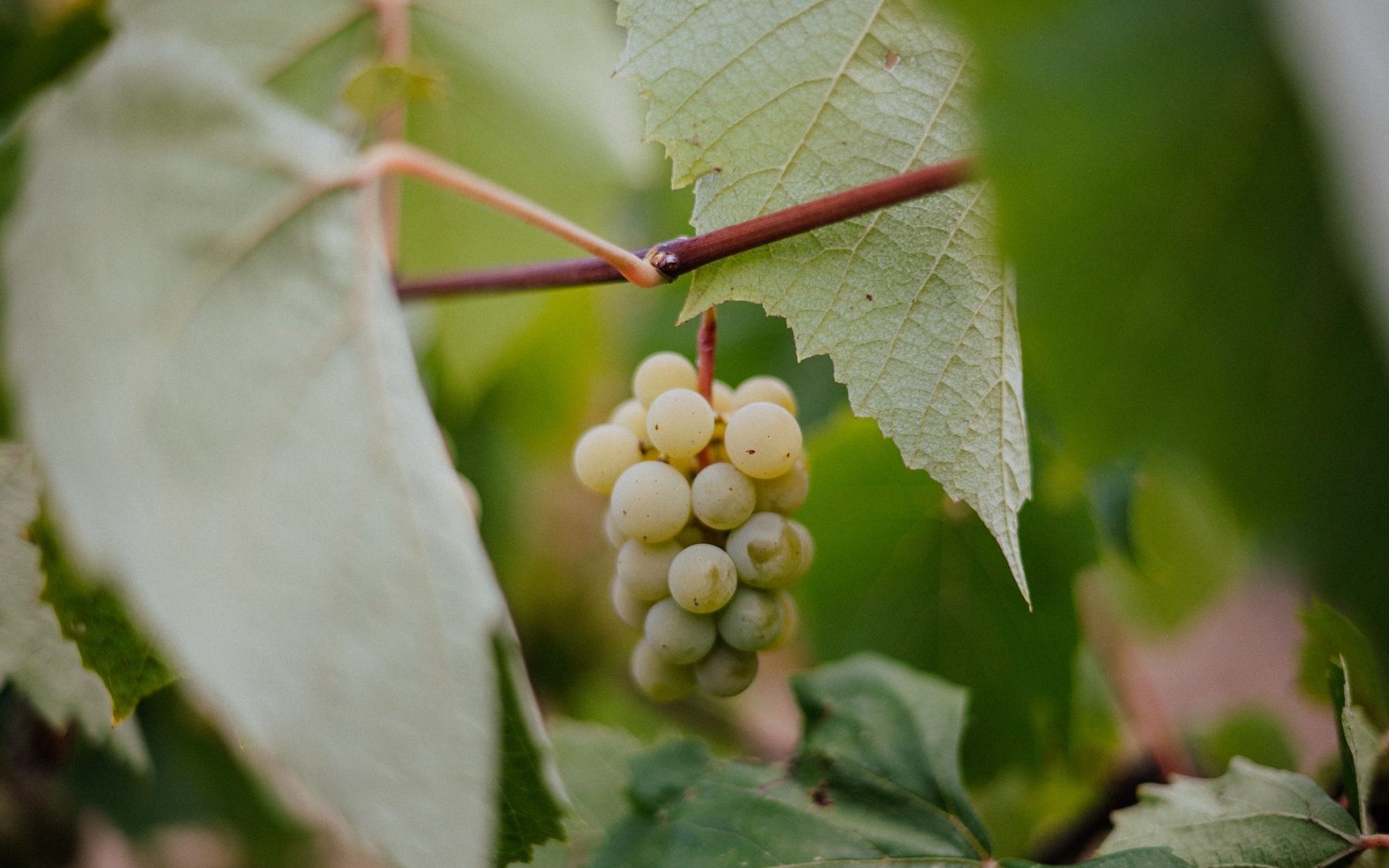
Chardonnay is the world’s most famous white grape, and its range is enormous. It can be lean and mineral or rich and buttery, and it’s one of the three main grapes of Champagne. It started in Burgundy, which is still the best place to understand it, and the best place to spend a wine weekend tasting it.
What it tastes like
Chardonnay itself is fairly neutral, which is its secret. It takes on the character of its place and of the winemaker’s choices.
- Cool climate, no oak: green apple, lemon, pear and a flinty, chalky edge. Think Chablis.
- Moderate climate, some oak: peach, melon, hazelnut, toast and a creamy texture. Think Meursault or Puligny-Montrachet.
- Warm climate, new oak: tropical fruit, vanilla and butter. Think the big Californian styles of the 1990s.
That buttery note comes from a natural process in which sharp malic acid turns into softer lactic acid. Many modern producers dial it back for a fresher style.
Where it grows in Europe
Burgundy, France
Burgundy’s white wines are almost all Chardonnay, and each part of the region shows a different side.
- Chablis: in the north, near Auxerre, cool and chalky. The wines are crisp, mineral and usually unoaked.
- Côte de Beaune: the heart of great white Burgundy. Meursault, Puligny-Montrachet and Chassagne-Montrachet make rich, complex wines that can age for many years.
- Mâconnais: in the south, softer and fruitier. Pouilly-Fuissé and Mâcon-Villages are friendly, approachable wines.
The vineyard plots of the Côte d’Or, the Climats of Burgundy, were added to the UNESCO World Heritage List in 2015, along with the historic centre of Dijon and the town of Beaune.
Champagne, France
Chardonnay brings freshness, finesse and citrus to Champagne. The Côte des Blancs, south of Épernay, is planted almost entirely with it. Champagne labelled blanc de blancs is made only from white grapes, which in practice usually means Chardonnay.
Elsewhere in Europe
Italy grows it in Alto Adige, Friuli and Franciacorta, where it goes into sparkling wine. Austria calls it Morillon in Styria. The Jura in eastern France makes distinctive, nutty versions. England’s sparkling wines also rely on it.
How to choose a bottle
Burgundy labels name the place, not the grape. Bourgogne Blanc is the everyday entry point. Mâcon-Villages and Saint-Véran are fresh, fruity and easy to like. Petit Chablis and Chablis are crisp and mineral, and Chablis Premier Cru and Grand Cru add depth. For the richest style, look to the Côte de Beaune villages, where Premier Cru and Grand Cru wines can age for well over a decade.
What to eat with it
- Oysters and Chablis: a famous match.
- Roast chicken: with a white from the Côte de Beaune.
- Lobster or scallops in butter: for richer, oak-aged styles.
- Gougères: the cheesy choux pastry puffs served across Burgundy.
Tip: Don’t serve oaked Chardonnay too cold. Straight from the fridge mutes its texture. Let it warm for ten minutes.
Where to taste it on a weekend
Burgundy gives you two good options.
Beaune and the Côte de Beaune. Fly to Lyon or take the train from Paris to Dijon, then go on to Beaune. Spend a day in Beaune itself, then drive or cycle south through Meursault, Puligny-Montrachet and Chassagne-Montrachet. The Cité des Climats et vins de Bourgogne has a site in Beaune that’s a good introduction.
Chablis. Closer to Paris and easy to combine with a drive south. The town is small and walkable, with tasting rooms along its main streets, and the Cité des Climats has a site here too. Climb the slopes above the River Serein for views over the Grand Cru vineyards.
Tip: Many Burgundy domaines are tiny and family-run. Book tastings ahead, and don’t be surprised if some are closed at weekends.
You can also taste Chardonnay in Champagne, based in Reims or Épernay. For more inspiration, browse the best wine regions in Europe. Pair your trip with things to do in Paris or where to eat in Paris, and read Bordeaux: the wine and the region for a contrast.
FAQ
Is Chablis a Chardonnay?
Yes. Chablis is 100% Chardonnay from northern Burgundy, usually made with little or no new oak.
Why does some Chardonnay taste buttery?
It’s usually malolactic conversion, a natural process that softens acidity, often combined with oak ageing.
What is white Burgundy?
Almost always Chardonnay. Labels name the place, such as Meursault or Mâcon, rather than the grape.
Is Chardonnay used in Champagne?
Yes. It’s one of the three main grapes, and blanc de blancs Champagne is made only from white grapes.