Milan rewards those who look beyond its business-city reputation. In two days you can walk among the marble spires of the Duomo, see Leonardo’s Last Supper and finish each evening with an aperitivo by the canals. It suits art and design lovers, food fans and anyone who likes a city that moves at a stylish pace.
Why go
Milan is Italy’s most modern city, but its historic heart is remarkably compact. The Gothic Duomo, the glass-roofed Galleria, La Scala and the Brera district are all within a short walk of each other.
It is also home to one of the world’s most famous paintings. Leonardo’s Last Supper still covers a wall of the refectory beside Santa Maria delle Grazie, and seeing it takes planning.
Then there’s the aperitivo. Milan made the early-evening drink with snacks into an art form. Add risotto alla milanese, cotoletta and panettone, and you have a serious food weekend.
Milan
Don’t miss
The places that make the trip, and why each one deserves your time.

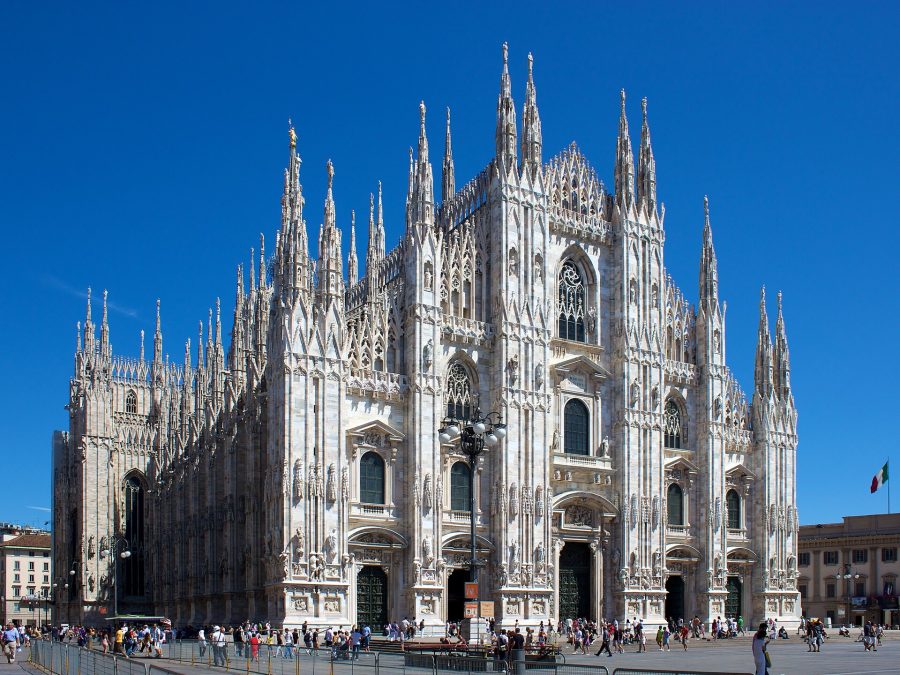
Jiuguang Wang / Wikimedia Commons, CC BY-SA 3.0 Duomo rooftops
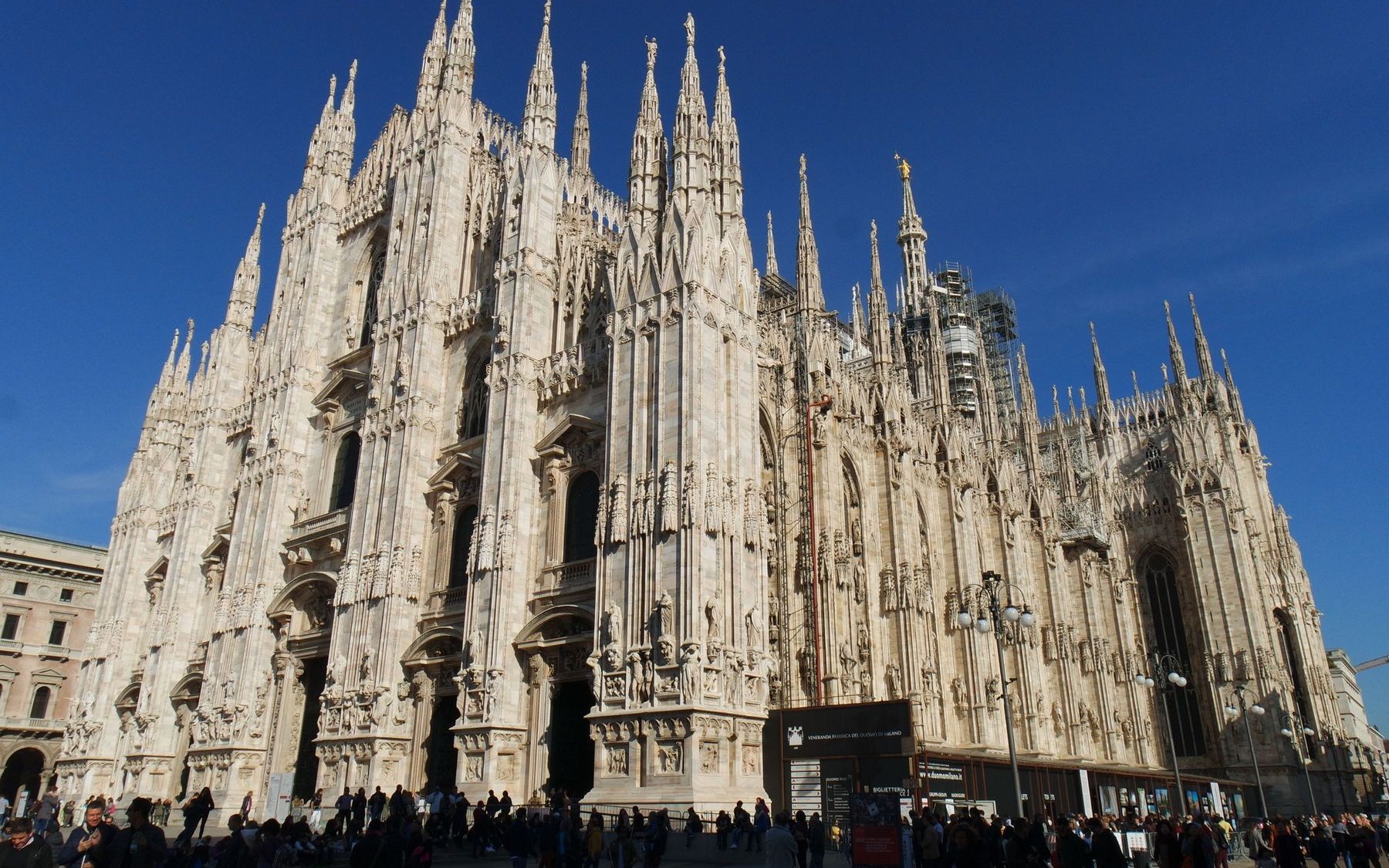
Walk among the marble spires and pinnacles of the Gothic cathedral, with views across the city and, on clear days, to the Alps, then explore the vast interior.
Climb late afternoon, when the marble glows in the sun.
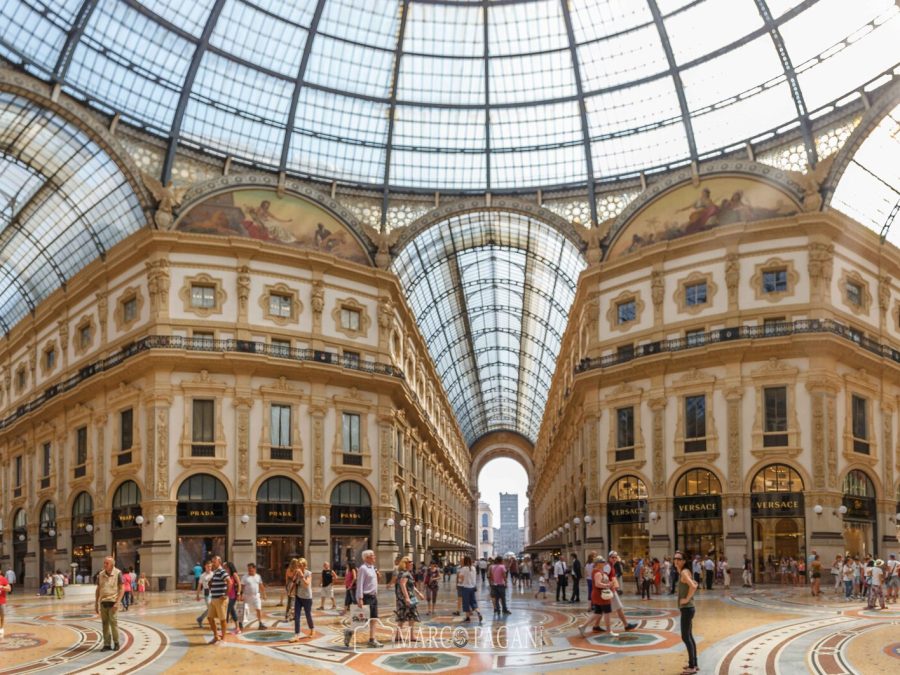
Marco Pagani / Wikimedia Commons, CC BY 3.0 Galleria Vittorio Emanuele II
The glass-roofed 19th-century arcade beside the Duomo, where Camparino at the entrance has poured Campari Soda for generations.
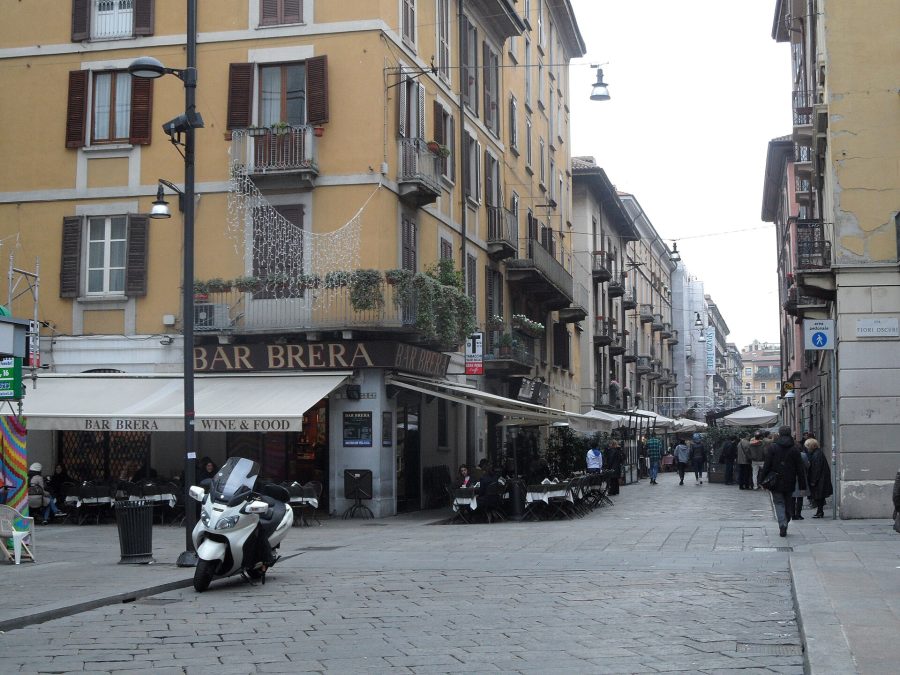
Gianluca Cogoli / Wikimedia Commons, CC BY 3.0 Brera
Narrow streets full of galleries, boutiques, cafés and wine bars, with the Pinacoteca di Brera holding a major collection of Italian painting, including Mantegna and Raphael.
Stay for aperitivo; smarter and more intimate than the Navigli.
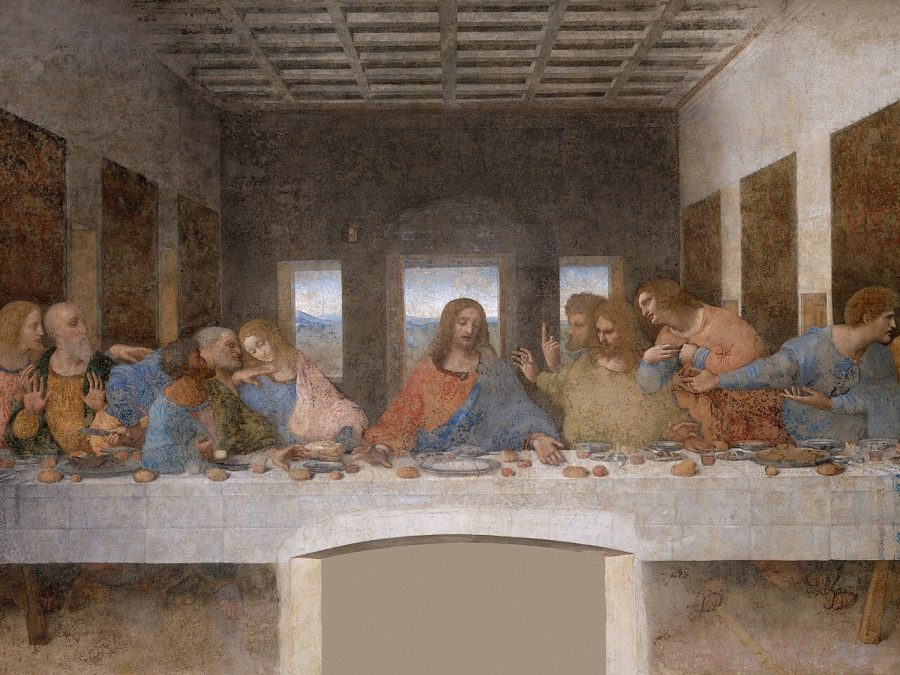
Leonardo da Vinci / Wikimedia Commons, Public domain The Last Supper
Leonardo's masterpiece still covers a wall of the refectory beside Santa Maria delle Grazie. Visits are short and controlled, so take your time once inside.
Book months ahead; extra tickets release Wednesdays at 12:00.
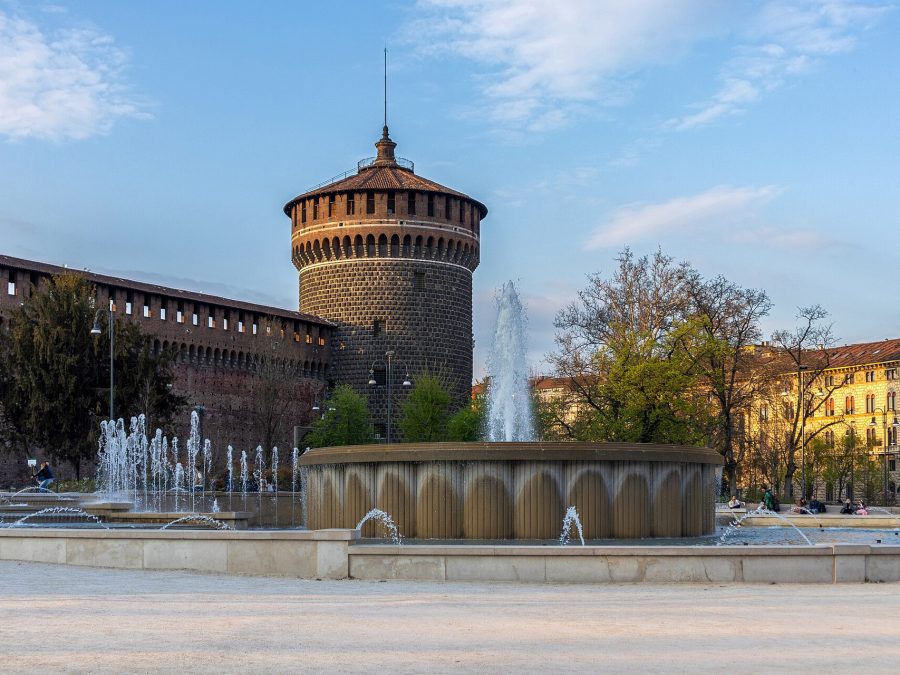
Terragio67 / Wikimedia Commons, CC BY-SA 4.0 Castello Sforzesco
The great brick castle of the Sforza dukes, whose museums include Michelangelo's last sculpture, the Rondanini Pietà, with Sempione Park stretching behind.
Ale Desiderio / Wikimedia Commons, CC BY 2.0 Bosco Verticale
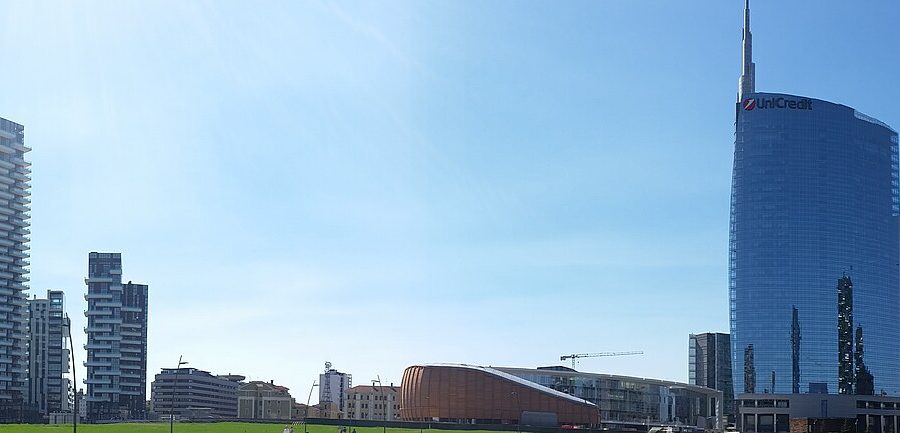
Two residential towers covered in trees and plants rise among the skyscrapers of Porta Nuova, modern Milan's answer to its Gothic centre.
Flavmi / Wikimedia Commons, CC BY-SA 4.0 Navigli
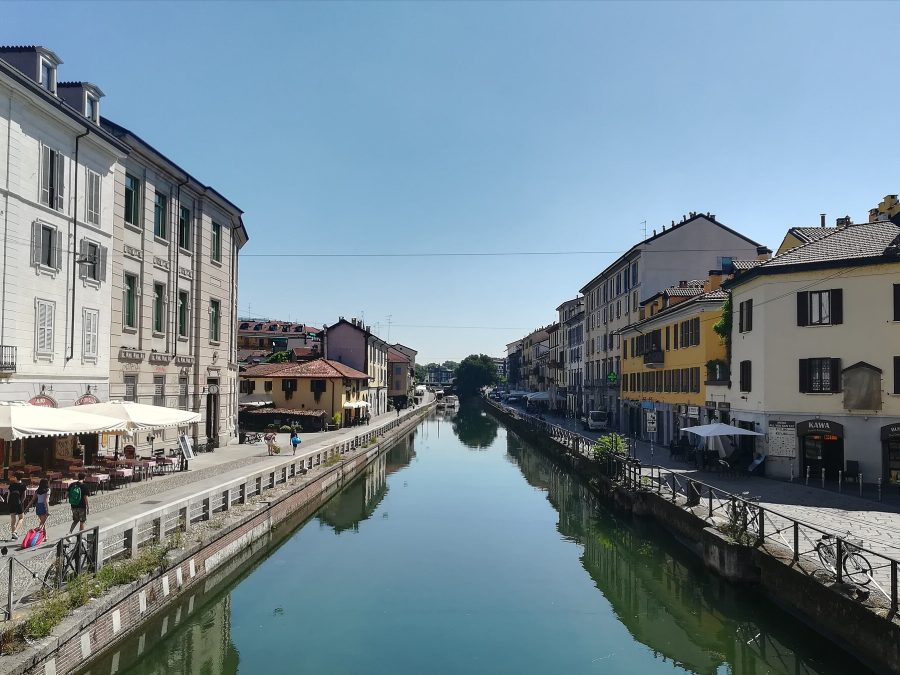
Canals that once carried marble for the Duomo, now lined with bars at aperitivo time. Walk the towpath at sunset and look into the Vicolo dei Lavandai.
Go at aperitivo time and stay for dinner.
Blackcat / Wikimedia Commons, CC BY-SA 3.0 it Basilica of San Lorenzo
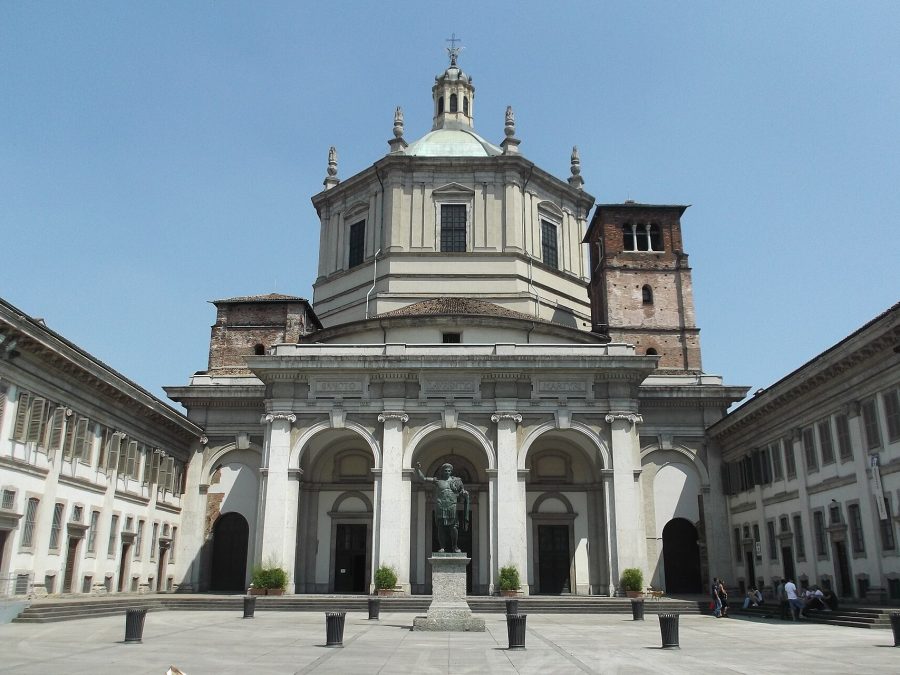
A row of Roman columns stands in front of the basilica, and the steps here are a favourite evening meeting point for the Milanese.
The 48-hour route
Day 1
Morning: Start at the Duomo. Buy tickets on the cathedral’s official ticket site, choosing between the cathedral and the rooftop terraces, which you can reach by stairs or lift. Walk among the spires and pinnacles for views across the city and, on clear days, to the Alps. Then explore the vast interior.
Afternoon: Walk through the Galleria Vittorio Emanuele II, the 19th-century arcade beside the Duomo. Continue to Piazza della Scala to see the famous opera house, then walk north into Brera. Its narrow streets are full of galleries, boutiques and cafés. The Pinacoteca di Brera holds a major collection of Italian painting, including Mantegna and Raphael.
Evening: Have an aperitivo in Brera or back in the Galleria. Camparino in Galleria has served Campari at the arcade’s entrance for generations. Then dine on Milanese classics.
Tip: Climb to the Duomo terraces late in the afternoon. The marble glows in the low sun, and the city lights come on below you.
Day 2
Morning: See the Last Supper at Santa Maria delle Grazie. Every visit needs a reservation for a fixed time. Collect your ticket at the office at least 30 minutes beforehand, bringing ID, and be at the museum entrance 15 minutes before your slot. Visits are short and controlled, so take your time once inside. Afterwards, visit the church itself.
Afternoon: Walk to Castello Sforzesco, the great brick castle of the Sforza dukes. Its museums include Michelangelo’s last sculpture, the Rondanini Pietà. Behind the castle, Sempione Park leads to the Arco della Pace. If you have time, take the metro to Porta Nuova for modern Milan’s skyscrapers and the Bosco Verticale towers.
Evening: Spend the evening on the Navigli, the canals in the south of the city. They were once part of a network that carried marble for the Duomo into the centre. Today the banks of the Naviglio Grande fill with bars and restaurants at aperitivo time. Walk the towpath at sunset, look into the Vicolo dei Lavandai, an old washing place lined with stone troughs, then stay for dinner. On the way back, the Basilica of Sant’Eustorgio and the Roman columns of San Lorenzo are both close by, and the steps in front of San Lorenzo are a favourite evening meeting point.
Tip: Last Supper tickets sell out fast. Tickets are released months ahead in seasonal blocks, and extra tickets go online every Wednesday at 12:00 for the following week. Set a reminder.
If you have more time
Milan makes a good base for day trips. Lake Como is an easy train ride north, and Bergamo’s walled upper town is close too. In the city, the Cimitero Monumentale is an open-air gallery of sculpture and family tombs, and a quiet contrast to the shopping streets. If you’re here for design, walk the Quadrilatero della Moda, the fashion district bounded by Via Montenapoleone and Via della Spiga, for window-shopping in grand palazzi.
Where to stay
- Centro Storico (around the Duomo): Steps from the main sights and the best shopping. Best for first-timers.
- Brera: Charming streets, galleries and wine bars. Best for couples and art lovers.
- Navigli: Lively evenings by the canals, with a younger feel. Best for groups of friends and nightlife.
- Porta Nuova and Isola: Modern architecture, design hotels and good transport links. Best for design fans and short business-plus-leisure stays.
What to eat and drink
- Risotto alla milanese: Saffron risotto, golden and creamy, sometimes served with ossobuco.
- Cotoletta alla milanese: A bone-in veal cutlet, breaded and fried in butter.
- Ossobuco: Slow-braised veal shank, often topped with gremolata.
- Panettone: Milan’s famous sweet bread, best around Christmas but sold year-round in good pasticcerie.
- Negroni Sbagliato: The "mistaken" Negroni, made with sparkling wine instead of gin.
- Campari Soda: A short, bitter aperitivo drink with deep Milanese roots.
For classic Milanese cooking, Trattoria Masuelli San Marco has been run by the same family since 1921 and serves risotto and cotoletta. Ratanà, in a former railway building near Porta Nuova, gives the same classics a modern twist. Trippa in Porta Romana is a favourite for nose-to-tail Lombard cooking, so book well ahead. For drinks, Bar Basso is where the Negroni Sbagliato was born, and Camparino in Galleria is the classic place for a Campari Soda. On the Navigli, Mag Café is a cocktail bar on the Naviglio Grande.
Getting around
Milan’s metro is fast and easy. There are five lines: M1 (red), M2 (green), M3 (yellow), M4 (blue) and M5 (lilac). The centre is walkable, and trams cover many routes, including some charming historic ones.
From Linate airport, the M4 metro line runs into the centre via San Babila. From Malpensa, the Malpensa Express train runs to Milano Cadorna and Milano Centrale. High-speed trains link Milano Centrale with Turin, Venice, Florence and Rome.
Milan in December
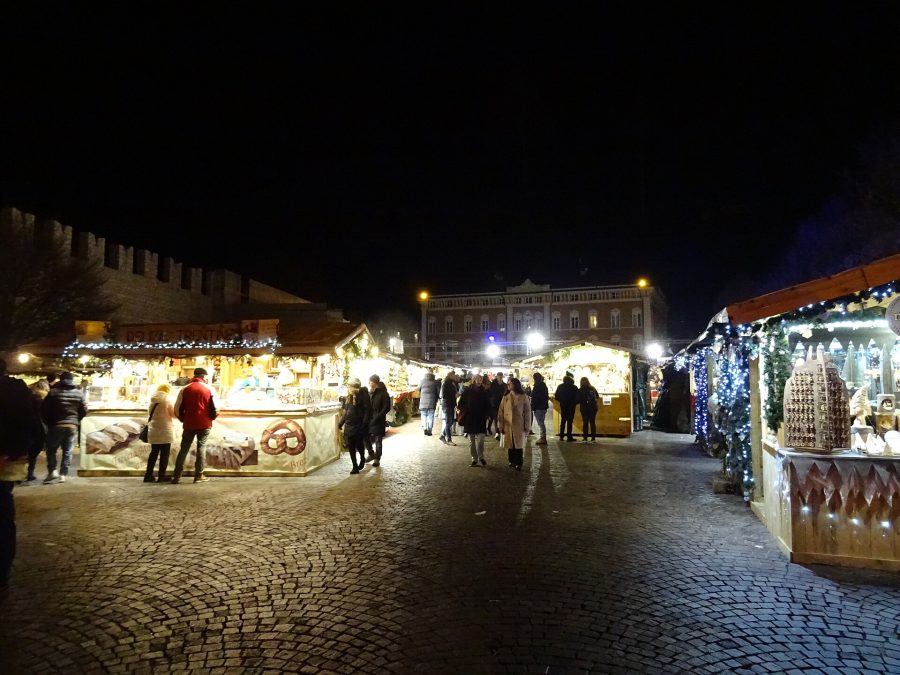
December brings lights to the shopping streets and two holidays back to back. On 7 December Milan celebrates Sant’Ambrogio, its patron saint, with a city holiday. The next day, 8 December, is the national Immacolata holiday. In 2026 they fall on a Monday and Tuesday, which makes a natural long weekend.
That Monday evening, 7 December 2026, La Scala opens its 2026/2027 season with Verdi’s Otello, conducted by music director Myung-Whun Chung and staged by Damiano Michieletto. Opening night is one of the grandest dates in the Italian cultural calendar, and it is sold out. Walk past the theatre in the early evening to catch the atmosphere in Piazza della Scala.
Oh Bej! Oh Bej!, the city’s traditional Sant’Ambrogio fair, fills the streets around Castello Sforzesco and the edge of Sempione Park in the days around 7 December. Expect roasted chestnuts, mulled wine, Lombard sweets, crafts and antiques. The 2026 dates had not been announced by mid-October; YesMilano, the city’s official tourism site, publishes them once confirmed.
In Piazza del Duomo, a tall Christmas tree goes up in front of the cathedral each year and is usually lit in early December. The Comune di Milano announces the 2026 tree and its lighting date nearer the time.
Arriving by rail is easier this winter too. Our news piece on the new Brussels–Milan night train has the details.
Good to know
- Book the Last Supper early: Reservations are mandatory, names can’t be changed on online bookings, and bulky bags aren’t allowed.
- Duomo tickets: Buy on the cathedral’s official site, choose stairs or lift for the terraces, and dress modestly for the interior.
- August: Many independent restaurants and shops close for part of August. Plan around it.
- La Scala: If you can’t get opera tickets, visit the theatre museum, which often has views into the auditorium.
- Look out for events: Design Week and Fashion Week fill hotels quickly. See this weekend for what’s on.
Tip: Order a drink at aperitivo time and many bars bring small snacks. Some offer a full buffet. It’s the Milanese way to start the evening.
FAQ
How do I get tickets for the Last Supper?
Book on the official site, which releases tickets months ahead in seasonal blocks. Extra tickets for the following week go online every Wednesday at 12:00. Reservations are required for every visit.
Is two days enough in Milan?
Two days covers the Duomo, the Last Supper, Brera, Castello Sforzesco and the Navigli at a comfortable pace. Add a day for Lake Como, which is an easy train ride away.
What’s on in Milan in December?
The Sant’Ambrogio holiday on 7 December brings the Oh Bej! Oh Bej! fair around Castello Sforzesco and the La Scala season opening, which in 2026 is Verdi’s Otello. The Immacolata holiday follows on 8 December, and the Christmas tree in Piazza del Duomo is usually lit in early December.
How do I get from Linate airport to central Milan?
Take the M4 metro line from the airport into the centre, changing at San Babila for the Duomo area.
Can you go on the roof of Milan Cathedral?
Yes. The rooftop terraces are open to visitors with a ticket, reached by stairs or lift.
What is the best area for aperitivo in Milan?
The Navigli is the liveliest, with bars along both canals. Brera is smarter and more intimate, and the Galleria offers classic drinks in a grand setting.
What is Milan famous for food-wise?
Risotto alla milanese, cotoletta, ossobuco and panettone, plus the city’s aperitivo culture.
Combine Milan with Venice or Florence by fast train, or see Piedmont’s wine country to the west. For more ideas, browse our best city breaks in Europe.