Florence is the Renaissance at walking pace. In two days you can climb Brunelleschi’s dome, stand in front of Botticelli and Michelangelo, and still find time for a long Tuscan lunch. It suits first-timers in Italy, art lovers and couples who want a beautiful city small enough to cover on foot.
Why go
Few places have this much great art in so small a space. The Duomo, the Uffizi, the Accademia and the Pitti Palace are all within a 15-minute walk of each other. The city itself, with its stone palazzi, bridges and hills, is a work of art too.
Florence is also one of Italy’s best food cities. Expect bistecca alla fiorentina, crusty schiacciata sandwiches, lampredotto from street stalls and Chianti poured by the glass.
The Vasari Corridor has reopened after years of restoration. The Medici’s private passage over the Ponte Vecchio is now open to booked visitors, which gives repeat visitors a new reason to return.
Florence
Don’t miss
The places that make the trip, and why each one deserves your time.

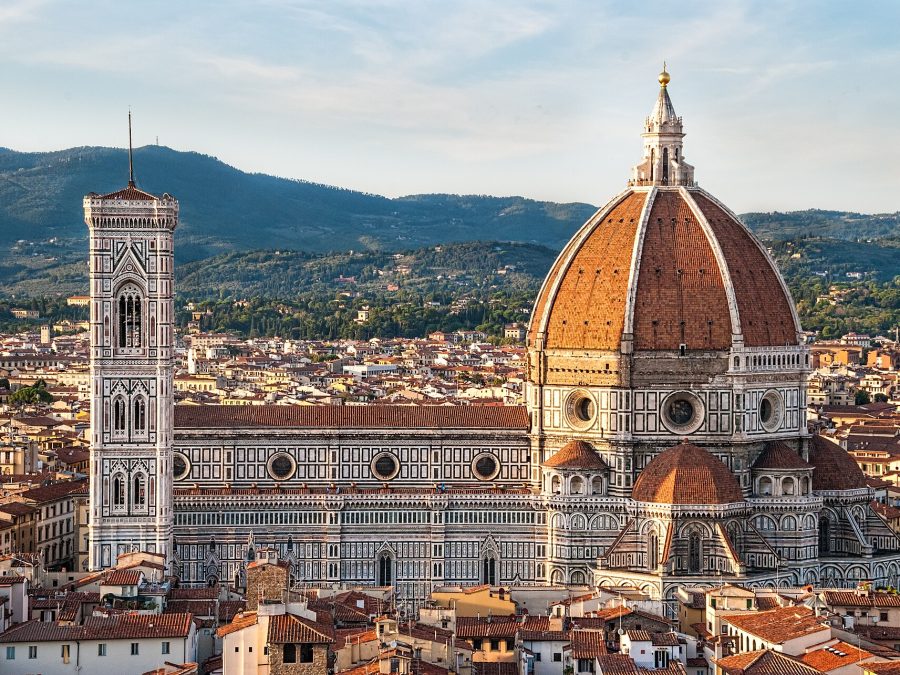
Gary Campbell-Hall / Wikimedia Commons, CC BY 2.0 Brunelleschi's Dome
Climb 463 steps inside Brunelleschi's great dome for a view over the terracotta roofs. The pass also covers the Baptistery, Giotto's bell tower and the cathedral museum.
Book the first slot; bring ID and leave big bags.
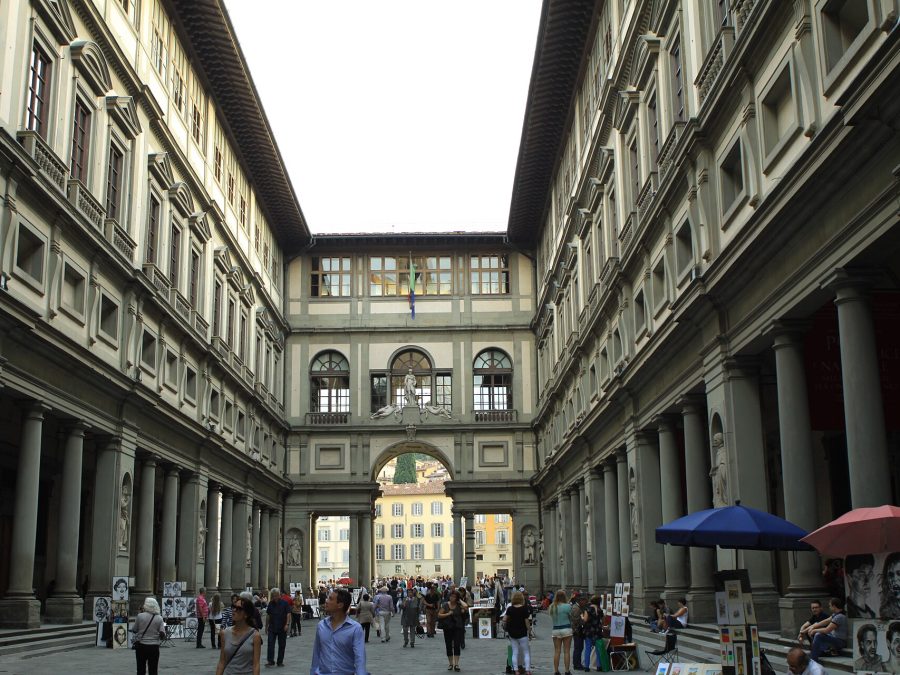
Arek N. / Wikimedia Commons, CC BY-SA 3.0 Uffizi
Botticelli's Birth of Venus and Primavera, Leonardo's Annunciation and Caravaggio's Medusa hang here, and the reopened Vasari Corridor runs from it over the Ponte Vecchio.
Plan gallery time around your Vasari Corridor slot.
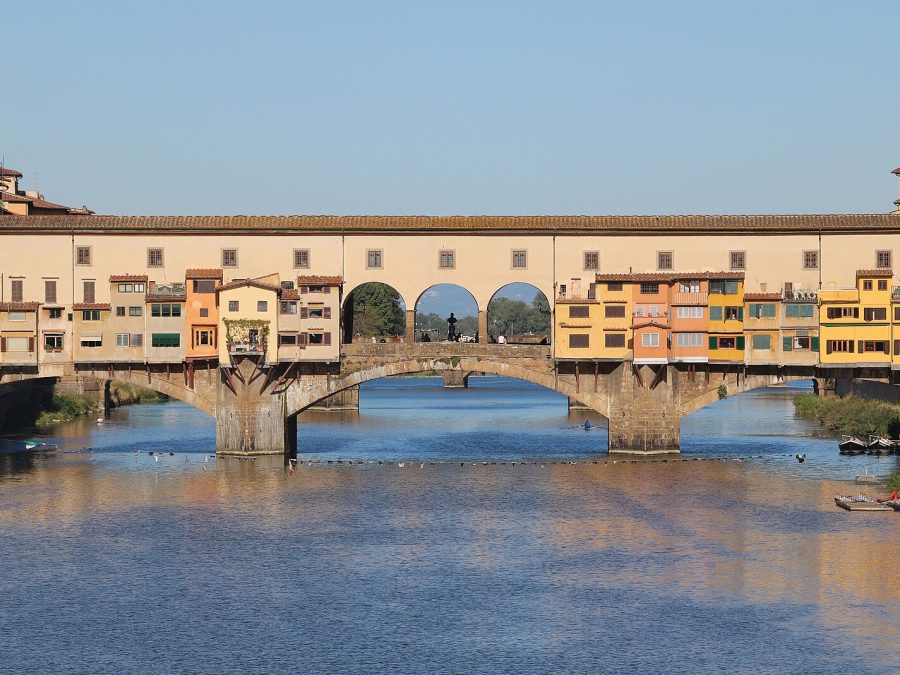
Ingo Mehling / Wikimedia Commons, CC BY-SA 4.0 Ponte Vecchio
The old bridge over the Arno, lined with jewellers' shops, is at its loveliest as the evening light softens on the river.
Cross in the early evening on the way to sunset.
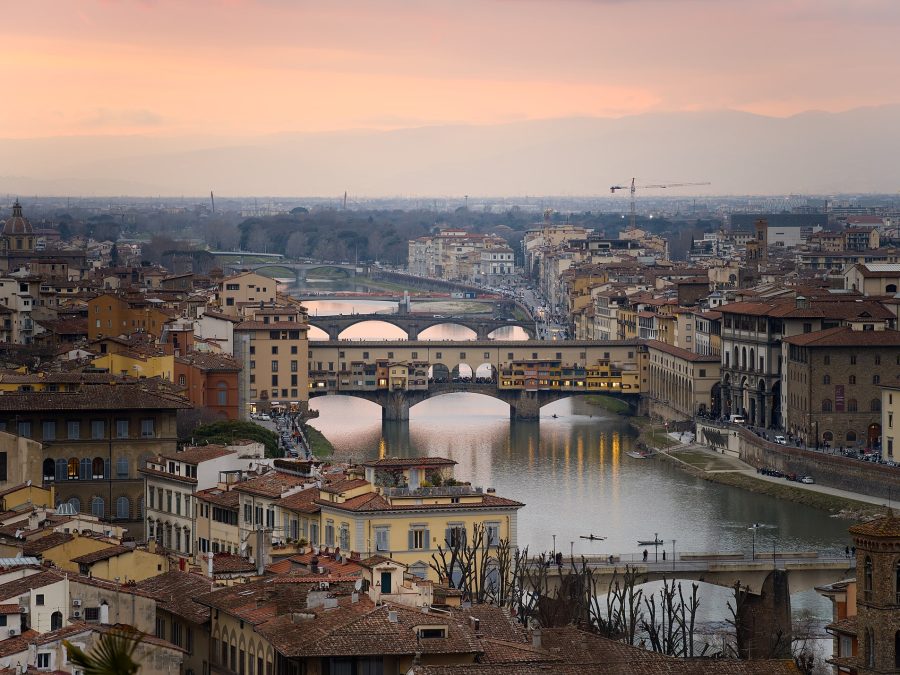
Daniel Lu (User:dllu) / Wikimedia Commons, CC BY-SA 4.0 Piazzale Michelangelo
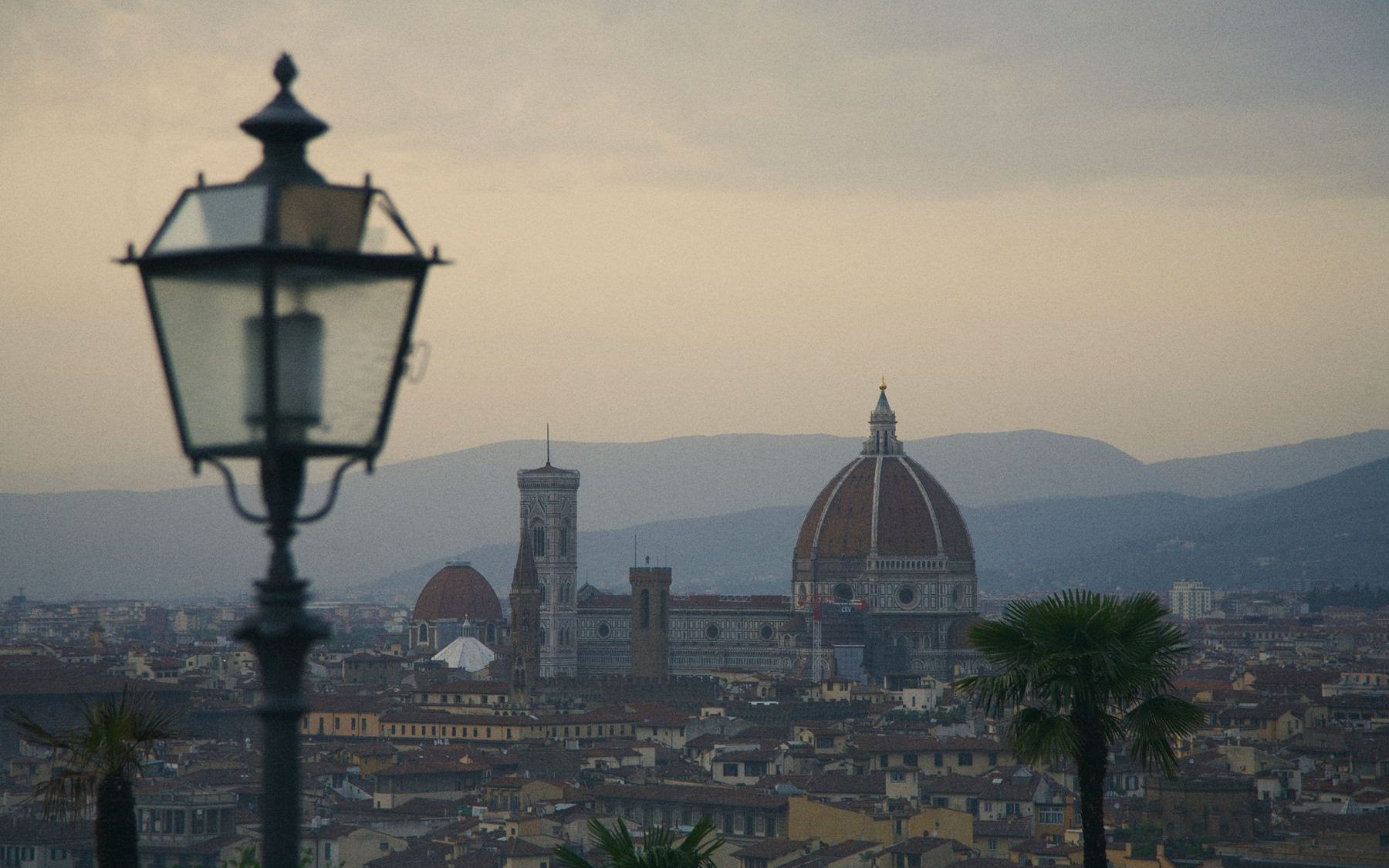
The classic sunset spot, with the whole city spread out below: domes, towers and the Arno glowing as the light goes.
Walk on to San Miniato al Monte for fewer crowds.
sailko / Wikimedia Commons, CC BY 2.5 Galleria dell'Accademia
Home to Michelangelo's David, which repays the early start. Afterwards, the Mercato Centrale in San Lorenzo is a short walk for lunch.
Book a timed ticket ahead; walk-up queues can be long.
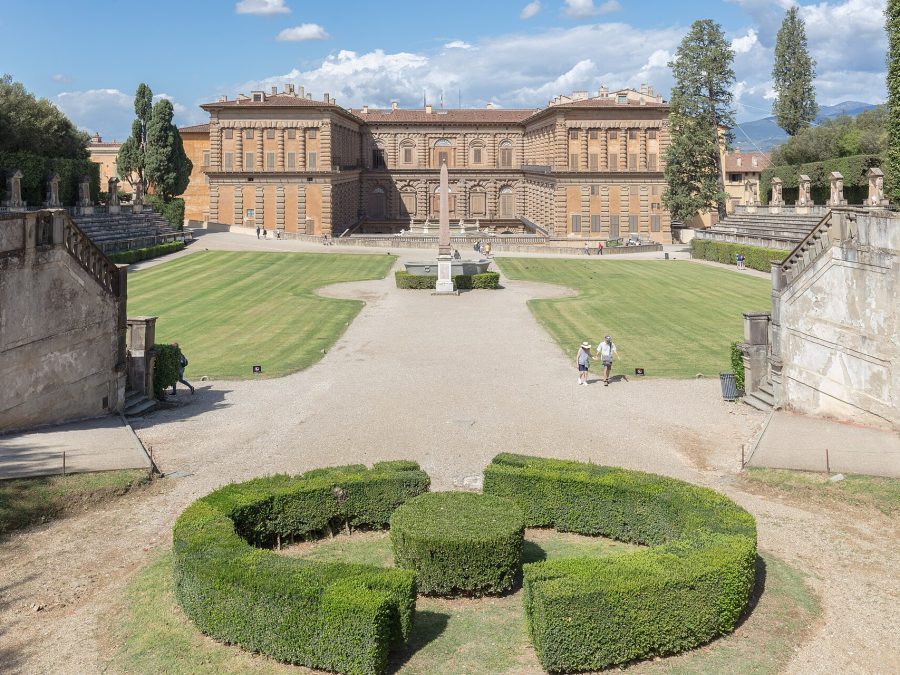
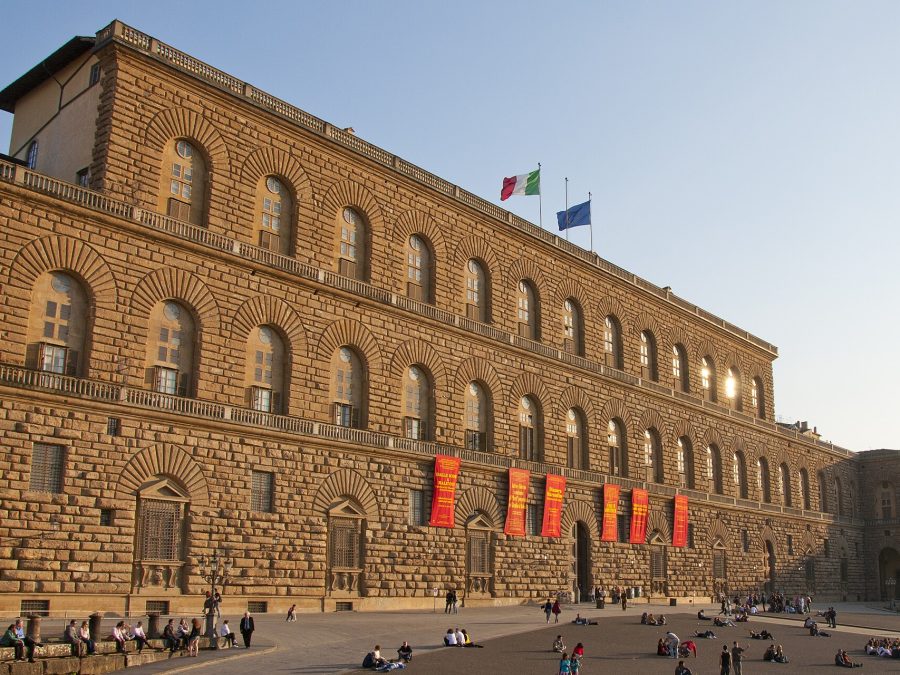
Diego Delso / Wikimedia Commons, CC BY-SA 4.0 Pitti Palace and Boboli Gardens
The Medici's grand residence holds a fine collection of paintings, and behind it the Boboli Gardens climb in terraces of fountains, grottoes and city views.
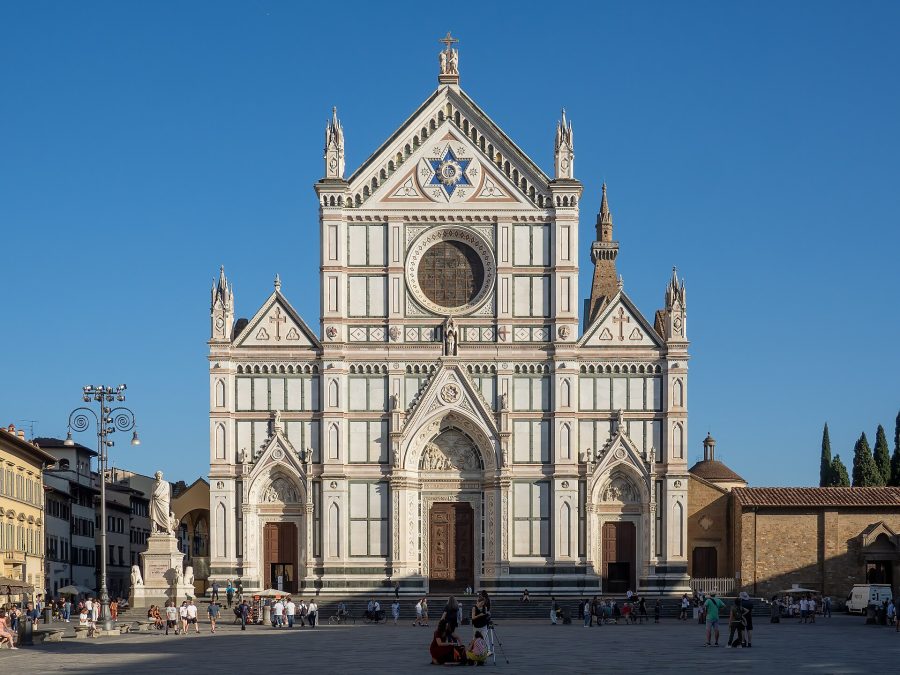
Rhododendrites / Wikimedia Commons, CC BY-SA 4.0 Santa Croce
The great Franciscan basilica holds the tombs of Michelangelo, Galileo and Machiavelli, and the piazza in front is one of the city's grandest.
Almaak / Wikimedia Commons, CC BY-SA 3.0 Oltrarno and Santo Spirito
Artisan workshops and wine bars across the river. On warm nights Santo Spirito's steps fill with students and locals, and the bars spill out onto the cobbles.
Come for aperitivo, then stay for Tuscan classics.
The 48-hour route
Day 1
Morning: Start at Piazza del Duomo. Climbing Brunelleschi’s dome requires the Brunelleschi Pass, which is the only ticket that includes the dome. You must book a time slot, which can’t be changed once issued, and arrive on time. Names are checked at the entrance, so carry ID. It’s 463 steps with no lift, and backpacks and medium or large bags must go into the luggage store on the piazza first. Enter through the Porta della Mandorla on the north side of the cathedral. The pass is valid for three calendar days and also covers the Baptistery, Giotto’s bell tower, the crypt of Santa Reparata and the cathedral museum. The cathedral itself is free to enter, with no ticket, but it closes on Sundays.
Afternoon: Walk down Via dei Calzaiuoli to Piazza della Signoria and the Palazzo Vecchio, the fortress-like town hall. Then head into the Uffizi (open Tuesday to Sunday), booked in advance. Botticelli’s Birth of Venus and Primavera, Leonardo’s Annunciation and Caravaggio’s Medusa are the headline works. If you’ve booked the Vasari Corridor, you’ll enter the Uffizi about two hours before your corridor slot.
Evening: Cross the Ponte Vecchio, lined with jewellers’ shops, as the light softens. Walk up to Piazzale Michelangelo for sunset over the domes and towers. Then come back down to the Oltrarno for dinner.
Tip: Book the first dome slot of the day. The stairwells are cooler and quieter, and the view over the terracotta roofs is clearest in the morning.
Day 2
Morning: See Michelangelo’s David at the Galleria dell’Accademia. Book a timed ticket ahead, as walk-up queues can be long. Afterwards, walk to the Mercato Centrale in San Lorenzo. The ground floor is a working food market; the upper floor is a food hall.
Afternoon: Cross the river to the Pitti Palace, the Medici’s grand residence, and its paintings. Then explore the Boboli Gardens behind it, terraced with fountains, grottoes and city views. If you didn’t do the Vasari Corridor yesterday, it ends here, at the Boboli side.
Evening: Before dinner, cross back over the river to Santa Croce. The great Franciscan basilica holds the tombs of Michelangelo, Galileo and Machiavelli, and the piazza in front is one of the city’s grandest. Then return to Santo Spirito, the Oltrarno’s liveliest square, for an aperitivo and a dinner of Tuscan classics. The square’s steps fill with students and locals on warm nights, and the bars spill out onto the cobbles.
Florence weekend in winter 2026–27: tickets and rules
Winter is the calmest time for the galleries, but closing days bunch up around Christmas and New Year. This is what the official sites say for November 2026 to spring 2027.
| Sight | How entry works | Free entry | Closed |
|---|---|---|---|
| Cathedral (Santa Maria del Fiore) | No ticket or booking | Always | Sundays and religious celebrations |
| Brunelleschi’s dome | Brunelleschi Pass with a mandatory, named time slot | No | 16–20 Nov 2026, 25 Dec, 1 Jan |
| Giotto’s bell tower | Slot mandatory with the Giotto Pass; guaranteed entry with the Brunelleschi Pass | No | 9–13 Nov 2026, 25 Dec, 1 Jan |
| Uffizi | Named tickets; Vasari Corridor by reservation only | First Sunday of the month (state museums) | Mondays, 25 Dec, 1 Jan |
Duomo complex rules
There are three passes. The Brunelleschi Pass is the only one with the dome; the Giotto Pass covers the bell tower, Baptistery, museum and crypt; the Ghiberti Pass covers the Baptistery, museum and crypt. Each runs for three calendar days from the first visit, with one entry per monument, and the slots must be booked on that first day. Slots can’t be changed or cancelled. Arrive within five minutes of your time, and show the QR code on your phone at the turnstile. In the cathedral, Baptistery and crypt, cover shoulders and knees. Flash, tripods and selfie sticks are not allowed anywhere.
Watch the monthly quirks: the cathedral museum closes on the first Tuesday of each month, and the Baptistery closes at 1:30pm on the first Sunday. The whole complex closes on 25 December and 1 January. During restoration on the bell tower, the top terrace stays open but the view may be partly screened.
Uffizi, Pitti and the Accademia
The Uffizi opens Tuesday to Sunday, 8:15am to 6:30pm; the ticket office closes at 5:30pm. It closes on Mondays, 25 December and 1 January. Tickets are named, and the Vasari Corridor can be visited only with an advance booking. Restoration and rearrangement works mean some rooms are temporarily closed and some works are off display, and at the Pitti Palace the Room of the Iliad and the Treasury of the Grand Dukes are among the spaces closed for now. Check the notices page before you go. Over the holidays, the Uffizi opened as normal on 26 December last year, and on New Year’s Day only the Boboli Gardens opened.
The first Sunday of the month is free at state museums, including the Uffizi galleries. This winter that means 6 December 2026, then 3 January, 7 February and 7 March 2027. Expect long queues.
For the David, book a timed ticket for the Galleria dell’Accademia through its official channels and check its holiday hours before you travel.
Christmas in Florence
The Christmas market in Piazza Santa Croce had no officially published 2026 dates by late October, so treat dates you see elsewhere as provisional. The fixed points are the closures: the Duomo complex and the Uffizi both close on 25 December and 1 January, so plan Christmas sightseeing around them. For markets with confirmed dates, see the best Christmas markets in Europe.
Where to stay
- Centro Storico (around the Duomo): Steps from the main sights, but busy by day. Best for first-timers who want to walk everywhere.
- Oltrarno: Artisan workshops, wine bars and a more local feel across the river. Best for couples and food lovers.
- Santa Croce: Lively at night, with good restaurants and the great Franciscan basilica. Best for groups of friends.
- Santa Maria Novella: Close to the station, practical and well connected. Best for short stays and day trips into Tuscany.
What to eat and drink
- Bistecca alla fiorentina: A thick T-bone, chargrilled and served rare, usually shared by two or more people.
- Schiacciata: Florentine flatbread split and stuffed with salami, cheese and vegetables. The city’s favourite lunch on the go.
- Lampredotto: Tripe simmered with herbs and served in a bun with green sauce, sold from street kiosks.
- Ribollita and pappa al pomodoro: Hearty bread-based soups, typical of Tuscan home cooking.
- Chianti Classico: The local red, made from Sangiovese in the hills between Florence and Siena.
- Gelato: Florence claims to have invented it. Look for muted colours and metal tubs with lids.
For a classic trattoria lunch, Trattoria Mario in San Lorenzo serves shared tables, no bookings and lunch only. Trattoria Sostanza, near Santa Maria Novella, is a historic dining room famous for its butter chicken; book about a week ahead. In the Oltrarno, Il Santo Bevitore offers modern Tuscan cooking in a vaulted room, and Le Volpi e l’Uva is a small wine bar by the Ponte Vecchio. For a quick lunch, the queue at All’Antico Vinaio for schiacciata moves fast, and the upper floor of the Mercato Centrale has plenty of choice.
Two habits help. Eat your main meal at lunchtime, when trattorias are at their best and the menus are shortest. And look out for the buchette del vino, the small arched wine windows set into palazzo walls, where noble families once sold wine from their estates straight onto the street.
Getting around
Florence is made for walking. The historic centre is compact and largely closed to traffic, and the walk from the Duomo to the Pitti Palace takes about 20 minutes.
From Florence Peretola airport, the tram runs into the city to Santa Maria Novella station. From Pisa airport, connect to Florence by train. High-speed trains link Santa Maria Novella with Rome, Milan, Bologna and Venice, making Florence easy to combine with other cities.
Tip: Climb up to San Miniato al Monte, a short walk above Piazzale Michelangelo. It has a beautiful Romanesque church and fewer crowds than the piazza.
Good to know
- Book ahead: The dome climb needs a booked slot on the Brunelleschi Pass. Uffizi tickets with the Vasari Corridor need a mandatory reservation. Book the Accademia ahead too.
- Bring ID: Brunelleschi Pass and Vasari Corridor tickets are named and checked.
- Free Sundays: State museums, including the Uffizi galleries, are free on the first Sunday of each month. Expect very long queues.
- Sundays and Mondays: The cathedral closes on Sundays and the Uffizi on Mondays. Plan the weekend around both.
- Leave big bags: Backpacks and medium or large bags aren’t allowed in the Duomo monuments; use the luggage store at Piazza Duomo 38/r.
- Look out for events: See this weekend for what’s on.
Tip: The Vasari Corridor ticket is booked with the Uffizi, so plan your gallery time around the corridor slot rather than the other way round.
FAQ
Do you need to book to climb the Duomo in Florence?
Yes. A time slot for the dome is mandatory, and you can only book it with the Brunelleschi Pass. Slots can’t be changed once issued, and names are checked at the door.
Is the Florence cathedral free to enter?
Yes. The cathedral needs no ticket or booking, but it is closed on Sundays and during religious celebrations. The dome, bell tower, Baptistery, museum and crypt need a pass.
Is the Uffizi open at Christmas?
It closes on 25 December and 1 January, as well as every Monday. Check the Uffizi’s notices page for any extra holiday changes before you travel.
Is the Vasari Corridor open?
Yes. It has reopened after restoration and can be visited by reservation, booked through the Uffizi. Tickets are named and non-transferable.
Is two days enough for Florence?
Two days covers the Duomo, the Uffizi, the David, the Pitti and Boboli, and a sunset at Piazzale Michelangelo. Add a day for Siena, Lucca or the Chianti hills.
Florence pairs well with Tuscany and its wine country. By fast train, add Rome or Venice to the trip.