Athens is where European history starts, and a weekend is enough to feel it. Climb to the Parthenon in the morning, walk the ancient marketplace where Socrates argued, and eat souvlaki in a square with the Acropolis lit up above you. It suits history lovers, food lovers and anyone looking for sun outside the summer peak.
Why go
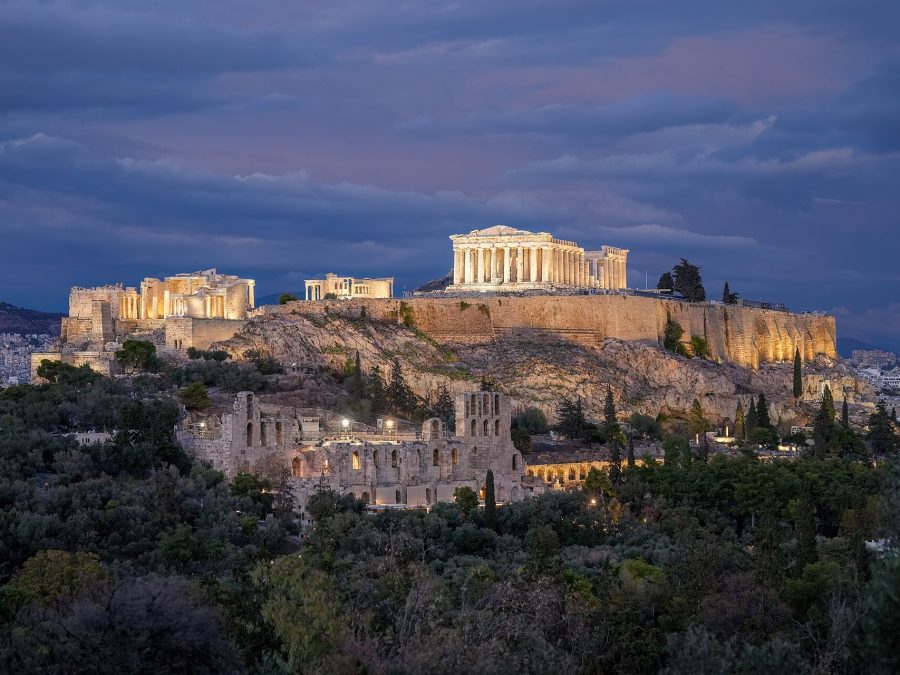
The Acropolis is one of the world’s great sights, and it’s right in the middle of a living city. Around it, the ancient sites, the Plaka’s lanes and the Monastiraki markets are all within walking distance.
Athens has also become a great food city. Classic tavernas sit beside modern Greek kitchens, and the souvlaki and gyros are some of the best street food in Europe.
The weather is a big draw. Spring and autumn are warm, and even winter brings plenty of bright days. In November the light is golden and the crowds are thinner.
Athens
Don’t miss
The places that make the trip, and why each one deserves your time.

Giles Laurent / Wikimedia Commons, CC BY-SA 4.0 The Acropolis
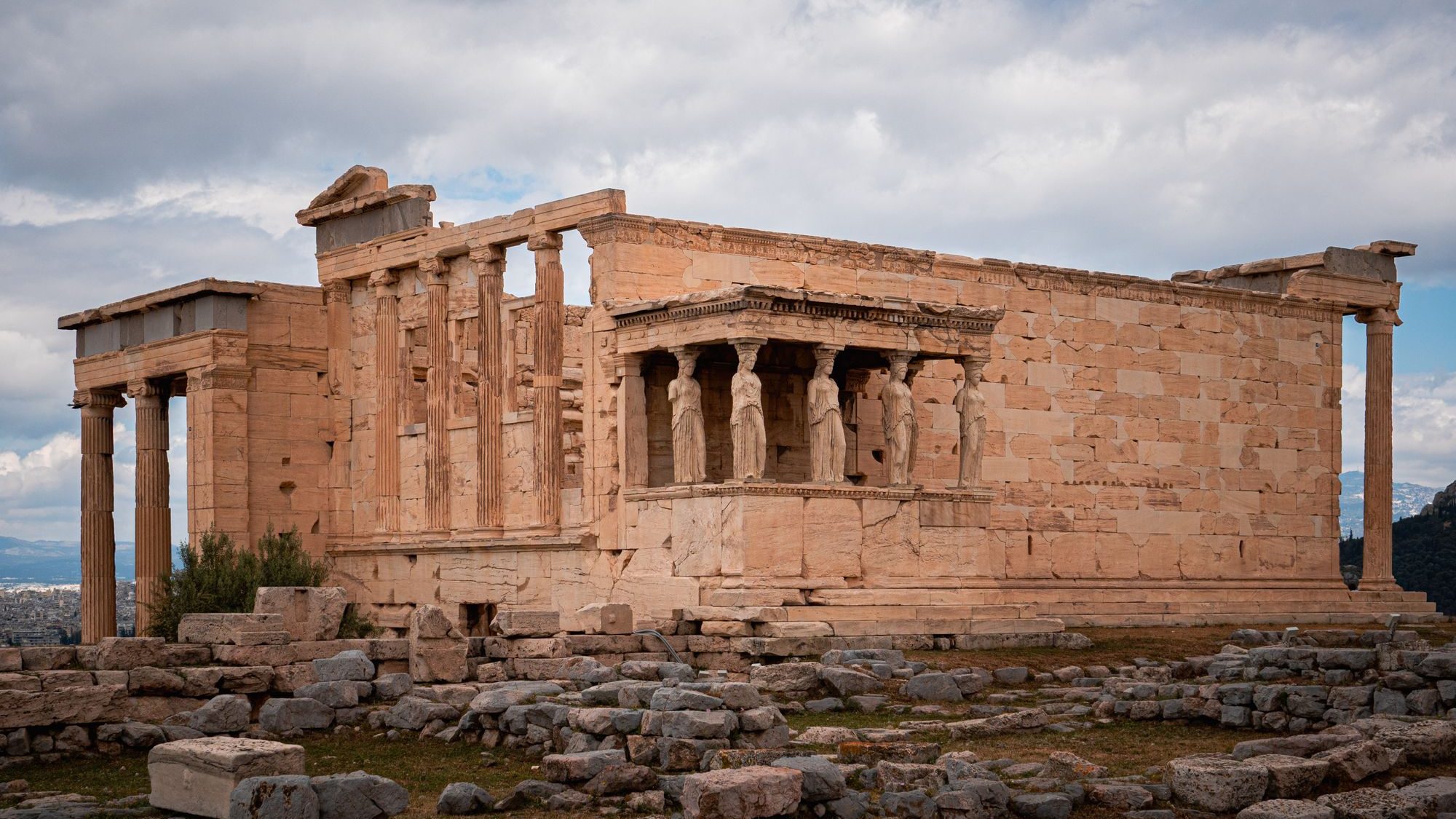
Walk through the Propylaia to the Parthenon and the Erechtheion with its Caryatid porch, high above a living city, with the cool morning light on the marble.
Book the 8am slot and use the south entrance.
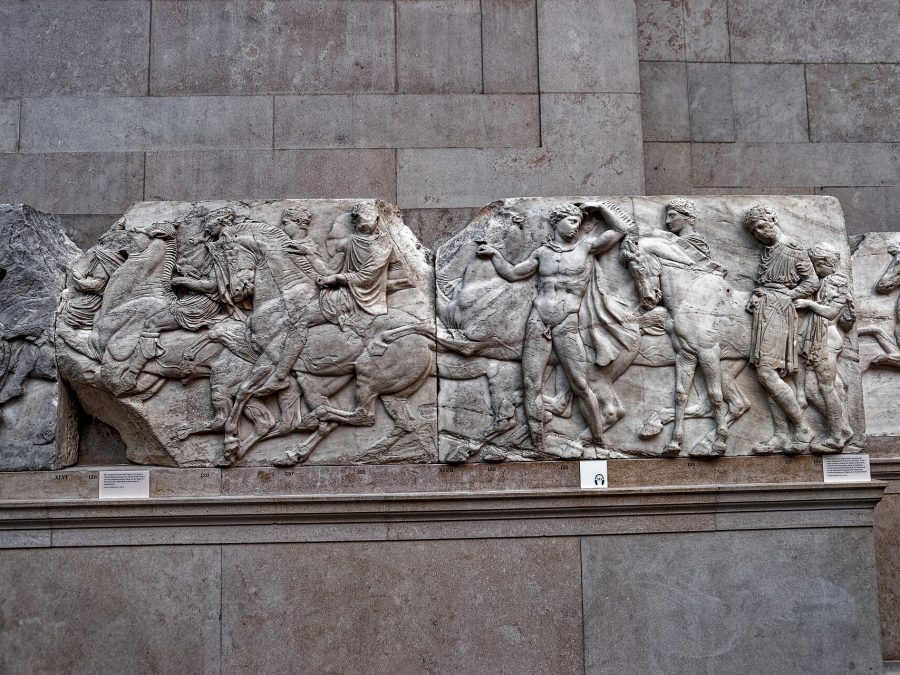
Txllxt TxllxT / Wikimedia Commons, CC BY-SA 4.0 Acropolis Museum
The top-floor gallery lays out the Parthenon sculptures at the same orientation as the temple, with the real building visible through the glass above you.
Book a timed ticket online.
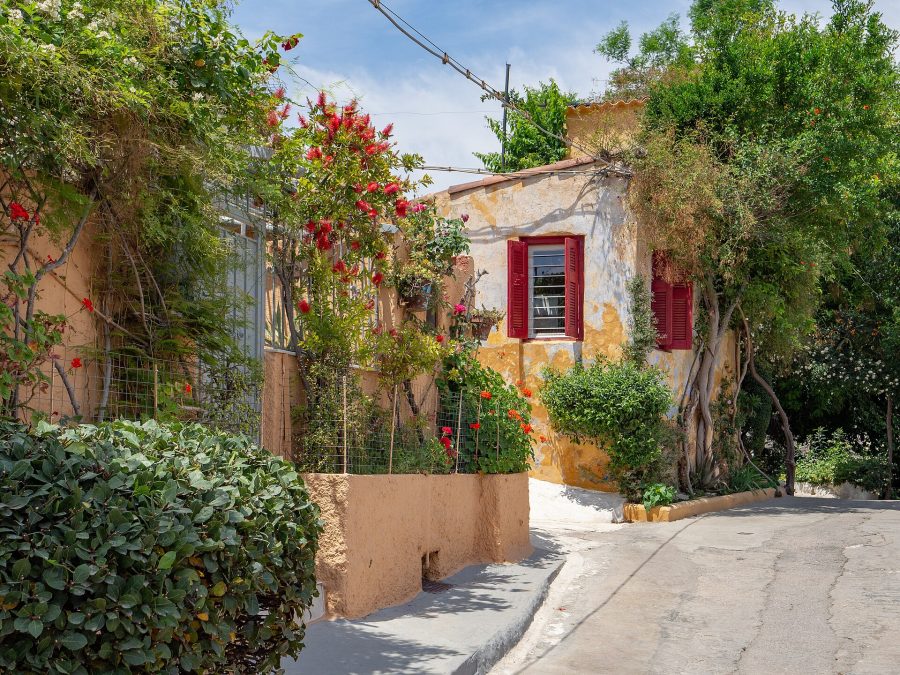
C messier / Wikimedia Commons, CC BY-SA 4.0 Anafiotika
A tiny cluster of whitewashed houses built by islanders on the slopes beneath the Acropolis, reached through the Plaka's lanes and feeling like a Cycladic village in the city.
Walk up in the evening, then dine in the Plaka.
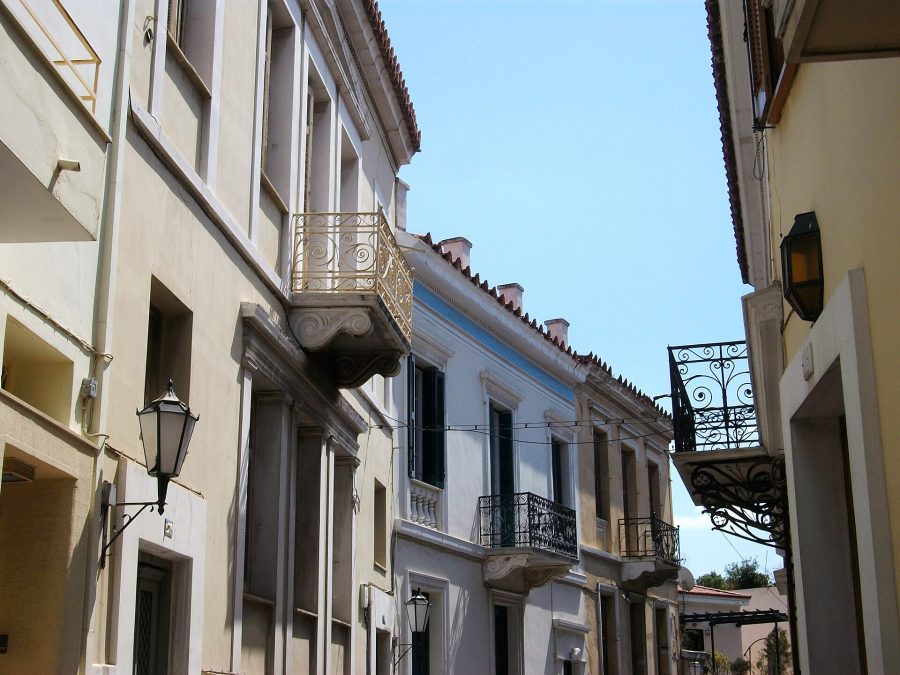
Joanbanjo / Wikimedia Commons, CC BY-SA 3.0 Plaka
Pedestrian lanes beneath the Acropolis, with taverna terraces where you can eat dinner looking up at the floodlit Parthenon, and Platanos serving traditional dishes under its plane tree.
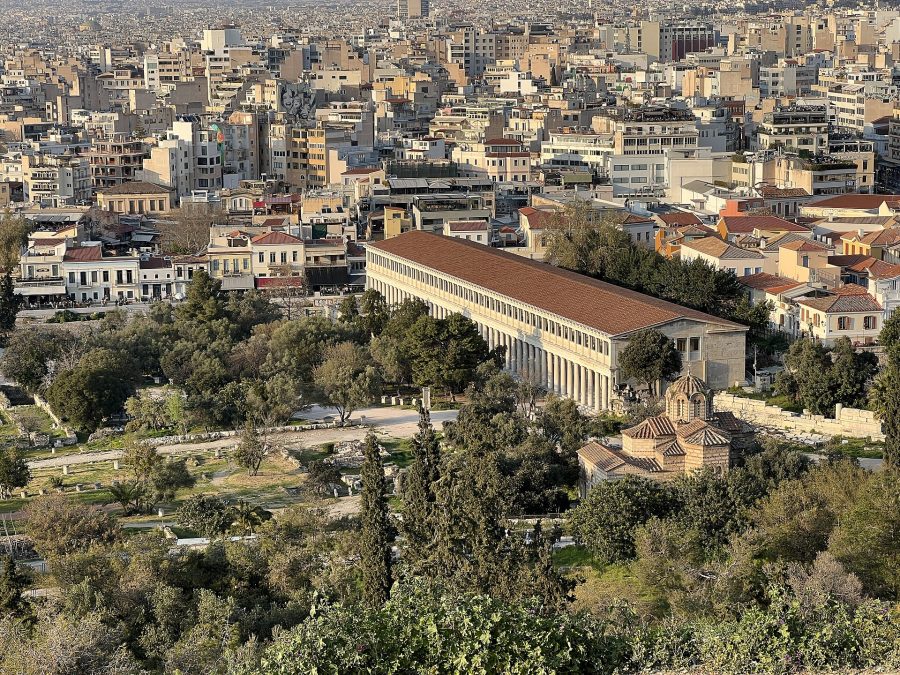
Chabe01 / Wikimedia Commons, CC BY-SA 4.0 Ancient Agora
The heart of ancient Athenian public life, where Socrates argued. Its Temple of Hephaestus is one of the best-preserved Greek temples anywhere, and the rebuilt Stoa of Attalos holds the museum.
Needs its own ticket; there is no combined pass.
George E. Koronaios / Wikimedia Commons, CC BY-SA 4.0 Monastiraki
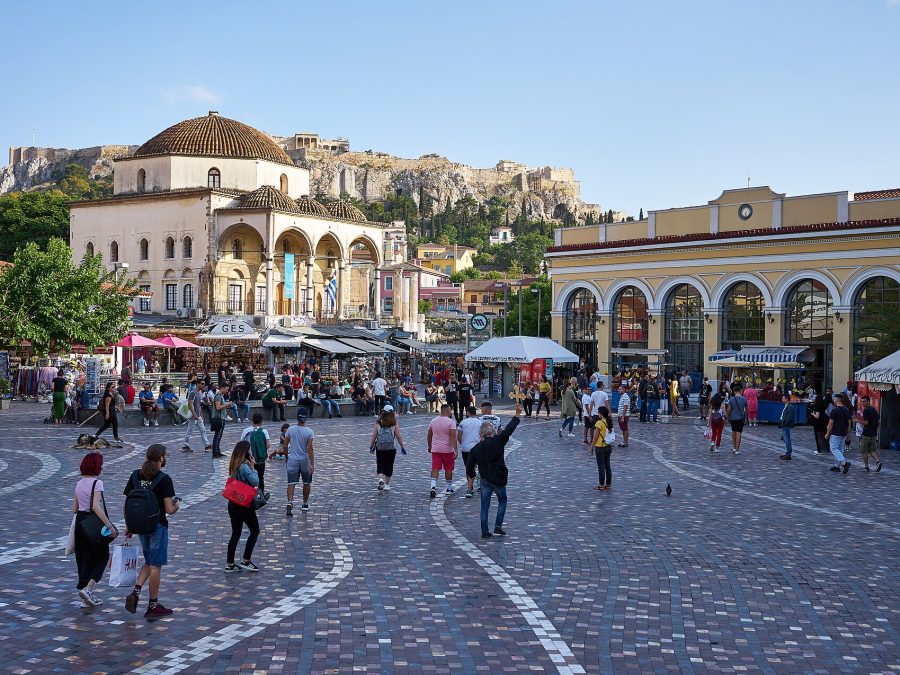
A flea market and busy streets around it, with some of the best street food in Europe: Thanasis grilling kebab-style souvlaki since 1964 and Bairaktaris serving gyros nearby.
Jean-Pierre Dalbéra from Paris, France / Wikimedia Commons, CC BY 2.0 Temple of Olympian Zeus
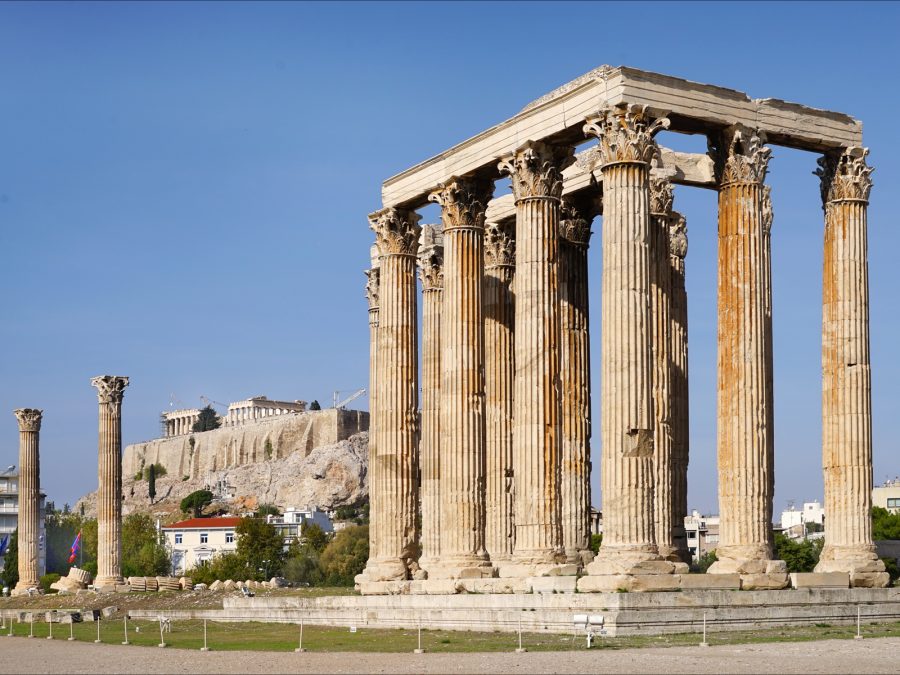
Only a handful of its giant columns still stand, but their scale is striking, and Hadrian's Arch next door marks the old boundary of the ancient city.
Ticketed separately from the Acropolis.
Mister No / Wikimedia Commons, CC BY 3.0 Panathenaic Stadium
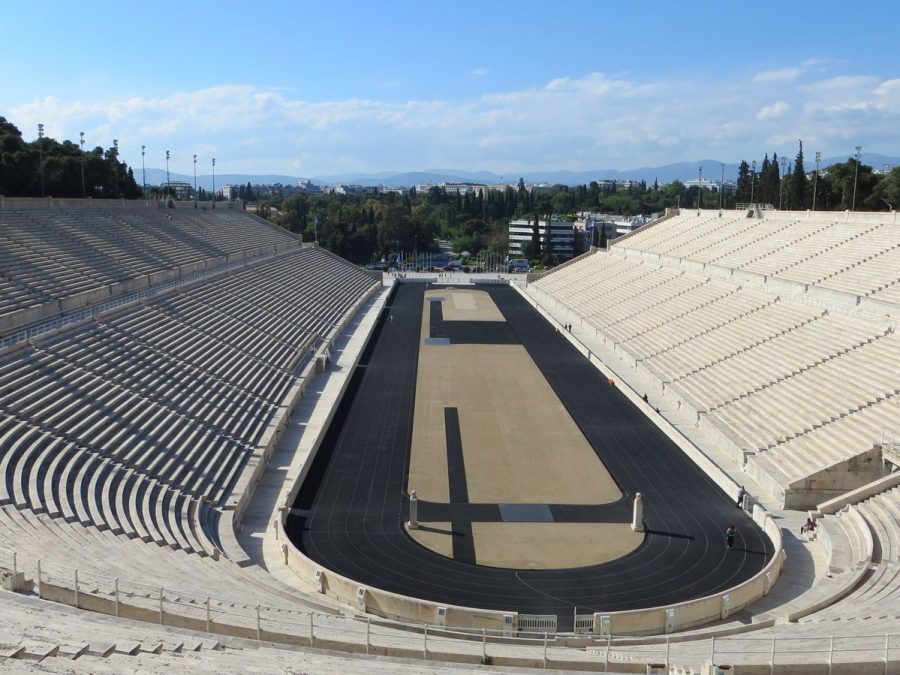
A stadium built entirely of marble, which hosted the first modern Olympic Games in 1896. Its gleaming tiers curve around the track in a way no photo quite captures.
The 48-hour route
Day 1
Morning: Start at the Acropolis as early as you can. Entry is by a timed slot, booked on the official e-ticket site, hhticket.gr; the ministry warns that "skip the line" tickets sold elsewhere do not exist. Use the south entrance, near the Acropolis Museum, which is usually less crowded than the main west gate. Walk through the Propylaia to the Parthenon and the Erechtheion with its Caryatid porch. For winter hours, see the section below.
Afternoon: Walk down to the Acropolis Museum at the foot of the hill. Its top-floor gallery displays the Parthenon sculptures at the same orientation as the temple, with the real building visible through the glass. Buy your ticket online or at the desk; it is valid only for the date printed on it. Afterwards, have lunch in Koukaki, the residential neighbourhood just south of the museum.
Evening: Wander up through the Plaka to Anafiotika, a tiny cluster of whitewashed houses built by islanders on the slopes beneath the Acropolis. Then come back down for dinner at a Plaka taverna, ideally on a terrace with a view of the floodlit Parthenon.
Tip: Book the first Acropolis slot of the day. You get the cool morning air and the best light, and you can be down before the tour groups arrive.
Day 2
Morning: Visit the Ancient Agora, the heart of ancient Athenian public life. Its Temple of Hephaestus is one of the best-preserved Greek temples anywhere, and the rebuilt Stoa of Attalos houses the site museum. Book the Agora separately on hhticket.gr and check there whether any combined option is on sale. Then explore Monastiraki’s flea market and the streets around it.
Afternoon: Walk past the Roman Agora and the Library of Hadrian, then across to the Temple of Olympian Zeus. Only a handful of its giant columns still stand, but their scale is striking. Next door, Hadrian’s Arch marks the old boundary of the ancient city. Continue to the Panathenaic Stadium, the marble stadium that hosted the first modern Olympic Games in 1896. If you have time, the Byzantine and Christian Museum nearby has a beautiful collection of icons and mosaics; check its winter hours and closing day before you go.
Evening: Watch the sunset from Lycabettus Hill, the highest point in central Athens, or from the Philopappos Hill opposite the Acropolis. Then head to Psyrri for dinner and drinks.
Athens in winter 2026–27
Winter is a good time for the sites: cooler air, shorter queues and free Sundays. This is what the official sources say for November 2026 to March 2027, and where they are still silent.
Opening hours at the Acropolis and ancient sites
Ancient sites keep shorter hours in winter. The ministry’s long-standing winter schedule gives the Acropolis 08:00–17:00, seven days a week, while most other sites close earlier in the afternoon. The ministry’s opening-hours page was updated in October 2026, but we could not confirm the 2026–27 figures for each Athens site from it, so check the time slots on hhticket.gr when you book. No new timed-entry rules or visitor caps for winter 2026–27 had been announced on the ministry’s pages by late October.
Acropolis Museum winter hours
From 1 November to 31 March, the museum opens:
| Day | Hours | Last entry |
|---|---|---|
| Monday to Thursday | 9am–5pm | 4:30pm |
| Friday | 9am–10pm | 9:30pm |
| Saturday and Sunday | 9am–8pm | 7:30pm |
The excavation beneath the museum opens daily from 9am to 5pm. The museum closes on 25 and 26 December and 1 January, and opens 9am to 3pm on 24 and 31 December.
Free days
State-run archaeological sites and museums are free on the first and third Sundays of each month from 1 November to 31 March, and on 6 March. This winter that means 1 and 15 November, 6 and 20 December 2026, 3 and 17 January, 7 and 21 February, and 6 (a Saturday), 7 and 21 March 2027. Expect bigger crowds on those days.
The Acropolis Museum follows its own calendar and is not free on winter Sundays. Its free days are 6 March, 25 March, 18 May and 28 October.
Tip: On a free Sunday, aim for the first slot or the last two hours of the day, when the hill is quietest.
Weather, November to March
The following is typical rather than a forecast; see the Hellenic National Meteorological Service (HNMS) for long-term averages. November is usually mild, with sunny days between the first proper rains. December to February are the coolest and wettest months, with chilly evenings and the occasional cold snap, though bright days are common. March warms up steadily. The Acropolis is exposed to wind and its marble gets slippery when wet, so bring layers and shoes with good grip.
Christmas and New Year
The festive season in Athens runs from St Nicholas Day on 6 December to Epiphany on 6 January. The City of Athens lights the big tree in Syntagma Square with a free evening concert, and on New Year’s Eve the square hosts a free party with live music, a drone show and fireworks at midnight. The 2026 dates had not been published by late October. For comparison, the 2025 tree was lit on 27 November, and the New Year’s Eve party started at 10pm.
Elsewhere, the Christmas Factory at Technopolis brings a craft bazaar and children’s rides, and the Stavros Niarchos Foundation Cultural Centre adds light displays, free concerts and an outdoor ice rink each winter. Check the official city guide, thisisathens.org, for this year’s dates. On 6 January, a cross is thrown into the sea at the coast and swimmers dive in after it. For other festive breaks, see the best Christmas markets in Europe.
Where to stay
- Plaka: Pedestrian lanes beneath the Acropolis, close to everything. Best for first-timers and couples.
- Koukaki: Residential and relaxed, by the Acropolis Museum, with good cafés. Best for those who want a local feel.
- Monastiraki and Psyrri: Lively, central and full of bars and street food. Best for night owls and groups of friends.
- Kolonaki: Upmarket and calm, with smart shops and cafés below Lycabettus. Best for repeat visitors.
What to eat and drink
- Souvlaki and gyros: Grilled meat in pita with tomato, onion and tzatziki, the classic Athenian snack.
- Moussaka: Layers of aubergine, spiced meat and béchamel, baked until golden.
- Gigantes plaki: Giant beans baked in tomato sauce, a taverna staple.
- Meze: Small plates to share, from grilled octopus to fried cheese (saganaki).
- Loukoumades: Fried dough balls drizzled with honey, best eaten hot.
- Ouzo and house wine: Ouzo with meze, or barrel wine by the carafe.
For souvlaki, Thanasis in Monastiraki has been grilling since 1964 and is famous for its kebab-style souvlaki, and Bairaktaris nearby has served gyros since the 19th century. Diporto Agoras, a basement taverna near the central market, has no menu: you eat what’s cooking, with wine from the barrel. It takes cash only and closes early in the evening, so go for lunch. Karamanlidika tou Fani serves cured meats and cheeses from northern Greece. In the Plaka, Platanos Taverna has served traditional dishes under its plane tree since 1932. In Psyrri, Klimataria serves Asia Minor dishes, with live rebetiko music on weekend nights.
Getting around
The historic centre is compact and walkable, and many streets around the Acropolis are pedestrianised. Wear comfortable shoes with good grip: the marble paths on the Acropolis are polished smooth and can be slippery.
The metro has three lines. Acropoli station on line 2 is right by the Acropolis Museum, and Monastiraki and Syntagma connect lines. From the airport, take metro line 3 into the centre or the express bus. Trams run from Syntagma down to the coast.
Good to know
- Book the Acropolis: Entry is by timed slot, booked on hhticket.gr, the only official online portal. Ignore "skip the line" offers.
- Separate tickets: The Ancient Agora, the Temple of Olympian Zeus and the other ancient sites are booked separately from the Acropolis.
- Seasonal hours: Ancient sites close earlier from November to March. Check the slots on hhticket.gr before you go.
- Free days: Ancient sites are free on the first and third Sundays from November to March and on 6 March. The Acropolis Museum has its own free days.
- Holiday closures: The Acropolis Museum closes on 25 and 26 December and 1 January.
- What’s on: See this weekend for events.
FAQ
Do you need to book Acropolis tickets in advance?
Yes. Entry is by timed slot on the official site, hhticket.gr. Book as early as you can, especially for morning slots and free Sundays.
What are the Acropolis opening hours in winter?
The Acropolis has long kept winter hours of 8am to 5pm, seven days a week. The ministry had not published Athens site-by-site figures for 2026–27 in a form we could confirm by late October, so check the slots on hhticket.gr.
When are the ancient sites free in Athens this winter?
On the first and third Sundays from November 2026 to March 2027, and on 6 March 2027. The Acropolis Museum is not free on those Sundays.
Is the Acropolis Museum open over Christmas?
It closes on 25 and 26 December and on 1 January. On 24 and 31 December it opens from 9am to 3pm.
Is there a New Year’s Eve party in Athens?
Yes. The City of Athens hosts a free party in Syntagma Square, with live music, a drone show and midnight fireworks. The 2026 line-up and timings had not been announced by late October.
Athens is the perfect start to a Greek island trip. See our best places to visit in Greece, or pair it with Istanbul for two ancient capitals in one trip. For more ideas, browse our best city breaks in Europe.