Capri is small, steep and theatrical: limestone cliffs, impossibly blue water and lanes lined with lemon trees and smart boutiques. Most visitors arrive mid-morning and leave by early evening, so staying the night changes everything. It suits couples, walkers and anyone who wants the island’s beauty without the crowds.
Why go
Few islands pack so much drama into such a small space. Capri has two towns, Capri and Anacapri, perched high above the sea, linked by a corniche road and countless paths. Below them, sea caves and rock stacks circle the coast.
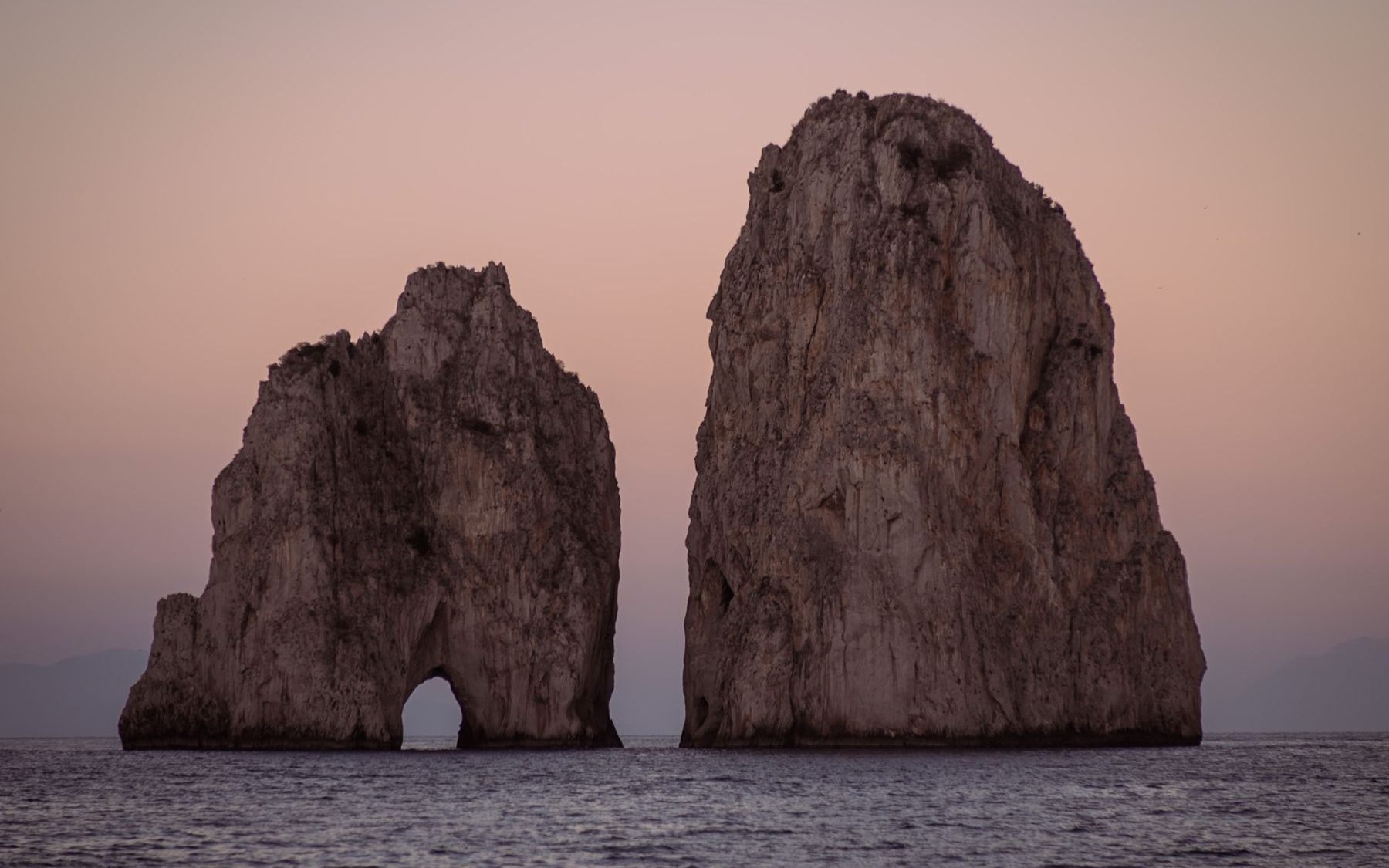
The famous sights live up to their reputation. The Faraglioni rise straight out of the sea, the Gardens of Augustus look down on hairpin bends, and the chairlift up Monte Solaro gives a view over the whole Bay of Naples.
It is also an island for walking. Leave the Piazzetta and within ten minutes you can be on a quiet path between villas and pines.
Capri
Don’t miss
The places that make the trip, and why each one deserves your time.

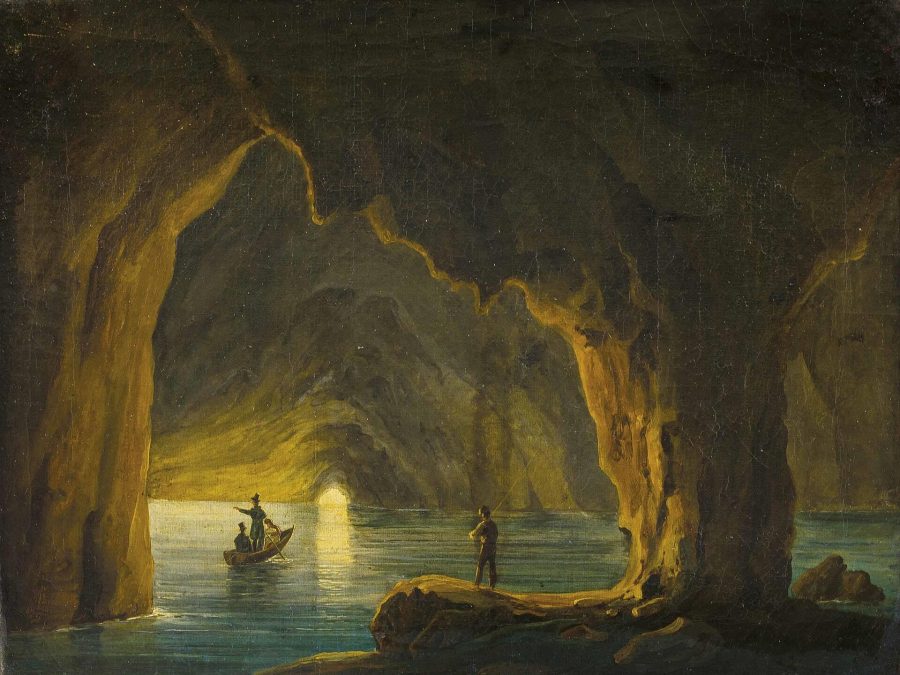
Circle of Christian Frederik Ferdinand Thøming / Wikimedia Commons, Public domain Blue Grotto
Transfer into a small rowing boat and slip through a low opening into the glowing cave, where the water shines an impossible blue.
Go in the morning on a sunny, calm day.
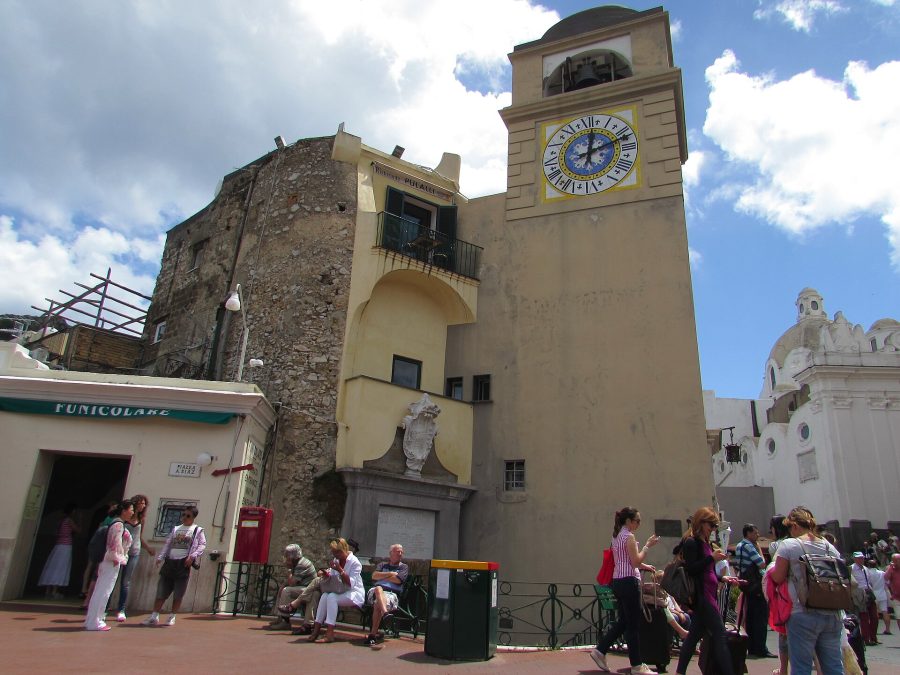
Cezar Suceveanu / Wikimedia Commons, CC BY-SA 4.0 The Piazzetta
Capri town's little square, perched high above the sea. Come for a coffee by day, then return for an aperitivo once the day boats have left.
Michael Karavanov / Wikimedia Commons, CC BY-SA 3.0 Gardens of Augustus
Terraced gardens above the sea, open all year, looking out over the Faraglioni and down to the dizzying hairpin bends of Via Krupp below.
Ask the tourist office whether Via Krupp has reopened.
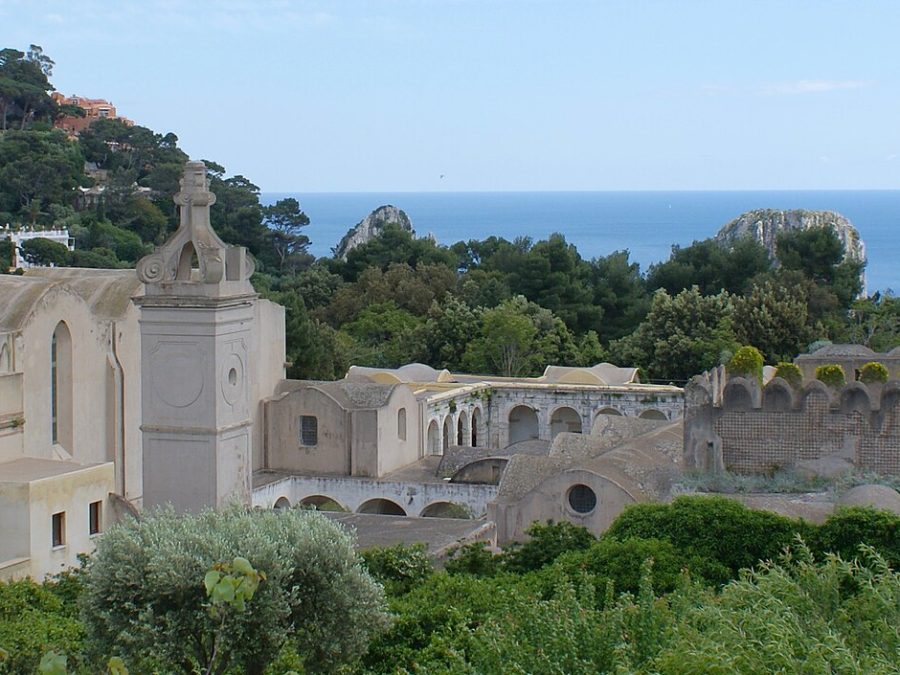
Norberto Chavez-Tapia / Wikimedia Commons, CC BY-SA 2.0 Certosa di San Giacomo
A 14th-century monastery a short walk from the Gardens of Augustus, a quiet counterpoint to the boutiques of Capri town.
Closed on Mondays, so plan around it.
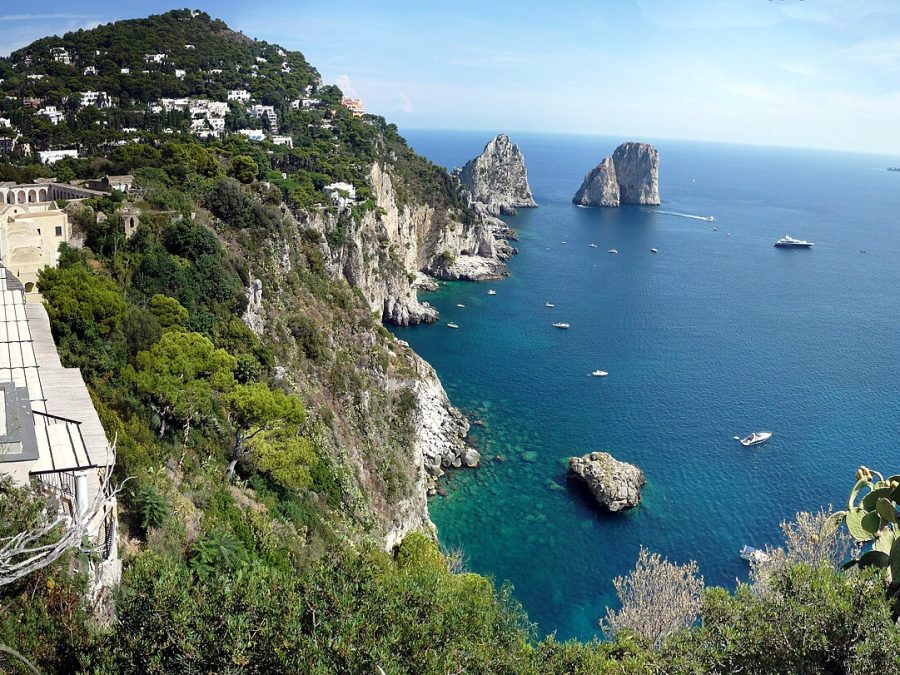
MM / Wikimedia Commons, Public domain Faraglioni and Via Tragara
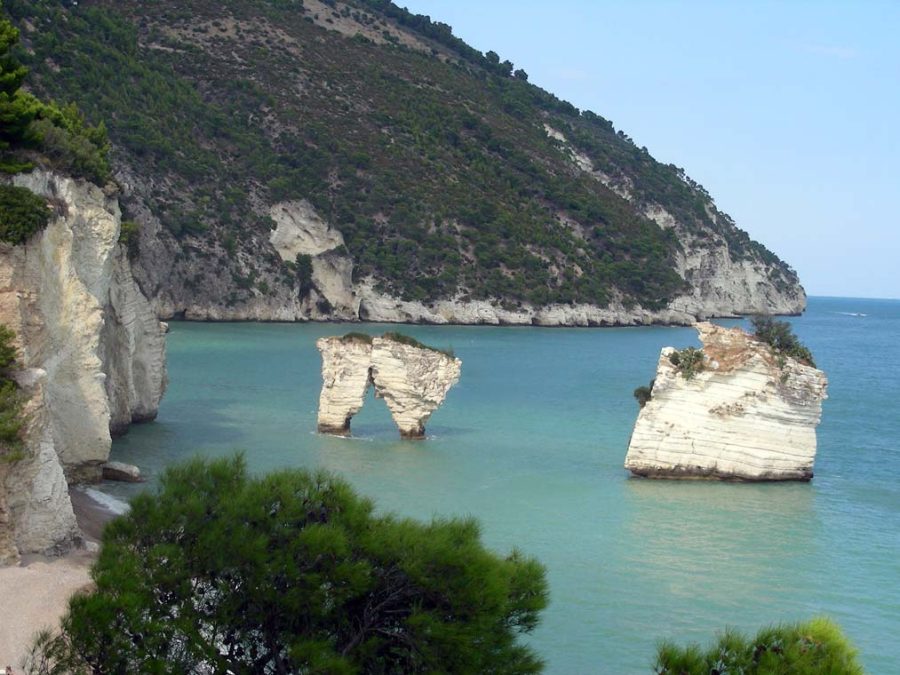
Limestone stacks rising straight out of the sea. Stroll Via Camerelle and Via Tragara to the Faraglioni viewpoint at dusk, when the day-trippers have gone.
Walk out at dusk, after the day boats leave.
Derbrauni / Wikimedia Commons, CC BY-SA 4.0 Villa Jovis
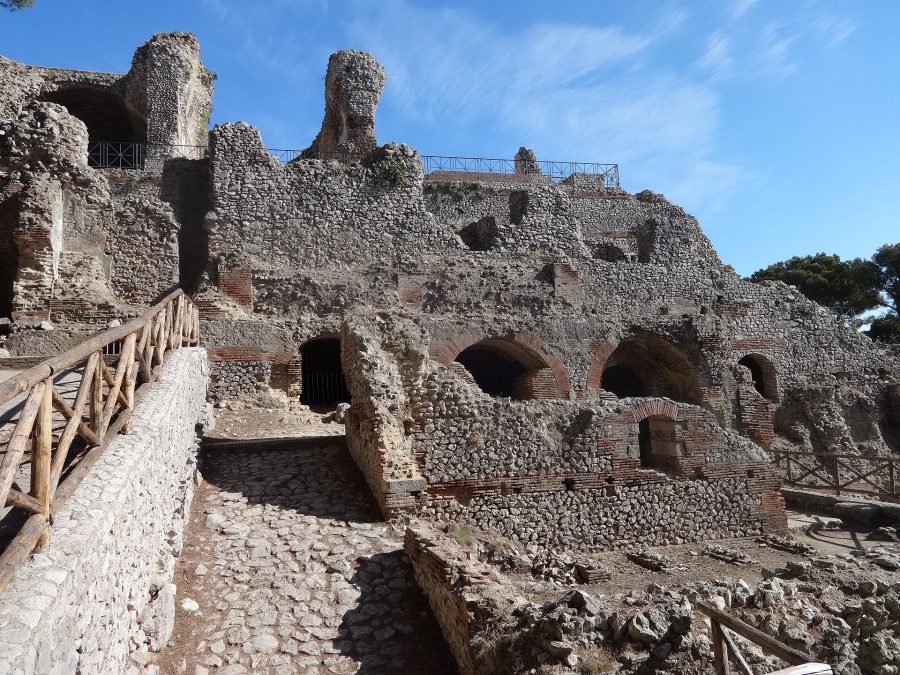
The ruined palace of Emperor Tiberius on the island's eastern tip, reached by a steady uphill walk. Detour to the Arco Naturale, a natural rock arch above the sea.
Closed Mondays and in January and February.
Berthold Werner / Wikimedia Commons, CC BY-SA 3.0 Villa San Michele
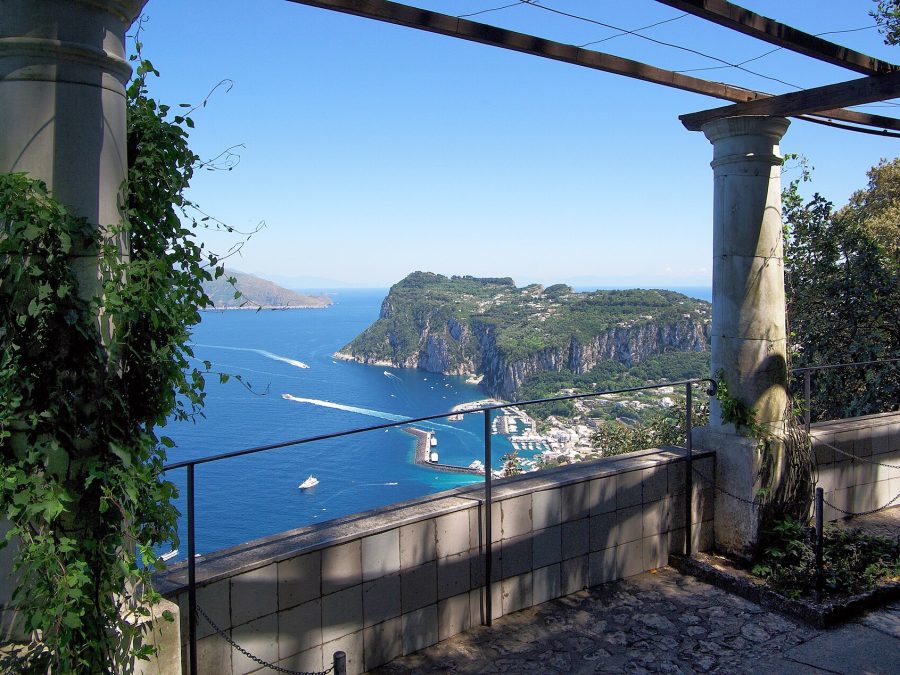
The Anacapri home of Swedish doctor Axel Munthe, with a pergola and a sphinx gazing out over the bay.
Villa San Michele closes in February.
Falk2 / Wikimedia Commons, CC BY-SA 4.0 Monte Solaro
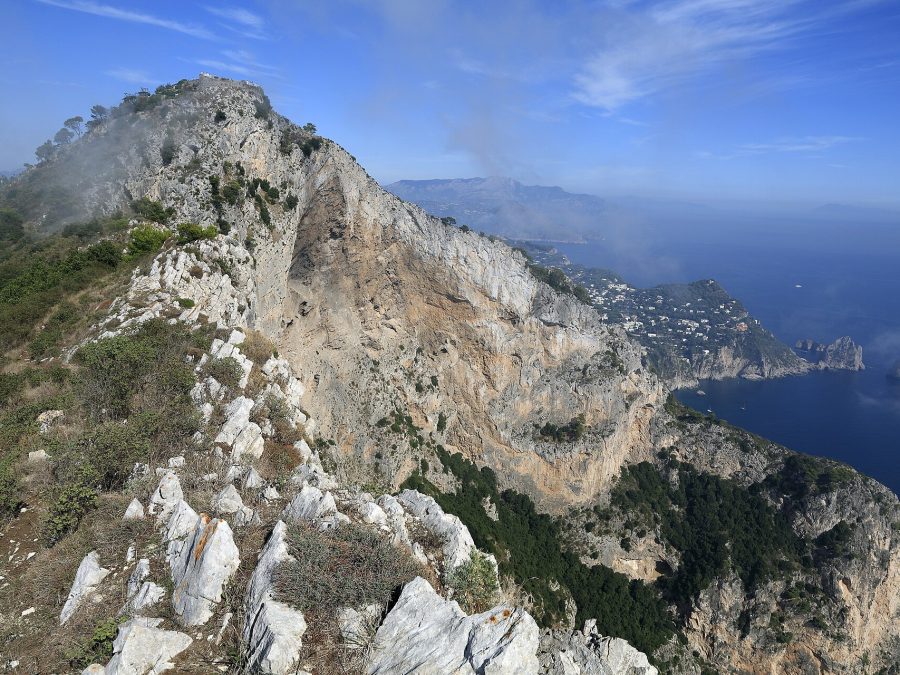
From Anacapri, the chairlift glides up to the island's highest point for a view stretching over the whole Bay of Naples.
Ride on a clear morning, before the haze builds.
The 48-hour route
Day 1
Morning: Arrive at Marina Grande early. Take a boat trip around the island, which passes the Faraglioni and the coastal caves. If the sea is calm, ask for a stop at the Blue Grotto, where you transfer into small rowing boats that slip through a low opening into the glowing cave. The grotto opens only when the sea allows, and skippers check conditions each morning. Strong northerly winds almost always close it.
Tip: Go to the Blue Grotto in the morning, ideally on a sunny day. Seas often get rougher after 3pm, and a cloudy sky dulls the famous blue.
Afternoon: Ride up to Capri town and its Piazzetta for a coffee. Walk to the Gardens of Augustus, open all year, for the view of the Faraglioni and the hairpins of Via Krupp below. Via Krupp, the switchback path down to Marina Piccola, reopened in 2023 after nine years, but in October 2026 it was closed again because of the danger of falling rocks. Admire it from above, and ask the tourist office whether it has reopened. Then walk to the Certosa di San Giacomo, a 14th-century monastery, closed on Mondays.
Evening: When the day boats leave, stroll Via Camerelle and Via Tragara to the Faraglioni viewpoint at dusk. Have an aperitivo in the Piazzetta, then dinner in Capri town.
Day 2
Morning: Walk out to Villa Jovis, the ruined palace of Emperor Tiberius on the island’s eastern tip, a steady uphill walk from the Piazzetta. It closes on Mondays and in January and February. On the way back, detour to the Arco Naturale, a natural rock arch above the sea.
Afternoon: Take the bus to Anacapri. Visit Villa San Michele, the home of Swedish doctor Axel Munthe, with a pergola and sphinx overlooking the bay. Then ride the chairlift to the top of Monte Solaro, the island’s highest point. It runs most of the year but closes in January.
Tip: Ride the Monte Solaro chairlift on a clear morning. Haze builds through the day and softens the view across the bay.
Evening: Stay in Anacapri for a quieter dinner, or head down to the coast for sunset before the ferry if this is your last night.
Beaches and swimming
Capri has no long sandy beaches. Swimming here means pebbles, rocks, ladders into deep water and the beach clubs that line the coves.
- Marina Piccola: The most popular swimming spot, on the sheltered south side, with small pebble beaches and bathing establishments. It is a short bus ride from Capri town.
- Marina Grande: The handiest beach, right by the ferry port, good for a swim before your boat leaves.
- Faro di Punta Carena: Rocks and ladders by the lighthouse on Anacapri’s south-western tip, with some of the island’s best sunsets.
The sea is warm enough for most swimmers from June to early October. Bring water shoes for the rocks.
Where to stay
- Capri town: Best for first-timers, nightlife and walking to the main sights. It is busy by day and lovely at night.
- Anacapri: Best for a calmer, more local stay, with easy access to Monte Solaro, Villa San Michele and the Blue Grotto road.
- Marina Grande: Best for early ferries and late arrivals, right on the harbour.
- Marina Piccola: Best for swimming and beach clubs in summer, on the south side of the island.
What to eat and drink
- Insalata caprese: Tomatoes, mozzarella and basil. It was born here, so order it at least once.
- Ravioli capresi: Pasta parcels filled with caciotta cheese and marjoram, served with tomato sauce.
- Torta caprese: A dense, flourless almond and chocolate cake.
- Limoncello: Made with local lemons and served ice-cold after dinner.
- Fresh seafood: Linguine with clams, grilled fish and frittura.
Where to go:
- Buonocore (Capri town): A long-running café for pizza, panini, pastries and gelato. Good for a quick lunch or an afternoon cone.
- Da Paolino (Marina Grande): Tables under a lemon grove, local cooking and lemon desserts. It is seasonal and closes from November to mid-April.
- Le Grottelle (near the Arco Naturale): A trattoria set into a cave above the sea, ideal after the Villa Jovis walk. It closes on Tuesdays and from November to March.
- La Capannina (Capri town): A classic Caprese dining room near the Piazzetta, open until November.
Getting around
Capri is steep, but distances are short. The funicular is the quickest link between Marina Grande and Capri town; check it is running on the day. Island buses run between Marina Grande, Capri town, Anacapri, Marina Piccola and the Blue Grotto. They are small and fill up fast, so expect queues at peak times. Open-top taxis cost more but are quicker.
To reach the island, ferries and hydrofoils run all year from Naples and Sorrento. From Positano and Amalfi, sailings run in season. In 2026, the last Positano–Capri sailings are on 3 November with NLG and 4 November with Lucibello. Rough seas can cancel any route, so keep your plans flexible.
Good to know
- Blue Grotto conditions: It closes in rough seas or strong winds and is mostly closed in winter. Swimming inside is not allowed.
- Weekly closures: Villa Jovis and the Certosa di San Giacomo close on Mondays. Villa San Michele closes in February.
- Via Krupp: It was closed for rockfall risk in October 2026, with no reopening date. Check before you plan the walk down to Marina Piccola.
- Off season: Many restaurants close from November to March or April. Book a winter stay knowing the island will be quiet.
- Shoes: Paths are steep and stepped. Bring flat shoes with grip.
FAQ
Is it worth staying overnight in Capri?
Yes. Most day-trippers leave by early evening, so you get the Piazzetta, the paths and the sunset to yourself, and you can see the main sights in the quiet morning hours.
Is the Blue Grotto open?
It opens only when the sea and wind allow, and is mostly closed in winter. Skippers check conditions each morning, so look at the live status after 9am.
Can you get to Capri from Positano in winter?
No. The Positano–Capri ferries stop in early November, with the last sailings on 3–4 November in 2026. In winter, go via Sorrento or Naples.
Is Via Krupp open?
Not as of October 2026. It reopened in 2023 after nine years, but it is closed again because of the danger of falling rocks. Check with the Capri tourist office for updates.
How many days do you need in Capri?
Two days is ideal. It gives you time for the boat trip, both towns, Villa Jovis and Monte Solaro without rushing.
Combine Capri with our Amalfi Coast guide or a few nights in Positano. For more swimming spots, see the best beaches in Italy and this weekend’s picks.