Málaga gives you winter sun, a Moorish fortress, a castle with the best view on the Costa del Sol and the city where Picasso was born, all within a short walk of the sea. In two days you can climb the Alcazaba, eat your way through a 19th-century market and finish on the beach at sunset. It suits couples, art lovers and anyone who wants a proper city break with a beach attached.
Why go
Winter here is mild and bright. Spain’s weather service, AEMET, gives average highs of around 17°C from December to February, with more sunshine than rain. That alone makes it one of the easiest winter escapes in Europe.
But the city is more than a gateway to the coast. The old town packs a Roman theatre, a Moorish palace-fortress and a Renaissance cathedral into a few streets. Museums have multiplied, led by the Picasso Museum and the Centre Pompidou on the port. And the food is simple and generous: fried fish, sardines grilled on skewers and sweet wines poured from the barrel.
Málaga
Don’t miss
The places that make the trip, and why each one deserves your time.

Fernando / Wikimedia Commons, CC BY-SA 4.0 Alcazaba
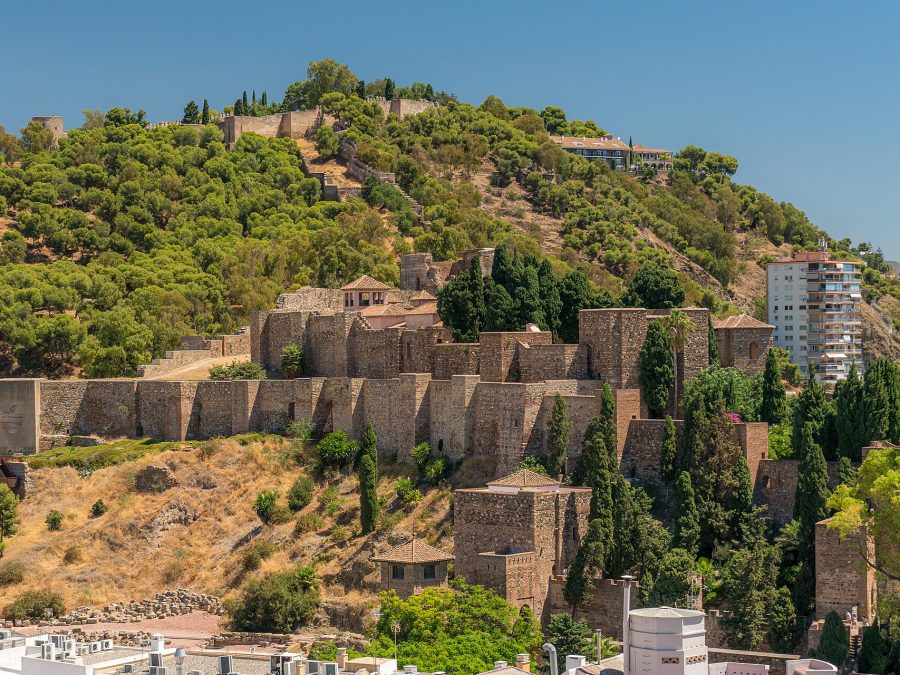
A Moorish palace-fortress climbing the hill above the Roman Theatre, with horseshoe arches, layered gateways, fountains and courtyards of orange trees, and glimpses of the port through the walls.
Free entry every Sunday from 2pm.
Gibralfaro Castle
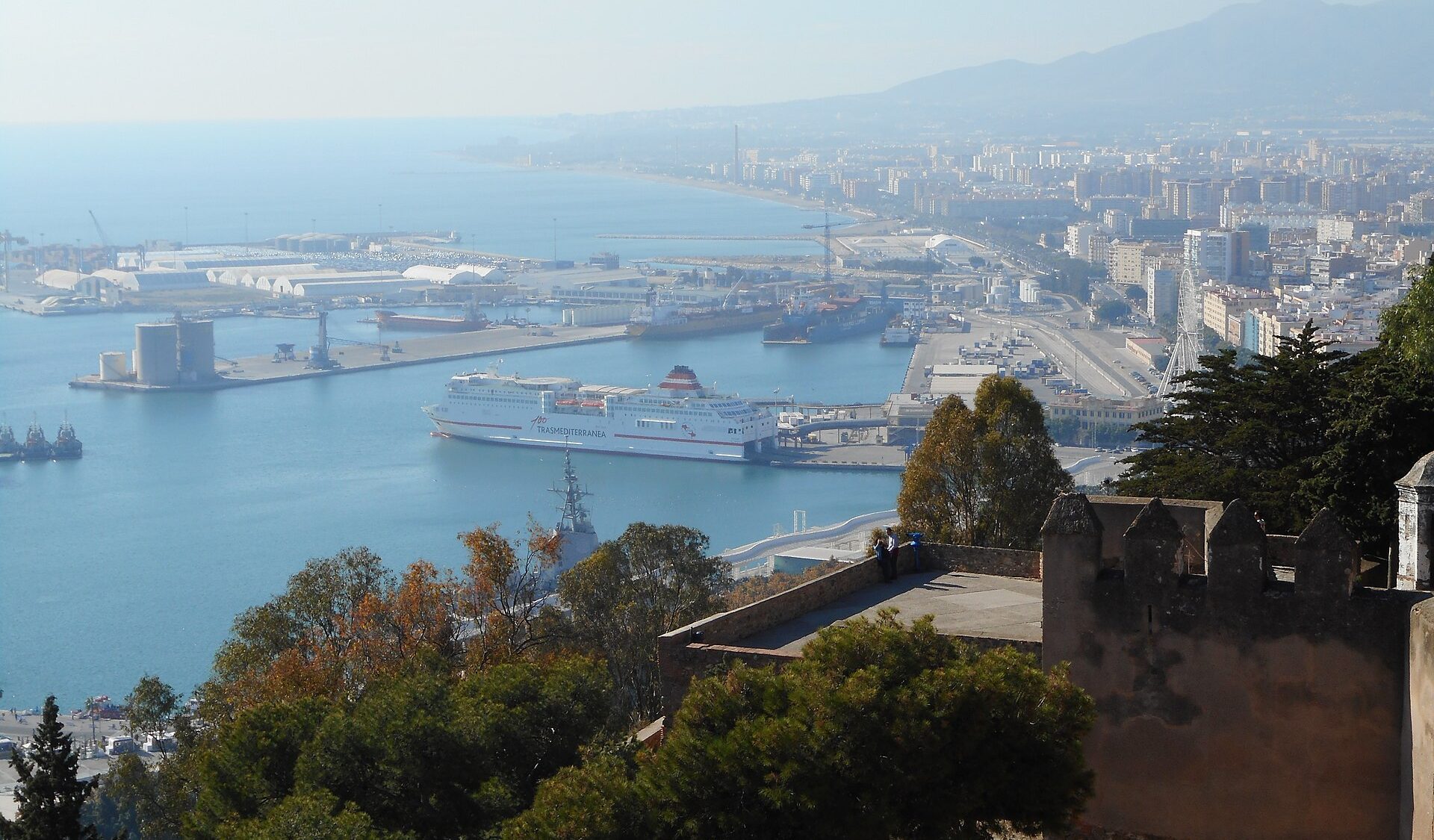
Walk the ramparts of the castle crowning the hill and the whole city spreads out below: the bullring, the port, the cathedral and the curve of the bay.
A combined ticket covers the Alcazaba and Gibralfaro.
HervilleMelman / Wikimedia Commons, CC BY-SA 4.0 Málaga Cathedral
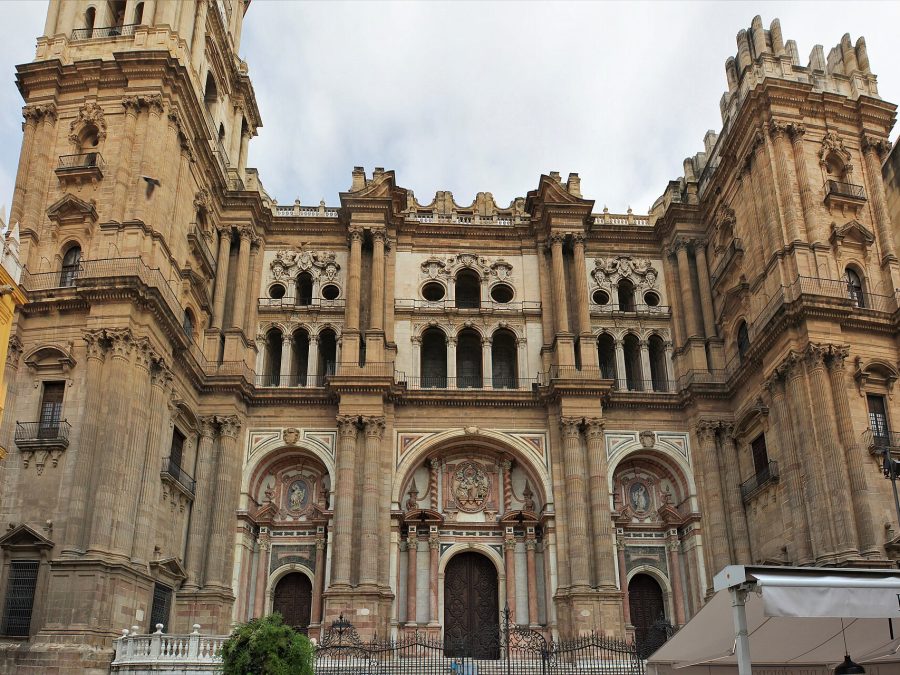
A Renaissance cathedral with Baroque touches, nicknamed La Manquita, the one-armed lady, because its second tower was never finished.
Sunday visits only start in the afternoon.
Llecco / Wikimedia Commons, CC BY-SA 3.0 Picasso Museum
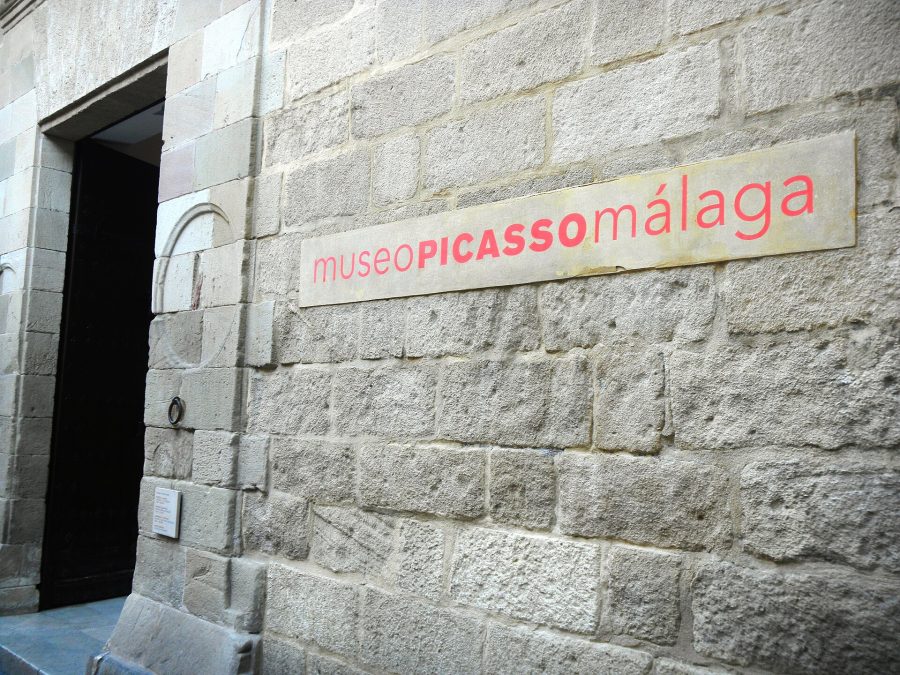
Picasso's birthplace honours him with a collection spanning eight decades of his work, shown in the Palacio de Buenavista, a Renaissance palace in the old town.
Free on Sundays for the last two hours.
Zarateman / Wikimedia Commons, CC0 Atarazanas market
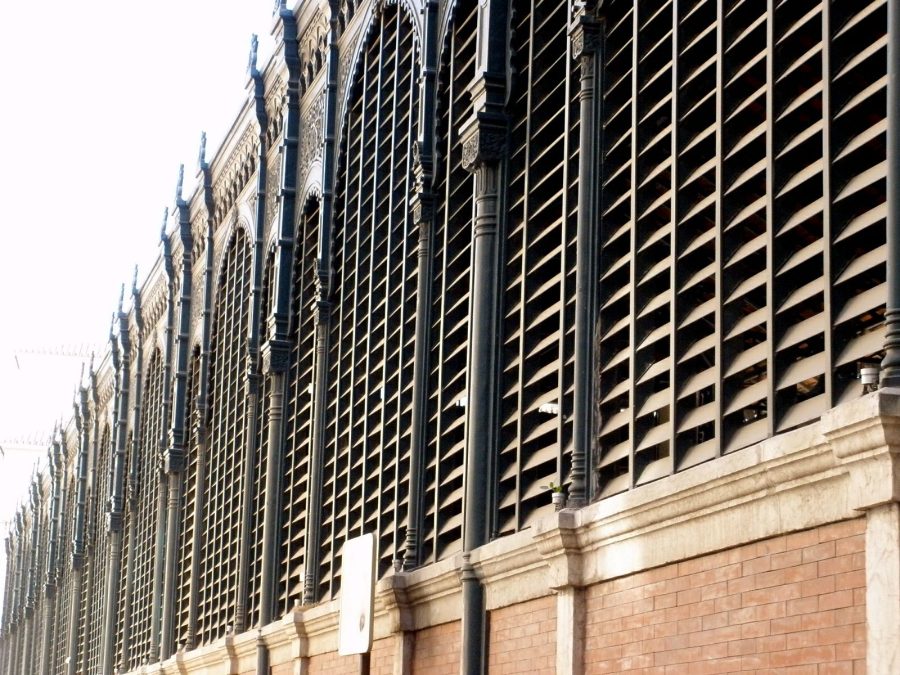
Málaga's largest municipal market, with 260 stalls of fish, olives, cured ham and fruit under an iron roof, entered through an old Moorish shipyard gate.
Open Monday to Saturday, 8am to 3pm.
Muelle Uno and Malagueta beach
The waterfront promenade runs past palms, cafés and the coloured Pompidou cube, then on to the city beach of La Malagueta for a sunset walk on the sand.
Walk through the Palmeral de las Sorpresas at dusk.
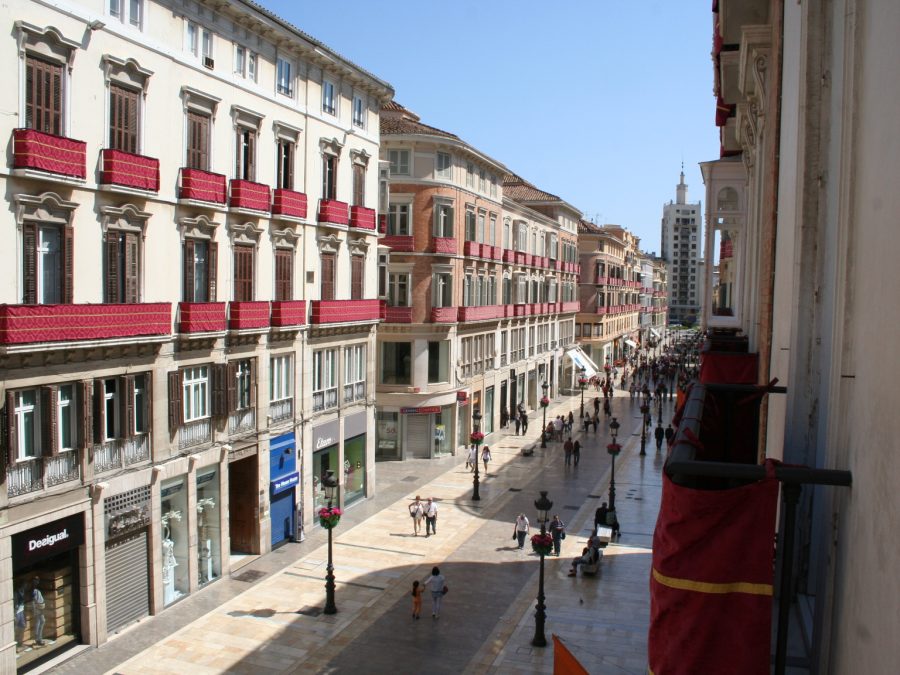
mahr / Wikimedia Commons, CC BY 2.0 Calle Larios
The old town's elegant 19th-century main street, pedestrian since 2002, turns into a tunnel of light and music shows every December.
Come after dark in December for the light show.
A weekend in Málaga: the 48-hour route
Day 1
Morning: Start at the Alcazaba, which opens at 9am. Through the winter season, from 1 November to 31 March, it closes at 6pm, with last entry at 5pm. The Moorish fortress climbs the hillside in a series of gateways, gardens and palace courtyards, and the higher you go, the better the views of the port. At its foot, on Calle Alcazabilla, lies the Roman Theatre, said to be the oldest in Spain and dating from the 1st century.
Afternoon: Carry on uphill to Gibralfaro Castle. A combined ticket covers both monuments, and both keep the same hours. The path is steep, so many visitors take a taxi up and walk back down. On the ramparts you get Málaga’s signature view: the port, the cathedral roof, the bullring and the long curve of the bay. Come down to the old town for a late lunch of tapas.
Tip: Entry to the Alcazaba and Gibralfaro is free every Sunday from 2pm. Plan your Sunday around it, but expect more company.
Evening: Walk down Calle Larios, the grand 19th-century shopping street that has been pedestrian since 2002. Then head for El Pimpi, a bodega founded in 1971, with entrances on Calle Granada and Calle Alcazabilla, across from the Roman Theatre. It is busy, atmospheric and lined with barrels, and it serves until late.
Day 2
Morning: Go early to the Mercado Central de Atarazanas, open Monday to Saturday from 8am to 3pm. It is the largest of Málaga’s 15 municipal markets, with 260 stalls. You enter through a horseshoe-arched gate that once belonged to the Moorish shipyards, and inside, a great stained-glass window lights the fish counters. Buy olives, almonds and fruit, or stand at a bar for fried fish.
Afternoon: Spend the afternoon on art. The Picasso Museum, in the Palacio de Buenavista on Calle San Agustín, covers eight decades of the artist’s work. From November to February it opens daily from 10am to 6pm. Buy online, as the museum advises, and keep the ticket office as a back-up. Next, walk a few minutes to the cathedral. From late October to late March, visits run from 10.30am on weekdays and Saturdays, while on Sundays they start only at 2pm. Last entry is 45 minutes before closing.
Tip: The Picasso Museum is free on Sundays for the last two hours before closing. In winter, that means from 4pm.
Evening: Walk out along the port to Muelle Uno, the waterfront promenade that opened in 2011 with shops, restaurants and the Palmeral de las Sorpresas, a palm-lined walkway. The coloured glass cube at the end is the Centre Pompidou Málaga, the first Centre Pompidou outside France. It closes on Tuesdays. From there, keep walking east to La Malagueta, the city beach, for sunset on the sand before dinner.
Málaga in winter
In plain words: Málaga’s winter feels like a good British late spring. AEMET’s normals for Málaga Airport (1981–2010) give average highs of 17.5°C in December, 16.8°C in January and 17.7°C in February. Nights fall to around 7–9°C, so bring a warm layer for the evenings. Rain comes in short bursts rather than long grey spells, on about five to seven days a month. And the sun shines for 160 to 180 hours a month through the winter, rising to more than 220 in March.
That is mild enough for lunch on a terrace and a walk on the beach, though the sea is cool for swimming. The upside of winter is quieter monuments, softer light on the castle walls and, in December, the Christmas lights on Calle Larios.
Christmas lights: Calle Larios is the centre of Málaga’s Christmas illuminations. In 2025, the city switched them on on 28 November, and the Calle Larios display ran until 4 January, with light-and-music shows at 6.30pm, 8.30pm and 10pm. The city had not announced the 2026 switch-on date when we checked, so look out for it on malaga.eu.
Where to stay
- Centro Histórico: The old town around the cathedral, Calle Larios and the Picasso Museum. Best for first-timers who want to walk everywhere.
- Soho: Between the old town and the port, with street art, galleries and cafés. Best for a creative, slightly quieter base close to the centre.
- La Malagueta: The seafront district east of the port, by the beach and the bullring. Best for winter-sun stays with sea views.
- El Perchel and around María Zambrano: West of the river, near the main station and the airport train. Best for short stays and early departures.
What to eat and drink
- Espetos de sardinas: Sardines threaded on a skewer and grilled over embers in a boat filled with sand. The classic beach lunch.
- Pescaíto frito: A plate of fried small fish, squid and anchovies, light and crisp.
- Ajoblanco: A cold almond and garlic soup, often served with grapes.
- Porra antequerana: A thick tomato and bread soup from nearby Antequera, topped with ham and egg.
- Málaga wine: Sweet muscatel and Pedro Ximénez, plus the dry wines of the Montes de Málaga.
Where to go:
- Mercado Central de Atarazanas (Centro): The city’s main market, with bars inside for fried fish and a glass at midday. Closed on Sundays.
- El Pimpi (Calle Granada and Calle Alcazabilla): A big, much-loved bodega founded in 1971, with Málaga wines and classic tapas.
- Antigua Casa de Guardia (Alameda Principal): Founded in 1840 and described by Andalusia’s tourist board as the oldest wine cellar still open. Wines come straight from the barrel, with prawns, clams and mussels on the side.
For more wine trips, see the best wine regions in Europe, and for wider ideas see the best holiday destinations in Spain.
Getting around
Málaga’s centre, port and beach are all within walking distance of each other, so you will rarely need transport.
Getting there: Málaga-Costa del Sol Airport lies south-west of the city. Cercanías line C1 runs from the airport station to María Zambrano, the main railway station, and on to Málaga Centro-Alameda, the stop closest to the old town. In the other direction, it runs along the coast to Torremolinos, Benalmádena and Fuengirola. Renfe accepts contactless bank cards and phones at the Cercanías gates, and charges each single journey at the fare for the zones you travel. An express bus also links the airport and the centre.
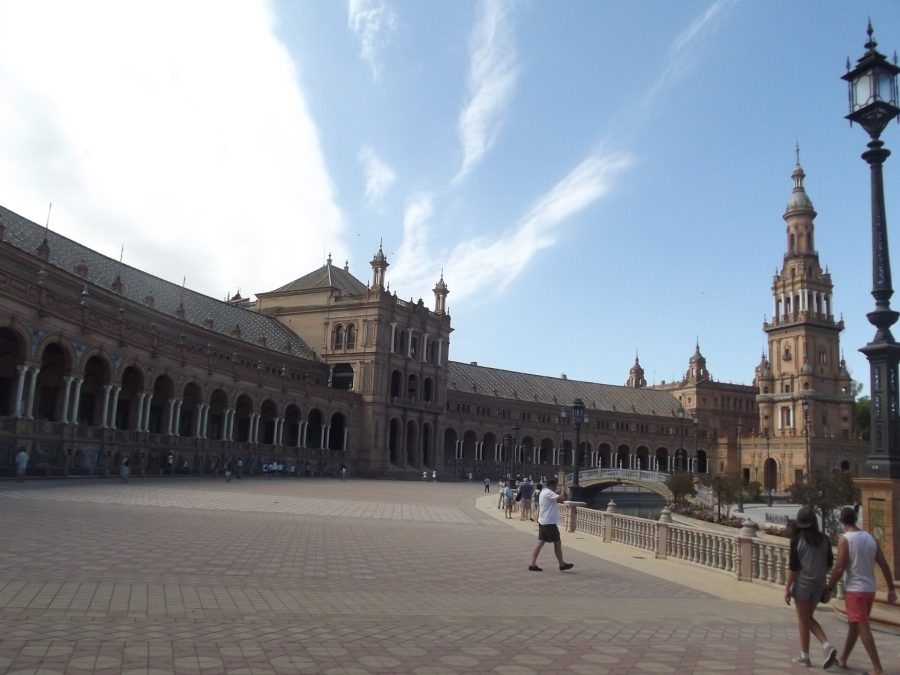
By train: High-speed and long-distance trains arrive at María Zambrano, which also has the bus station and a metro connection next door. That makes Málaga easy to pair with our Seville weekend guide by rail.
In the city: Walk the old town and the port. City buses and taxis cover the rest, including the climb up to Gibralfaro.
Good to know
- Sunday plans: The cathedral opens for visits only in the afternoon on Sundays, and the market is closed. The Alcazaba, Gibralfaro and the Picasso Museum all have free entry for part of Sunday afternoon.
- Cathedral roof: Guided visits to the cathedral roof are suspended while roof works take place, so check the cathedral’s site before planning around them.
- Holiday hours: The cathedral and the Picasso Museum close early on 24 and 31 December and shut on 25 December and 1 January. The Picasso Museum also closes on 6 January.
- Pompidou day off: The Centre Pompidou Málaga closes on Tuesdays, except when a Tuesday is a public holiday.
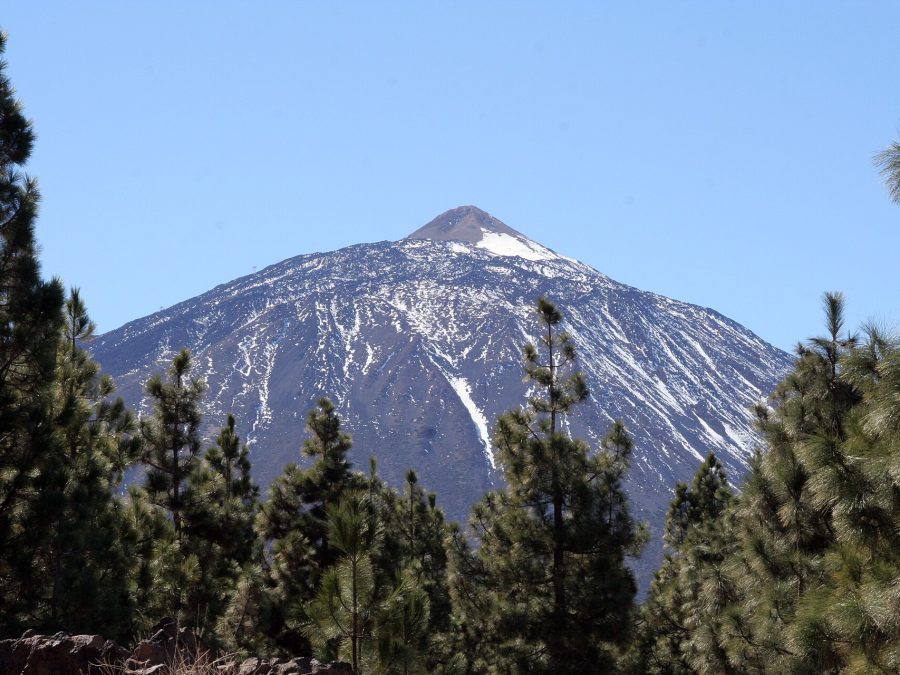
- More winter sun: Compare Málaga with Madeira in winter, Tenerife or Valletta, and see this weekend’s picks for events.
FAQ
Is a weekend in Málaga enough?
Yes. Two days covers the Alcazaba, Gibralfaro, the cathedral, the Picasso Museum, the Atarazanas market and the port at an easy pace. Add a third day for a coastal trip on the C1 or a train to Seville.
Is Málaga warm in winter?
Mild rather than hot. AEMET’s averages give highs of around 17°C from December to February and lows of around 7–9°C, with sunshine on most days. Bring a light jacket for the evenings.
How do you get from Málaga Airport to the city centre?
Take Cercanías line C1 from the airport station to María Zambrano or Málaga Centro-Alameda. You can pay with a contactless card or phone at the gates.
When is the Alcazaba free?
Entry to the Alcazaba and Gibralfaro Castle is free every Sunday from 2pm. Children under six always go free.
When do the Málaga Christmas lights go on in 2026?
The city had not announced the 2026 date when we checked. In 2025 the lights went on on 28 November and stayed up on Calle Larios until 4 January.