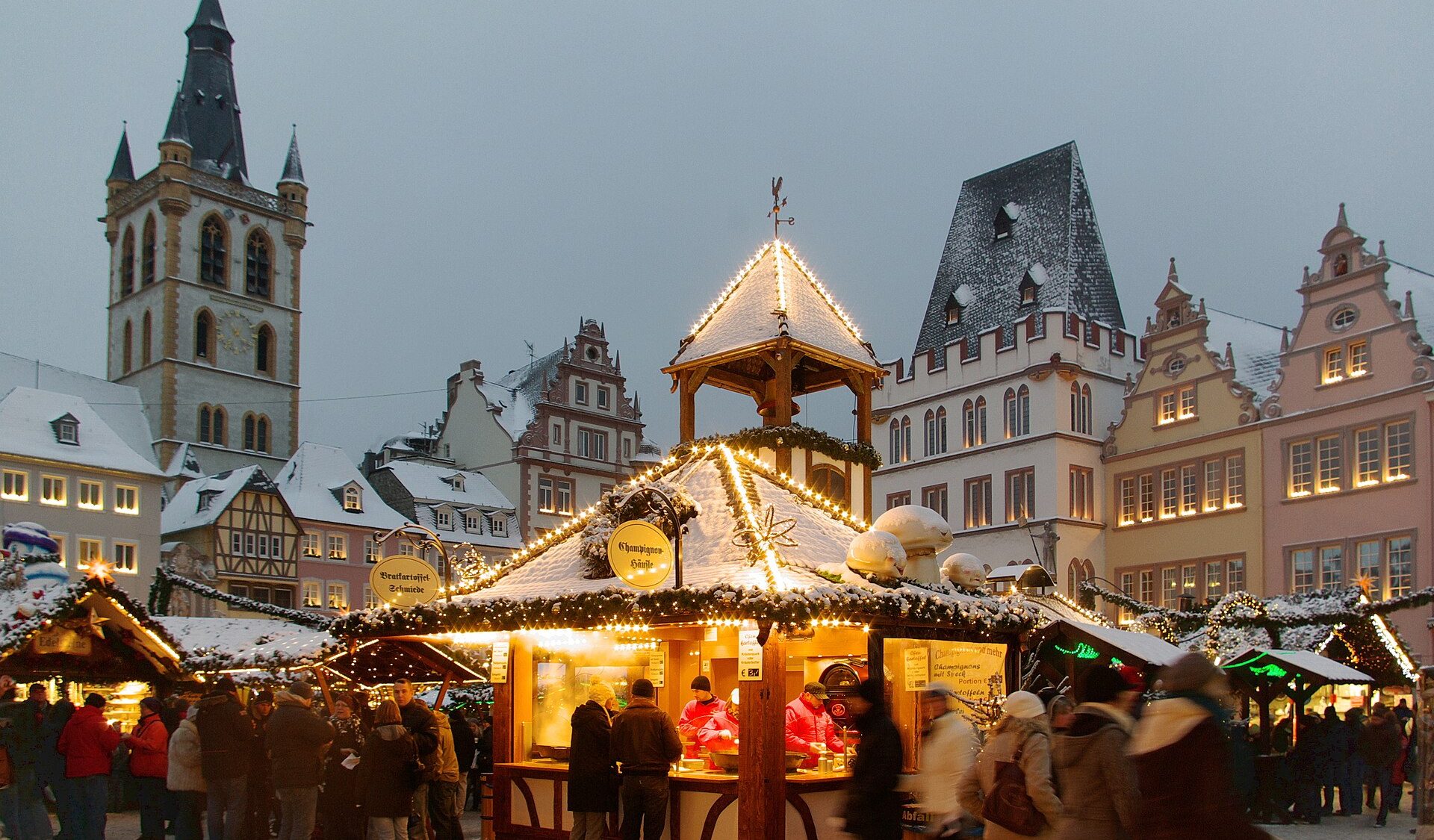
Trier sets its Christmas market between Roman ruins and medieval squares. Around 90 wooden stalls fill the Hauptmarkt and the square in front of the cathedral, a short walk from the Porta Nigra. It suits couples and history lovers, and with direct trains from Luxembourg it is one of the easiest market days in the region.
Why go
Trier is Germany’s oldest city, and it shows. You walk in through a Roman gate, shop in a medieval market square and drink mulled wine in front of Germany’s oldest cathedral. The market itself is traditional: decorated wooden stalls, a stage in front of the cathedral’s west front and a near-daily programme for families, from historic puppet theatre to tenors.
Trier also has a mulled-wine monarch. The tourist board says the city has the only Glühweinkönigin, or Mulled Wine Queen, in Germany. That fits a city on the Moselle, one of the country’s great wine regions.
Trier
Don’t miss
The places that make the trip, and why each one deserves your time.

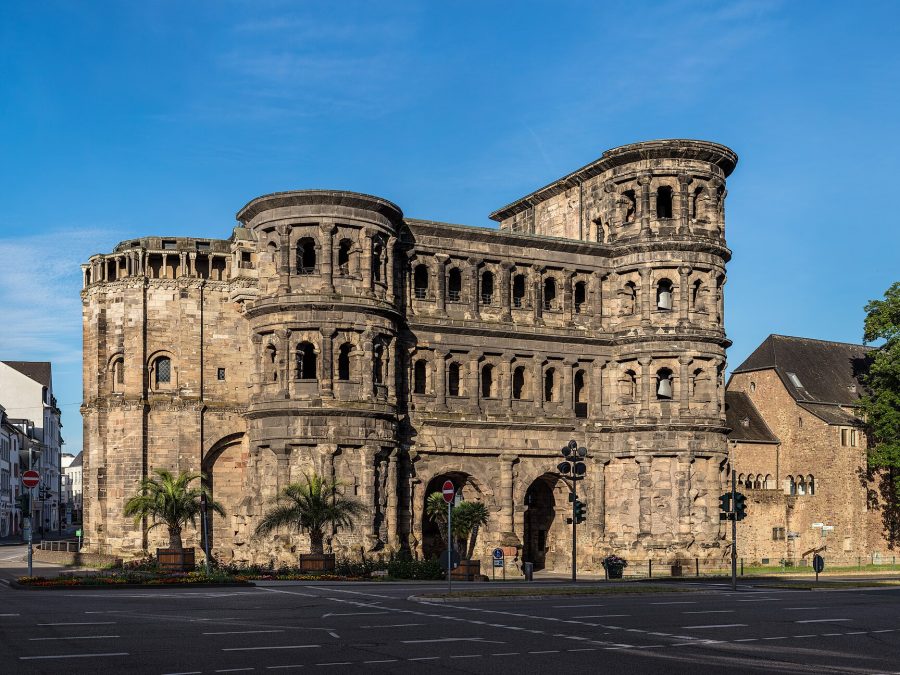
Thomas Wolf, www.foto-tw.de / Wikimedia Commons, CC BY-SA 3.0 de Porta Nigra
A blackened Roman city gate from the second century, the largest surviving in the world north of the Alps, and your gateway from the station to the market.
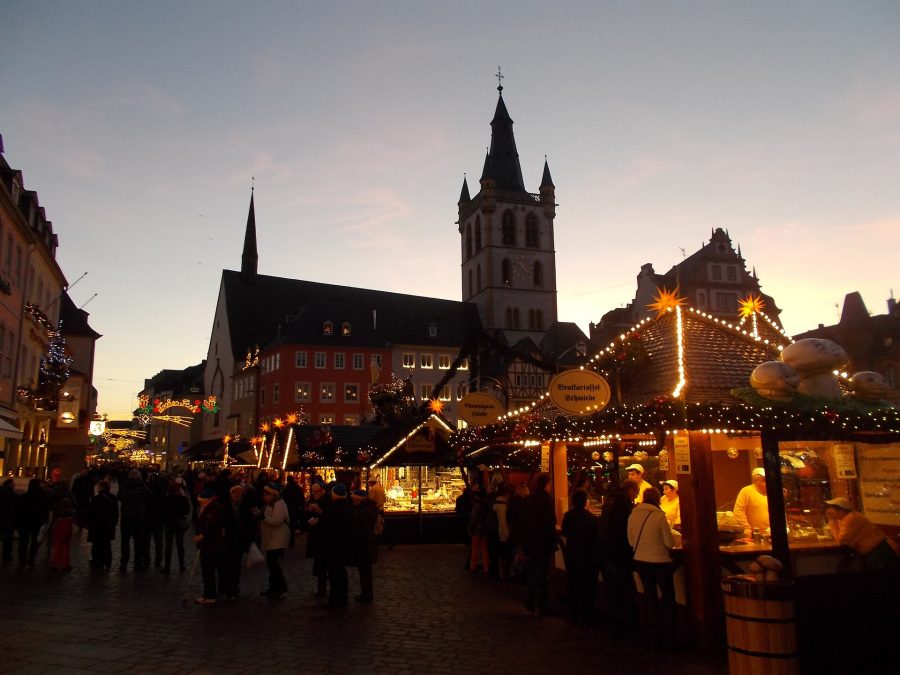
Leiflive / Wikimedia Commons, CC BY-SA 4.0 Hauptmarkt
Trier's main square, ringed by gabled and half-timbered houses and the old market cross, fills with wooden stalls around the Renaissance Petrusbrunnen fountain.
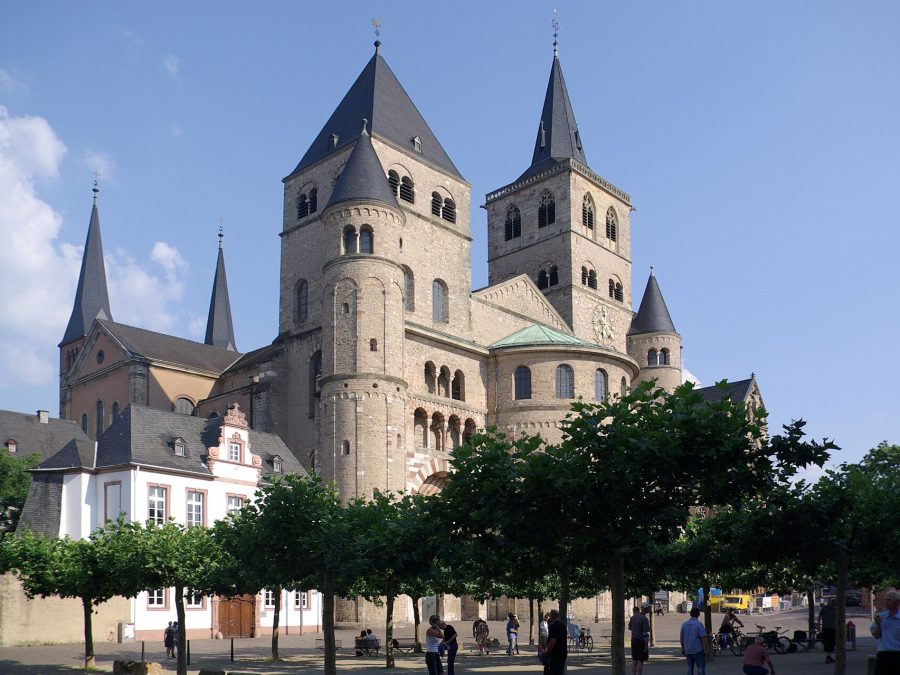
Berthold Werner / Wikimedia Commons, Public domain Domfreihof and Trier Cathedral
Stalls and a stage line the square in front of the cathedral's west front, Germany's oldest cathedral, with Roman masonry still in its walls.
Check the stage programme for puppet theatre and concerts.
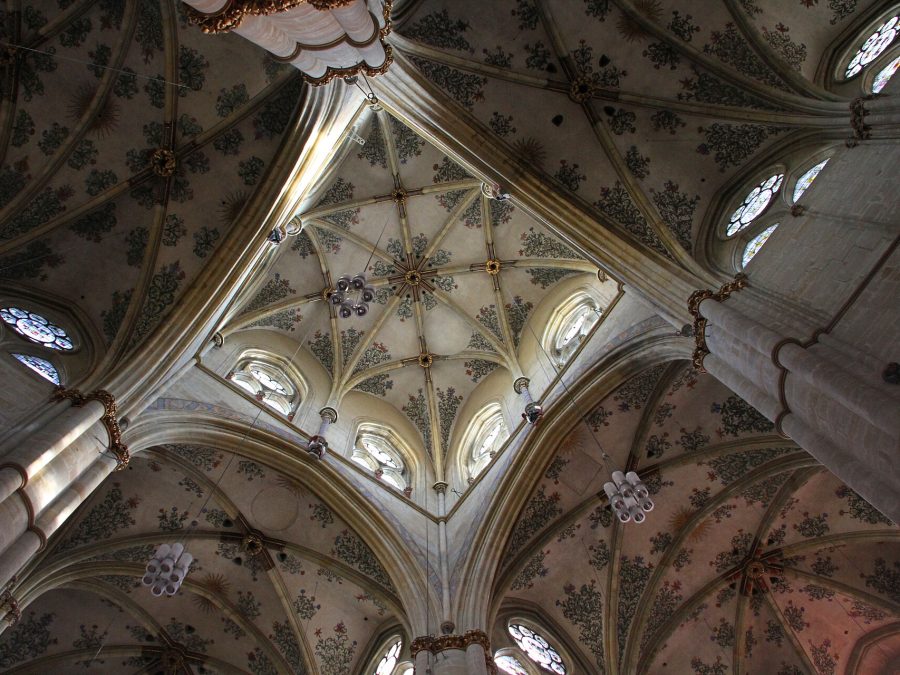
Gerd Eichmann / Wikimedia Commons, CC BY 4.0 Church of Our Lady
One of the earliest Gothic churches in Germany stands right beside the cathedral, its slender interior laid out in the shape of a rose.
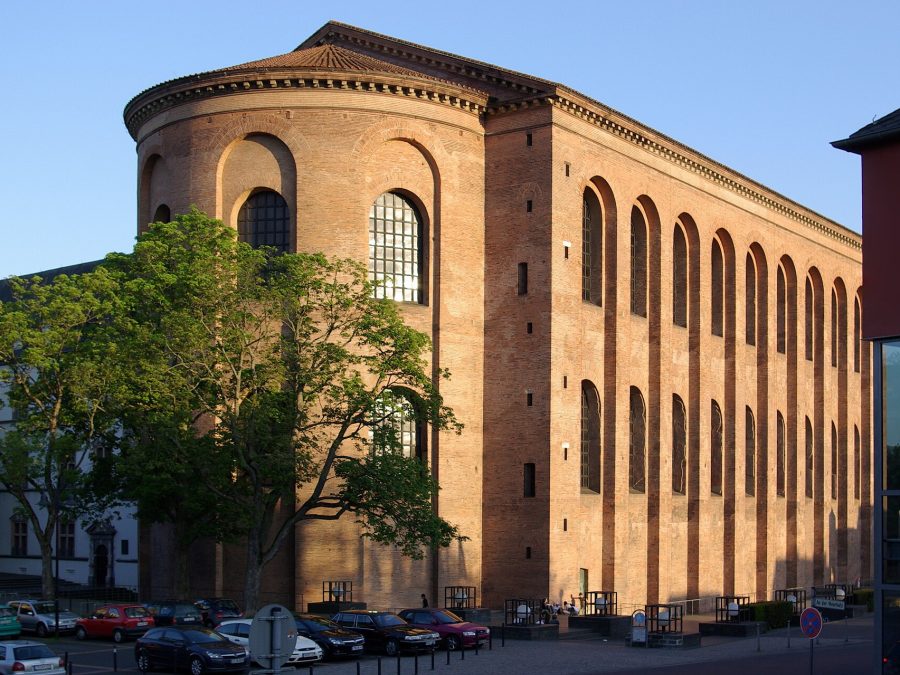
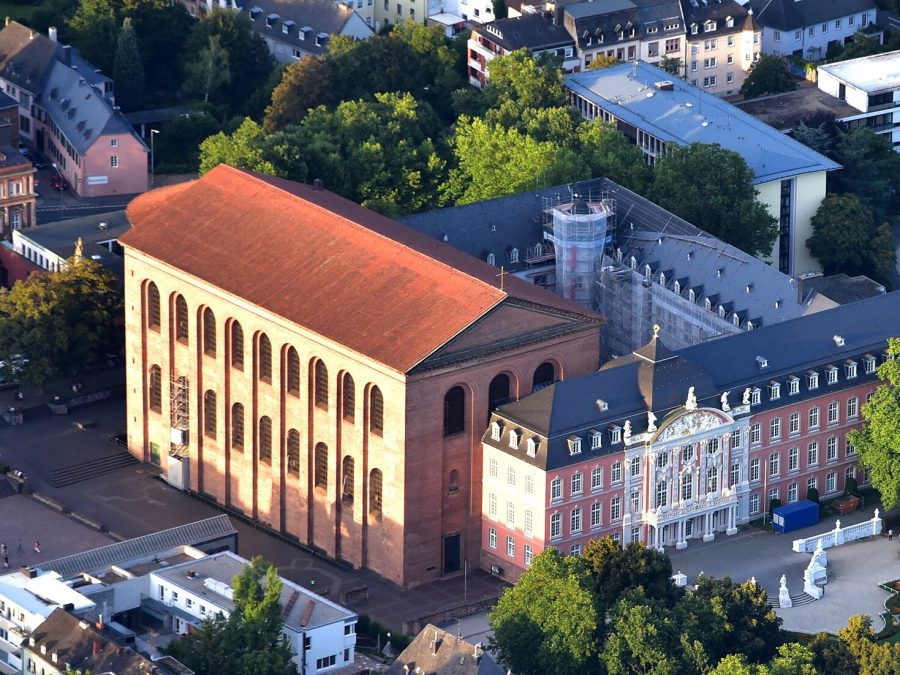
Berthold Werner / Wikimedia Commons, Public domain Constantine Basilica
Emperor Constantine's vast brick throne hall is the largest single-room structure surviving from Roman times, and its scale is hard to take in from outside alone.
Wolkenkratzer / Wikimedia Commons, CC BY-SA 4.0 Electoral Palace and gardens
A pink rococo palace stands beside the Roman basilica, and its formal gardens lead you towards the Imperial Baths.
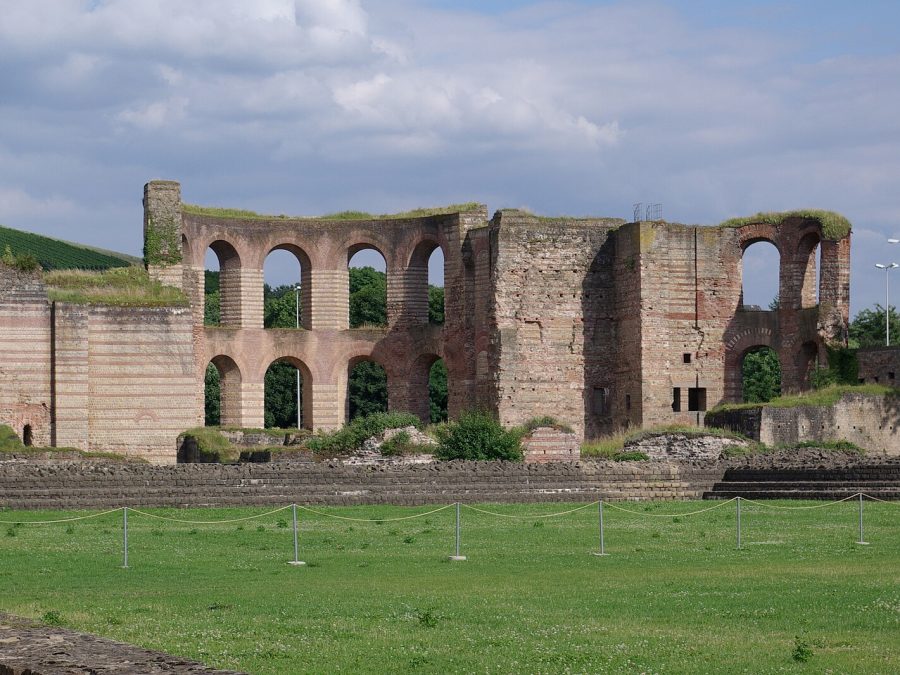
Berthold Werner / Wikimedia Commons, Public domain Imperial Baths
The ruins of a huge fourth-century bath complex, with underground service tunnels you can walk through, show Trier's Roman past at its grandest.
Trier Christmas market 2026 dates
Trier’s tourist board lists the market from Friday 20 November to Tuesday 22 December 2026.
- Closed: Sunday 22 November 2026, Totensonntag.
- Where: The Hauptmarkt and the Domfreihof, the square in front of the cathedral.
- Stalls: Around 90 decorated wooden stalls.
- Stage: In front of the cathedral’s west façade, with a programme for the whole family on most days. St Nicholas, Father Christmas and the angels of the Christmas bakery make appearances.
- Hours: The tourist board’s page doesn’t list daily opening hours for 2026. Check the organiser’s site, trierer-weihnachtsmarkt.de, before you go.
Tip: The market closes on 22 December, earlier than many German markets. Plan your visit before then.
The 48-hour route
Day 1: Roman Trier and the market
Morning: Walk from the station to the Porta Nigra and climb inside the Roman gate. Continue down the Simeonstraße, Trier’s main shopping street, to the Hauptmarkt.
Afternoon: Browse the stalls on the Hauptmarkt, then cross to the Domfreihof. Step inside the cathedral and the Church of Our Lady next door before the light fades.
Evening: Come back to the stalls after dark, when the squares are lit, and check the stage programme in front of the cathedral.
Day 2: Basilica, palace and baths
Morning: Visit the Constantine Basilica, the emperor’s throne hall, and walk through the gardens of the Electoral Palace.
Afternoon: Explore the Imperial Baths and their underground passages, then return to the market for a last mug of mulled wine.
Evening: Take the train back to Luxembourg, or stay for a Moselle wine dinner in the old town.
What to eat and drink
- Glühwein: Mulled wine, here often made with local Moselle wine, red or white.
- Gebäckkringel: A spiral of pastry sprinkled with sugar crystals, one of the market’s own specialities.
- Dampfnudel: A steamed yeast dumpling, often served with vanilla sauce.
- Marzipanstollen: Christmas stollen with a marzipan core.
- Riesling: Away from the stalls, try a glass of Moselle Riesling with dinner. Our Riesling guide explains the style.
- Viez: The region’s dry apple cider, a local favourite in Trier’s taverns.
Where to stay
- Old town around the Hauptmarkt: Walk to the stalls and the cathedral. Best for couples.
- Near the Porta Nigra and the station: Easy rail connections and a short walk to the market. Best for train travellers.
- Luxembourg City: Stay in Luxembourg and visit Trier as a day trip, adding the Luxembourg Winterlights market. Best for a two-country weekend.
Getting there and around
Trier is close to Luxembourg, and the rail link is simple. CFL, Luxembourg’s railway, says direct trains connect Luxembourg station with Trier twice an hour. Both CFL and Deutsche Bahn run regional trains on the route between Trier and Luxembourg, crossing the border at Igel. The reopened Weststrecke line also brings Luxembourg trains to new stops in the west of Trier, including Trier-West and Trier-Hafenstraße.
From Trier Hauptbahnhof, walk to the Porta Nigra and on to the Hauptmarkt in a few minutes. Regional trains also link Trier with Koblenz and Saarbrücken. For current timetables, use bahn.de or the CFL journey planner.
Once you arrive, everything is on foot. The Porta Nigra, the Hauptmarkt, the cathedral, the basilica and the Imperial Baths form a walkable line through the old town.
Good to know
- Dates: 20 November to 22 December 2026, closed on 22 November. Compare other cities in our Christmas markets 2026 dates roundup.
- Early close: The market ends on 22 December, so don’t plan a Christmas Eve visit.
- Crowds: Saturdays bring day-trippers from Luxembourg and the Saarland. Weekday afternoons are calmer.
- Weather: The Moselle valley can be damp and cold in December. Wear waterproof shoes for the cobbles.
- More markets: Our best Christmas markets in Germany and best Christmas markets in Europe guides have more ideas, and Strasbourg is a natural next stop.
FAQ
When is the Trier Christmas market 2026?
From 20 November to 22 December 2026 on the Hauptmarkt and the Domfreihof. It is closed on Sunday 22 November, Totensonntag.
How do you get from Luxembourg to the Trier Christmas market?
Take a direct train from Luxembourg station to Trier; CFL says there are two an hour. From Trier Hauptbahnhof, the market is a short walk past the Porta Nigra.
Is the Trier Christmas market worth a day trip?
Yes. The market is compact, and the Roman sights, the cathedral and the stalls are all within a short walk, so one day covers the essentials.
What is special about the Trier Christmas market?
Its setting between a medieval square and Germany’s oldest cathedral, a stage programme for families and Germany’s only Mulled Wine Queen, according to the tourist board.