Merlot is the soft-spoken star of French red wine. It’s the most planted grape in Bordeaux and the heart of some of the world’s most sought-after bottles. It suits anyone who likes smooth, fruity reds without hard edges, and Bordeaux’s right bank is a lovely place to drink it.
What it tastes like
Merlot is all about plush fruit: plum, black cherry and blackberry, with chocolate, fruitcake and sometimes a herbal note. Compared with Cabernet Sauvignon, it has softer tannins, a rounder body and a little less acidity. That’s why it’s so approachable when young.
Cooler sites give fresher, red-fruited wines with more structure. Warmer sites give riper, richer styles. When aged in oak, Merlot picks up vanilla, mocha and spice, and the best examples develop truffle and leather notes over a decade or more.
The name is thought to come from merle, the French for blackbird, which may have liked the ripe grapes.
Where it grows in Europe
Bordeaux, France
Merlot is by far Bordeaux’s most important grape. According to the Bordeaux wine council, it makes up around two-thirds of the region’s red vines. Nearly every red Bordeaux is a blend, and Merlot is usually the main part.
The right bank
East of the Dordogne river, clay and limestone soils favour Merlot. Saint-Émilion, a medieval hill town and a UNESCO World Heritage Site, makes rich, generous reds, often blended with Cabernet Franc. Neighbouring Pomerol, small and unassuming, makes some of the most famous Merlot-based wines in the world. Fronsac and the Côtes de Bordeaux offer similar styles for a fraction of the fame.
The left bank
West of the Garonne, in the Médoc and Graves, gravel soils favour Cabernet Sauvignon. Merlot is still there, but in a supporting role that softens the blend.
Elsewhere in Europe
Italy grows plenty, from the north-east to Tuscany, where it appears in some Super Tuscan blends. Switzerland’s Italian-speaking Ticino makes Merlot its signature red. You’ll also find it in southern France, Spain and across central and eastern Europe.
How to choose a bottle
Bordeaux labels name the place, not the grape, so look for right-bank appellations to find Merlot-led wines: Saint-Émilion, Pomerol, Lalande-de-Pomerol, Fronsac and the Côtes de Bordeaux. Saint-Émilion’s labels can also show its own classification, with Grand Cru Classé above plain Grand Cru. For drinking now, the satellite appellations around Saint-Émilion, such as Montagne-Saint-Émilion, offer a similar style, often at better value, and are ready sooner.
What to eat with it
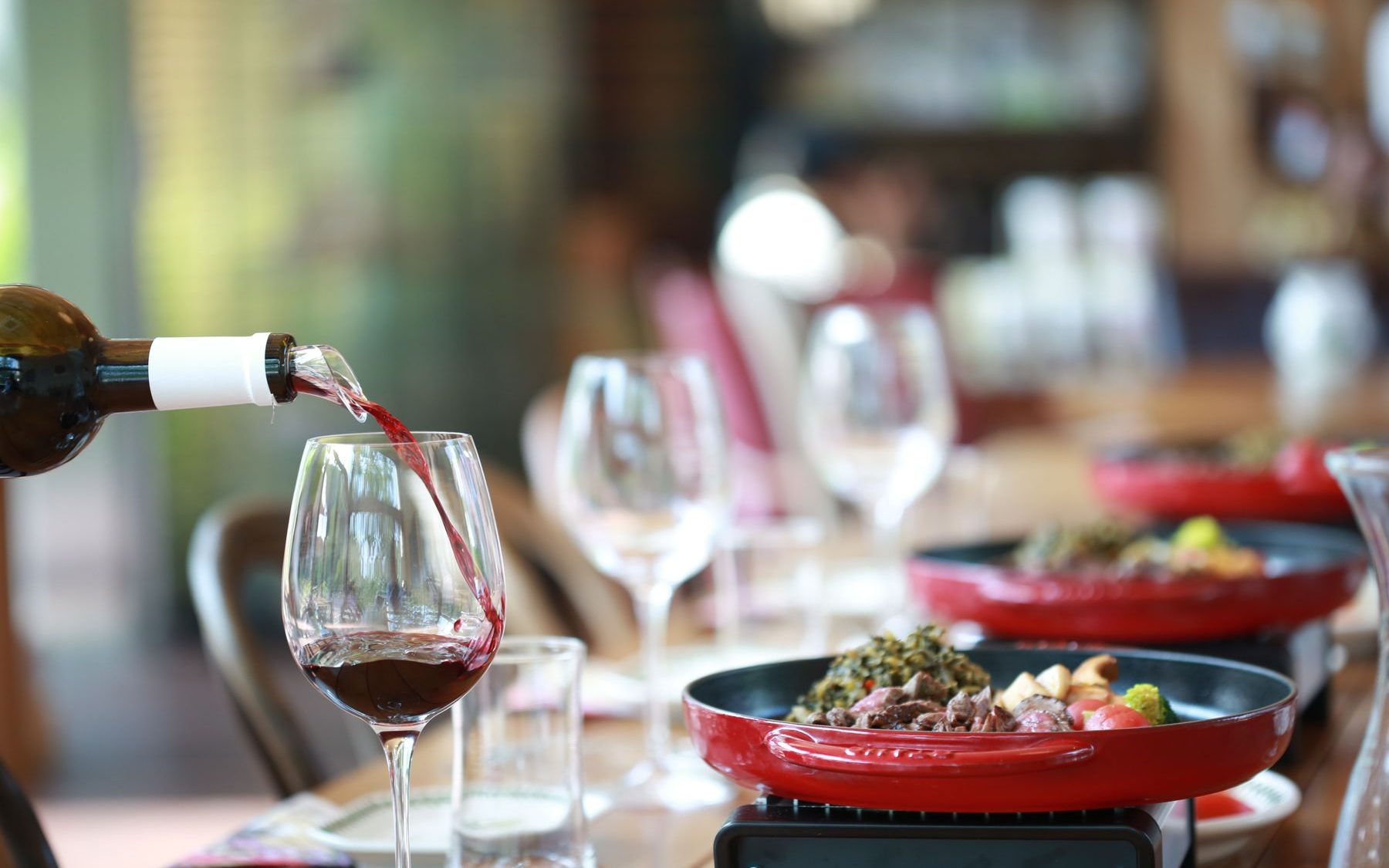
- Roast lamb or beef: a classic with right-bank Bordeaux.
- Duck confit: a south-west France staple that loves Merlot’s fruit.
- Mushroom risotto: earthy flavours suit older Merlot.
- Hard cheeses: Comté or aged Gouda.
Tip: Merlot is a safe pick when a group is sharing one bottle across different dishes. Its soft tannins make it easy to match.
Where to taste it on a weekend
Base yourself in Bordeaux city or in Saint-Émilion itself. Bordeaux has an airport and fast trains from Paris. Libourne, the gateway to the right bank, is a short train ride from Bordeaux Saint-Jean, and Saint-Émilion is a short taxi or bike ride beyond.
- Day 1: Explore Bordeaux’s grand riverside centre and wine bars. Its elegant 18th-century centre is part of a UNESCO World Heritage Site.
- Day 2: Head to Saint-Émilion. Wander its steep lanes and underground monolithic church, then visit châteaux in the surrounding vines. Drive on to Pomerol, a short hop away.
Most châteaux need a booking, and some of the most famous don’t open at all. The Saint-Émilion tourist office is a useful starting point for tours.
Tip: Hire a bike in Saint-Émilion. The vineyard roads are quiet, and it saves arguing over who drives.
For the whole region, read Bordeaux: the wine and the region. For more ideas, see the best wine regions in Europe, the best city breaks in Europe and this weekend for current picks.
FAQ
Is Bordeaux mostly Merlot?
Yes. Merlot is Bordeaux’s most planted red grape, at around two-thirds of red vines, and it leads most right-bank blends.
What is the difference between Merlot and Cabernet Sauvignon?
Merlot is softer, rounder and plummier. Cabernet Sauvignon has firmer tannins, more acidity and blackcurrant flavours.
Is Merlot sweet?
No. Merlot is a dry red wine. Its ripe fruit can make it taste smooth and generous, but it isn’t sweet.
What is the best region for Merlot?
Pomerol and Saint-Émilion on Bordeaux’s right bank are the benchmark.